

Rain Industries adjusted PAT surges 538% in Q2FY26 on margin recovery


Rain Industries delivered robust Q2FY26 results with adjusted PAT soaring 538% to ₹3.17 billion and revenue rising 17% to ₹51.67 billion. The Carbon and Advanced Materials segments drove growth through pricing power and cost efficiencies, offsetting volume declines and headwinds in the Cement business.


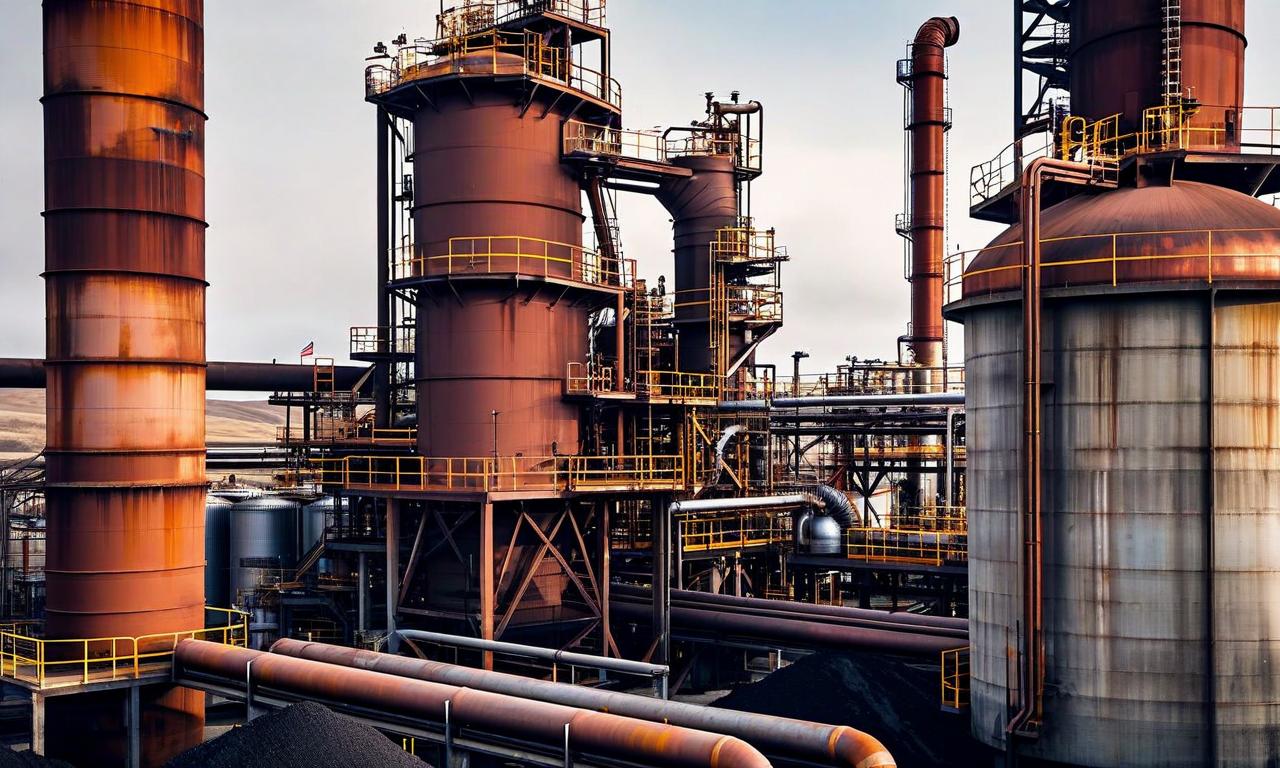
*this image is generated using AI for illustrative purposes only.
Rain Industries reported a dramatic turnaround in profitability for the second quarter of FY26, with adjusted profit after tax (PAT) surging 538% year-on-year to ₹3.17 billion, up from ₹495 million in the corresponding period of the previous year. The company’s consolidated revenue from operations rose 17% to ₹51.67 billion, while adjusted EBITDA jumped 61% to ₹9.94 billion. This significant improvement underscores effective cost management and favorable pricing dynamics, particularly within its core Carbon and Advanced Materials segments, despite challenging global geopolitical conditions.
The un-audited financial results for the quarter and half-year ended June 30, 2026, were submitted to the Bombay Stock Exchange (BSE) and the National Stock Exchange of India Limited (NSE) on August 6, 2026. Company Secretary S. Venkat Ramana Reddy signed off on the filing, which was accompanied by a management presentation detailing strategic initiatives and operational highlights. Managing Director Jagan Reddy Nellore emphasized that the results reflect progress toward a normalized earnings profile, though he cautioned that the operating environment remains fluid due to ongoing conflicts in the Persian Gulf and broader market volatility.
Segment Performance Drivers
The Carbon segment remained the primary growth engine, contributing ₹5.79 billion to consolidated revenue growth. Revenue for the segment reached ₹37.70 billion, an 18.1% increase from ₹31.91 billion in Q2FY25. This growth was driven by price appreciation linked to the strengthening of the Euro and USD against the Indian Rupee, which appreciated by approximately 13.5% and 10.7% respectively. Although volumes declined slightly to 594,000 MT from 664,000 MT due to shipment timing and logistical disruptions, adjusted EBITDA surged to ₹8.11 billion from ₹5.15 billion, aided by raw material blend optimization and lower-cost inventory utilization.
| Segment | Q2FY26 Revenue (₹ Bn) | Q2FY25 Revenue (₹ Bn) | Q2FY26 Adj EBITDA (₹ Bn) | Q2FY25 Adj EBITDA (₹ Bn) |
|---|---|---|---|---|
| Carbon | 37.70 | 31.91 | 8.11 | 5.15 |
| Advanced Materials | 10.73 | 8.18 | 1.68 | 0.77 |
| Cement | 2.97 | 3.26 | 0.15 | 0.25 |
The Advanced Materials segment also posted significant gains, with revenue rising 31.2% to ₹10.73 billion from ₹8.18 billion. This increase was fueled by pricing hikes linked to reduced market supplies and currency appreciation. Adjusted EBITDA more than doubled to ₹1.68 billion from ₹0.77 billion, supported by higher margins from timely raw material purchases and cost-saving initiatives. Conversely, the Cement segment faced headwinds, with revenue declining 8.9% to ₹2.97 billion from ₹3.26 billion due to increased competition in South India following acquisitions by pan-India players, resulting in a dip in adjusted EBITDA to ₹0.15 billion.
Balance Sheet and Liquidity Position
Rain Industries maintained a strong liquidity position with total liquidity of US$313 million, comprising US$172 million in cash and US$141 million in undrawn credit facilities. The company’s gross term debt stood at US$1.064 billion as of June 2026, including US$257 million in working capital borrowings. Net debt decreased to US$892 million from US$837 million, while the net debt-to-EBITDA ratio improved to 2.8x from 3.21x, reflecting enhanced operational cash flows. Capital expenditure for the six months ended June 2026 was US$26 million (₹2.43 billion), primarily directed toward maintenance and plant turnarounds. Operating activities generated a net cash inflow of ₹1.88 billion in H1FY26, a significant improvement from the outflow of ₹1.967 billion in the corresponding period last year.
What the Numbers Show
The divergence between volume trends and profitability metrics reveals a shift toward value-driven growth. While Carbon volumes contracted by approximately 10% YoY, EBITDA expanded by nearly 57%, indicating successful pass-through of input costs and currency benefits to end customers. Similarly, in Advanced Materials, stable volumes yielded a 118% increase in EBITDA, underscoring the impact of product mix optimization and disciplined sourcing. This margin expansion despite flat or declining volumes suggests that Rain Industries is effectively leveraging its integrated logistics network and raw material flexibility to protect profitability in a volatile commodity environment. Management noted that lower-cost inventory carried from earlier quarters positively contributed to margin realization, highlighting the importance of disciplined procurement in volatile markets.
Historical Stock Returns for Rain Industries
| 1 Day | 5 Days | 1 Month | 6 Months | 1 Year | 5 Years |
|---|---|---|---|---|---|
| +7.89% | +11.50% | +9.77% | +91.07% | +83.50% | -1.22% |

How sustainable is Rain Industries' current margin expansion if the Euro and USD stabilize or weaken against the Indian Rupee in the coming quarters?
What specific strategic initiatives is management implementing to counteract the intensifying competition and margin erosion in the Cement segment from pan-India players?
Given the 10% year-on-year decline in Carbon volumes, does Rain Industries plan to invest in capacity expansion to offset logistical disruptions and capture future demand growth?
 20
20








 Access 50+ Readymade Screeners
  Use 200+ Custom Filters
  Get Full Market Insights





