

Proventus Agrocom FY26 PAT Surges 93% YoY; FY28 Target Raised to ₹1,100 Cr


Proventus Agrocom delivered strong FY26 results with brand revenue of ₹659 Cr (+58% YoY), consolidated PAT of ₹14.26 Cr (+93% YoY), and EBITDA of ₹19.84 Cr. Consolidated revenue from operations reached ₹92,498.74 lakhs. The company raised its FY28 revenue target to ₹1,100 Cr, backed by capacity expansion across Mumbai, Bihar, and the upcoming Surat facility.

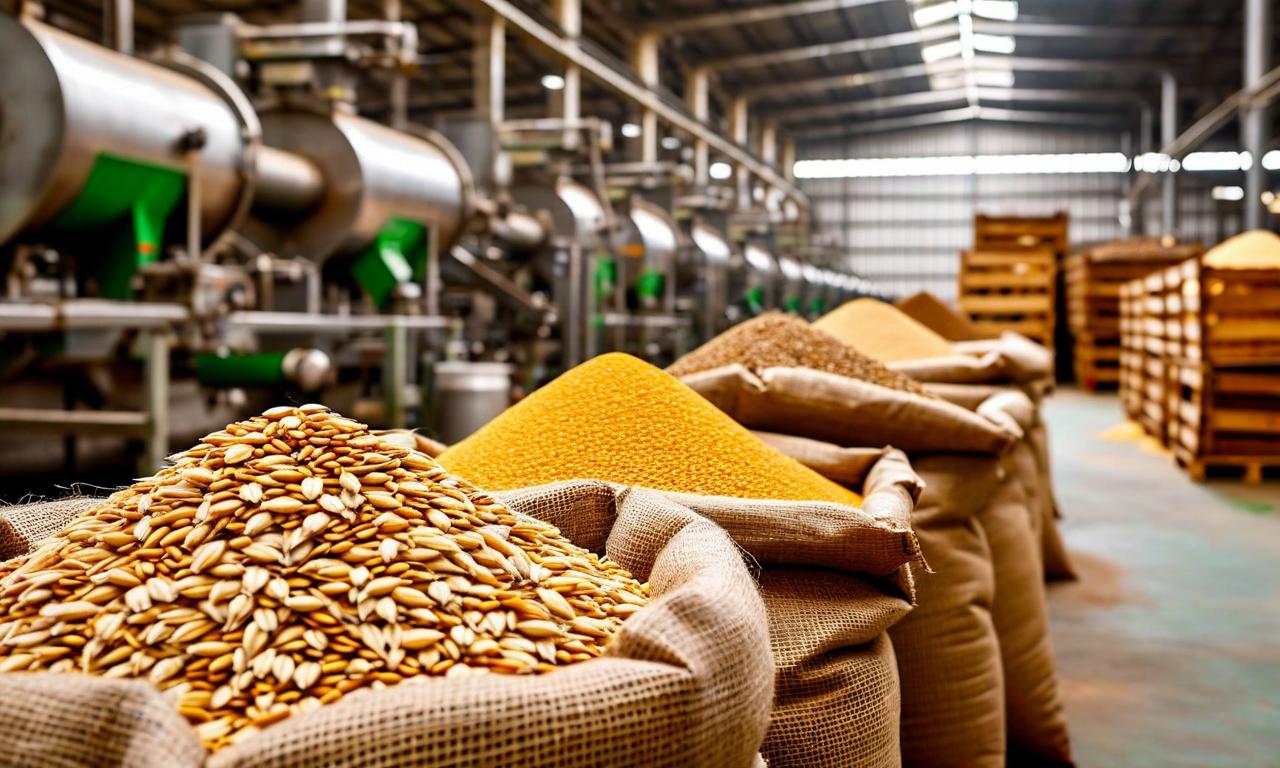

*this image is generated using AI for illustrative purposes only.
Proventus Agrocom Limited announced its audited standalone and consolidated financial results for the half year and year ended March 31, 2026, reporting a year of robust growth and margin expansion. The company posted a brand revenue of ₹659 Cr for FY26, reflecting a 58% YoY increase, while total revenue stood at ₹926 Cr, up 59% from ₹584 Cr in FY25. Consolidated PAT surged 93% YoY to ₹14.26 Cr, driven by a richer product mix and improved sourcing economics. The Board of Directors approved the results at its meeting held on May 15, 2026, with statutory auditors issuing an unmodified opinion on both standalone and consolidated financial statements.
FY26 Financial Performance at a Glance
FY26 marked the strongest year on record for Proventus Agrocom across key financial metrics. EBITDA rose to ₹19.84 Cr from ₹12.92 Cr in FY25, while gross margin expanded by 240 basis points to 22.1%. The company's five-year revenue CAGR from FY21 to FY26 stood at 54%. The balance sheet remained disciplined with a debt-equity ratio of 0.19:1 and a net worth of ₹144 Cr.
The following table summarises the key financial metrics across fiscal years:
| Metric: | FY22 | FY23 | FY24 | FY25 | FY26 |
|---|---|---|---|---|---|
| Revenue (₹ Cr): | — | 282 | 373 | 492 | 659 |
| EBITDA (₹ Cr): | 4.3 | 7.7 | 11.9 | 12.9 | 19.8 |
| Consolidated PAT (₹ Cr): | 1.1 | 3.7 | 7.2 | 7.4 | 14.3 |
| Net Worth (₹ Cr): | 53 | 63 | 123 | 130 | 144 |
| Gross Margin (%): | — | — | 17.2 | 19.7 | 22.1 |
Standalone Financial Results
On a standalone basis, Proventus Agrocom reported revenue from operations of ₹53,529.66 lakhs for the year ended March 31, 2026, compared to ₹38,000.18 lakhs in the previous year. Total income stood at ₹53,796.93 lakhs versus ₹38,420.24 lakhs. Profit before tax was ₹583.17 lakhs against ₹490.33 lakhs in the prior year. Net profit from continuing operations came in at ₹433.69 lakhs compared to ₹360.98 lakhs. Basic EPS for the full year was ₹12.58 and diluted EPS was ₹12.54.
The following table presents the standalone income statement highlights:
| Particulars: | Year Ended Mar 31, 2026 (₹ Lakhs) | Year Ended Mar 31, 2025 (₹ Lakhs) |
|---|---|---|
| Revenue from Operations: | 53,529.66 | 38,000.18 |
| Other Income: | 267.27 | 420.06 |
| Total Income: | 53,796.93 | 38,420.24 |
| Total Expenses: | 53,213.76 | 37,929.91 |
| Profit Before Tax: | 583.17 | 490.33 |
| Net Profit (after tax): | 433.69 | 360.98 |
| Basic EPS (₹): | 12.58 | 10.50 |
| Diluted EPS (₹): | 12.54 | 10.44 |
The standalone balance sheet as at March 31, 2026 reflected total assets of ₹14,173.94 lakhs versus ₹12,909.56 lakhs a year earlier. Shareholders' funds stood at ₹12,683.89 lakhs, comprising share capital of ₹345.34 lakhs and reserves and surplus of ₹12,338.55 lakhs. Current assets totalled ₹11,593.65 lakhs, supported by inventories of ₹2,572.40 lakhs, trade receivables of ₹2,857.13 lakhs, and cash and cash equivalents of ₹2,094.44 lakhs. During the half year ended March 31, 2026, 6,725 equity shares of ₹10 each were issued and allotted under the PAPL SIP 2022 scheme, raising paid-up capital to ₹345.34 lakhs.
Consolidated Financial Results
On a consolidated basis, which includes subsidiaries Prov Foods Private Limited, Proventus Retail Private Limited, Prov Nova Bio Technologies Private Limited, and Proventus Commodities DMCC, the group reported revenue from operations of ₹92,498.74 lakhs for the year ended March 31, 2026, compared to ₹58,155.96 lakhs in the prior year. Total income was ₹92,638.55 lakhs against ₹58,421.48 lakhs. Profit before tax rose to ₹1,785.43 lakhs from ₹938.63 lakhs. Net profit attributable to equity shareholders of the parent stood at ₹1,414.07 lakhs versus ₹735.86 lakhs. Consolidated basic EPS for the full year was ₹41.01 and diluted EPS was ₹40.90.
The following table presents the consolidated income statement highlights:
| Particulars: | Year Ended Mar 31, 2026 (₹ Lakhs) | Year Ended Mar 31, 2025 (₹ Lakhs) |
|---|---|---|
| Revenue from Operations: | 92,498.74 | 58,155.96 |
| Other Income: | 139.81 | 265.52 |
| Total Income: | 92,638.55 | 58,421.48 |
| Total Expenses: | 90,853.12 | 57,482.85 |
| Profit Before Tax: | 1,785.43 | 938.63 |
| Net Profit (after tax): | 1,425.94 | 740.13 |
| Attributable to Parent Equity Shareholders: | 1,414.07 | 735.86 |
| Basic EPS (₹): | 41.01 | 21.40 |
| Diluted EPS (₹): | 40.90 | 21.28 |
The consolidated balance sheet as at March 31, 2026 showed total assets of ₹19,812.09 lakhs versus ₹16,912.16 lakhs. Shareholders' funds (including non-controlling interests) stood at ₹14,456.71 lakhs. Long-term borrowings were ₹474.18 lakhs, down from ₹585.75 lakhs. Short-term borrowings were ₹2,230.34 lakhs. Capital work in progress stood at ₹1,016.96 lakhs, reflecting ongoing construction at the Surat facility.
Business Mix and Strategic Shift
A defining feature of FY26 was the continued shift in revenue composition toward higher-margin Wholesome Nutrition products. The Core Dry Fruits to Wholesome Nutrition revenue mix moved to 52:48 in FY26, compared to 59:41 in FY25. Wholesome Nutrition, comprising Makhana, seeds, bars, and premium dry fruits, now carries higher margins than Core Dry Fruits. The company launched 25+ new SKUs during the year, with Makhana emerging as a significant growth lever, growing at 25–30% CAGR.
| Period: | Core Dry Fruits (%) | Wholesome Nutrition (%) | Gross Margin (%) |
|---|---|---|---|
| FY24: | 60 | 40 | 17.2 |
| FY25: | 59 | 41 | 19.7 |
| FY26: | 52 | 48 | 22.1 |
| FY27E: | 47 | 53 | 24.5 |
| FY28E: | 42 | 58 | 27.0 |
Speaking on the results, MD & CEO DP Jhawar stated: "ProV has delivered on every commitment it has made. FY26 validates that our transition from a dry fruit company to a wholesome nutrition platform is working. Healthy snacking in India is becoming a daily habit, and ProV is positioned at the centre of this structural shift. Makhana, in particular, is emerging as a generational category opportunity, and with our Bihar facility now operational at the source of 90%+ of India's Makhana supply, ProV is scaling it aggressively. We are now revising our FY28 revenue target upward to ₹1,100 Crore."
Capacity Expansion and Manufacturing Infrastructure
Proventus Agrocom is scaling manufacturing capacity across three locations. The Mumbai facility, spanning 47,000 sq.ft. with a capacity of 1.5 lakh pouches per day, is fully operational. The Purnia, Bihar plant—focused on Makhana—provides backward integration at the source of 90%+ of India's supply and is expected to deliver 300+ basis points margin improvement post full commissioning. A 2,00,000 sq.ft. facility in Surat, Gujarat is under construction and targeted to be commissioned by H1 FY27, with a combined capacity target of 4 lakh+ pouches per day. The company's sales force has expanded to 350+ field personnel, covering 16,000+ General Trade touchpoints across all four channels—General Trade, Modern Trade, E-Commerce, and Quick Commerce.
| Facility: | Location | Status | Key Feature |
|---|---|---|---|
| Mumbai: | Mumbai | Fully Operational | 47,000 sq.ft., 1.5 lakh pouches/day |
| Bihar: | Purnia, Bihar | Phase 1 Operational | Makhana backward integration |
| Surat: | Surat, Gujarat | Under Construction | 2,00,000 sq.ft., 4 lakh+ pouches/day by H1 FY27 |
Market Opportunity and FY28 Target
The company revised its FY28 revenue target upward to ₹1,100 Cr from ₹1,000 Cr. The total addressable market for dry fruits and wholesome nutrition is projected to grow from ₹75,000 Cr to ₹1,10,000 Cr by 2030, driven by a structural shift toward healthier snacking, rapid growth in Makhana at 25–30% CAGR, and GST rationalisation on dry fruits favouring organised players. Organised players are already growing 2.5x faster than unorganised. The FY28 roadmap is anchored on four pillars: expanding General Trade reach and deepening Quick Commerce presence targeting 10%+ of revenue; growing Wholesome Nutrition to 58%+ of revenue with Makhana as the primary vehicle; commissioning Surat and Bihar facilities to deliver 4 lakh+ pouches per day by FY27; and expanding the workforce, which currently stands at 850+ employees, with targeted leadership additions across sales, supply chain, and brand marketing.
Historical Stock Returns for Proventus Agrocom
| 1 Day | 5 Days | 1 Month | 6 Months | 1 Year | 5 Years |
|---|---|---|---|---|---|
| -1.09% | 0.0% | +10.40% | +48.44% | 0.0% | +87.64% |

How might the commissioning of the Surat facility in H1 FY27 impact Proventus Agrocom's ability to meet its revised ₹1,100 Cr FY28 revenue target if construction faces delays?
With Makhana growing at 25–30% CAGR and competitors likely eyeing the same opportunity, what competitive moat can Proventus sustain through its Bihar backward integration before larger FMCG players enter the category?
As Wholesome Nutrition is projected to reach 58% of revenue by FY28, how dependent is the company's gross margin expansion on Makhana pricing stability, given its agricultural commodity nature?
 20
20






 Access Market Heat-map & Insights
  Create, Save & Share your Screener
  Use 200+ Screening Filters





