

Pace Digitek Q1 Results: Revenue up 51% YoY to ₹5,554 crore


Pace Digitek reported Q1FY27 revenue of ₹5,554 crore, up 51.3% YoY, driven by its energy segment which contributed 79.5% of sales. Net profit rose 14.3% to ₹625 crore. The order book grew to ₹108,033 crore, supported by strong BESS execution and telecom infrastructure demand. The company aims to scale BESS manufacturing capacity to 10 GWh by FY27 end.


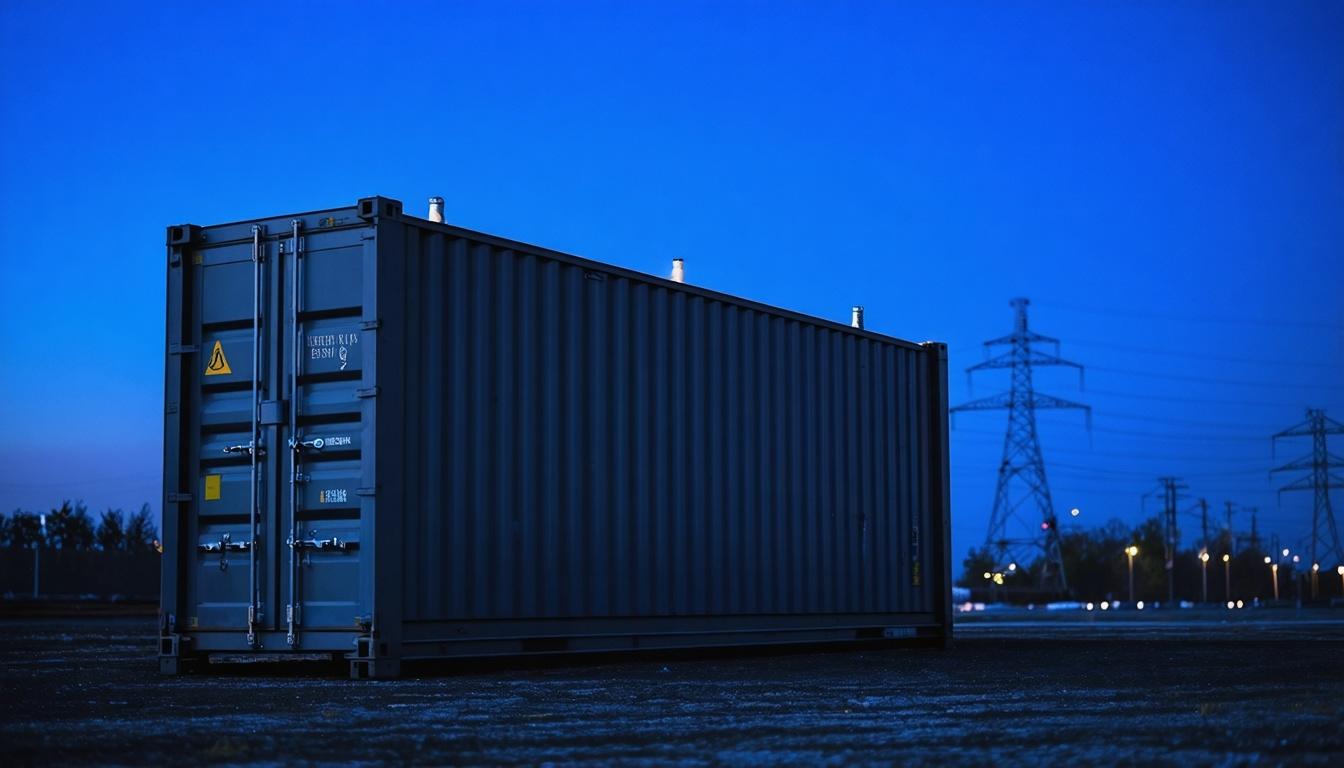
*this image is generated using AI for illustrative purposes only.
Pace Digitek Limited reported robust financial performance for the first quarter of FY27, with revenue from operations rising 51.3% year-on-year to ₹5,554 crore. The growth was primarily driven by its energy business, which accounted for 79.5% of total revenue, reflecting accelerated execution in Battery Energy Storage Systems (BESS) and renewable energy projects.
Net profit for the quarter climbed 14.3% to ₹625 crore, compared to ₹547 crore in Q1FY26. EBITDA grew 7.5% to ₹861 crore, with margins contracting slightly to 15.5% from 21.8% in the prior year period. The company’s order book strengthened significantly, reaching ₹108,033 crore as of June 30, 2026, up from ₹96,613 crore at the end of FY26, supported by incoming orders worth ₹16,766 crore during the quarter.
Financial Performance Highlights
The company’s financial metrics for Q1FY27 demonstrate strong top-line growth alongside stable profitability. Gross profit expanded 32.8% year-on-year to ₹1,555 crore, maintaining a margin of 28.0%. While EBITDA margins dipped to 15.5% from 21.8% in Q1FY26, they improved sequentially from 14.9% in Q4FY26.
| Metric: | Q1FY27 | Q1FY26 | YoY Change |
|---|---|---|---|
| Revenue: | ₹5,554 crore | ₹3,671 crore | +51.3% |
| Gross Profit: | ₹1,555 crore | ₹1,171 crore | +32.8% |
| EBITDA: | ₹861 crore | ₹801 crore | +7.5% |
| Net Profit: | ₹625 crore | ₹547 crore | +14.3% |
What the Numbers Show
A significant shift in revenue composition is evident, with the energy segment’s contribution jumping from just 6.8% in Q1FY26 to nearly 80% in Q1FY27. This pivot aligns with the company’s strategic expansion into BESS manufacturing and EPC services. Despite the lower absolute EBITDA margin compared to the previous year, the absolute EBITDA value grew, indicating that volume growth in the energy business is offsetting margin compression. Furthermore, finance costs more than doubled to ₹283 crore from ₹97 crore in Q1FY26, likely reflecting increased leverage to fund the rapid scaling of energy infrastructure projects and manufacturing capacity.
Operational Updates and Capacity Expansion
Pace Digitek continues to scale its BESS manufacturing capabilities, having operationalized a facility with 5 GWh installed capacity. The company is on track to expand this to 10 GWh by the end of FY27 through phased upgrades and new facility commissioning. In Q1FY27, the company executed 975 MWh of utility-scale BESS capacity, including progress on key projects such as the MSEDCL standalone BESS BOO project, where 39 of 75 sites are now operational.
The telecom & ICT business remains a steady contributor, with an order book of ₹23,503 crore as of June 30, 2026. Major clients include BSNL, Railtel, and Indian Railways, supporting ongoing infrastructure modernization efforts such as BharatNet and railway Kavach systems.
Future Outlook
Management has provided revenue guidance of ₹32,000–₹34,000 crore for FY27 and ₹40,000–₹42,000 crore for FY28. Strategic priorities include scaling utility-scale BESS execution, enhancing localization through backward integration, and expanding international presence in markets such as Saudi Arabia and Kenya. The company also plans to develop indigenous cell manufacturing capabilities in collaboration with IISER Pune to strengthen its supply chain resilience.
Historical Stock Returns for Pace Digitek
| 1 Day | 5 Days | 1 Month | 6 Months | 1 Year | 5 Years |
|---|---|---|---|---|---|
| -0.50% | +1.94% | -1.28% | +9.04% | -24.10% | -24.10% |

How will Pace Digitek manage the increased financial leverage and rising finance costs while scaling its energy infrastructure projects?
What specific strategies will the company employ to mitigate EBITDA margin compression as it transitions from high-margin telecom services to capital-intensive BESS manufacturing?
How does the collaboration with IISER Pune for indigenous cell manufacturing aim to reduce supply chain risks compared to relying on imported components?
 20
20










 Access Market Heat-map & Insights
  Create, Save & Share your Screener
  Use 200+ Screening Filters





