Oracle Corp. (NYSE: ORCL) shares fell more than 3% on Thursday as investors weighed the company’s aggressive AI spending. The CFO reiterated that full-year capital expenditure for fiscal 2027 will remain in the $90 billion to $95 billion range.
The Nasdaq dropped 0.96%, the S&P 500 fell 0.58%, and the Technology sector declined 1.3%. Oracle is scheduled to release its fiscal first-quarter 2027 results after the U.S. market closes Thursday.
Capex Guidance And Timing
During the conference call, Oracle’s CFO provided clarity on the company’s capital expenditure strategy. The executive stated that the company continues to anticipate total capex of $90 billion to $95 billion for the full year.
Crucially, the CFO noted that this spending will not be linear throughout the year. This clarification adds nuance to the heavy investment cycle, suggesting periods of intense deployment followed by slower phases, rather than a steady quarterly burn rate.
Debt And Cash Flow Pressure Build
Oracle’s earnings will put its AI spending strategy under fresh scrutiny. The company has taken on substantial debt to expand AI infrastructure, while free cash flow is expected to remain negative into 2029. S&P Global Ratings downgraded Oracle in July to the lowest investment-grade rating.
Carnegie Investment Counsel research director Greg Halter, whose firm owns Oracle shares, told Bloomberg, “Oracle is right at the center of the market’s concerns about AI financing, and a lot would have to go right to change that.”
Wall Street expects fiscal first-quarter earnings per share to rise about 30%, with revenue increasing at a similar pace. Cloud infrastructure revenue is projected at about $7.2 billion, up from $3.3 billion a year earlier.
Coastal Bridge Advisors Chief Investment Strategist David Waddell told Bloomberg that investors need proof that Oracle can convert heavy AI investment into returns.
Analysts expect quarterly capital expenditures of nearly $20 billion, pushing free cash flow to roughly negative $10 billion. Fiscal 2027 capex could approach $93 billion, while free cash flow could fall to negative $46.6 billion.
Revenue Backlog Conversion Timeline
The CFO also provided clarity on the conversion timeline for its recent revenue pipeline opportunities (RPO). The company now expects around half of its RPO to convert into sales over the next 36 months.
This new revenue backlog will not impact capital expenditures or revenues until fiscal 2028 or beyond. This suggests that while demand remains strong, the financial benefits of these specific deals are not immediate factors for the upcoming fiscal first-quarter 2027 results.
Analyst Outlook
Oracle carries a Buy consensus rating and an average price forecast of $259.26.
- Scotiabank maintained a Sector Outperform rating Wednesday but lowered its price forecast to $215.
- Citizens maintained a Market Outperform rating and a $285 forecast.
- Guggenheim maintained its Buy rating Tuesday with a $400 forecast.
Top ETF Exposure
| ETF Name |
Ticker |
Weight |
| iShares Expanded Tech-Software Sector ETF |
IGV |
5.51% |
| First Trust NASDAQ Technology Dividend Index Fund |
TDIV |
5.28% |
| REX FANG & Innovation Equity Premium Income ETF |
FEPI |
7.28% |
Because ORCL carries such a heavy weight in these funds, any significant inflows or outflows for these ETFs will likely force automatic buying or selling of the stock.
Options Market Signals Bullish Sentiment
According to Julia Spina, head of research at IG Group North America, options are currently pricing an approximately 11% move, or about $18, around the earnings release. While this implied volatility is large, Spina noted it is not unusual for Oracle given its recent history of reactions ranging from roughly 8.5% to 10.8% over the past three earnings cycles.
A key divergence in trader behavior is emerging: calls are trading richer than puts. This indicates investors are paying relatively more for upside exposure than downside protection, a pattern Spina described as "the opposite of what you normally see in equities markets." The bullish activity has accelerated over the past two weeks, potentially reflecting fear of missing another major rally similar to the roughly 35% jump seen after last year’s earnings.
Analyst Constraints vs Market Optimism
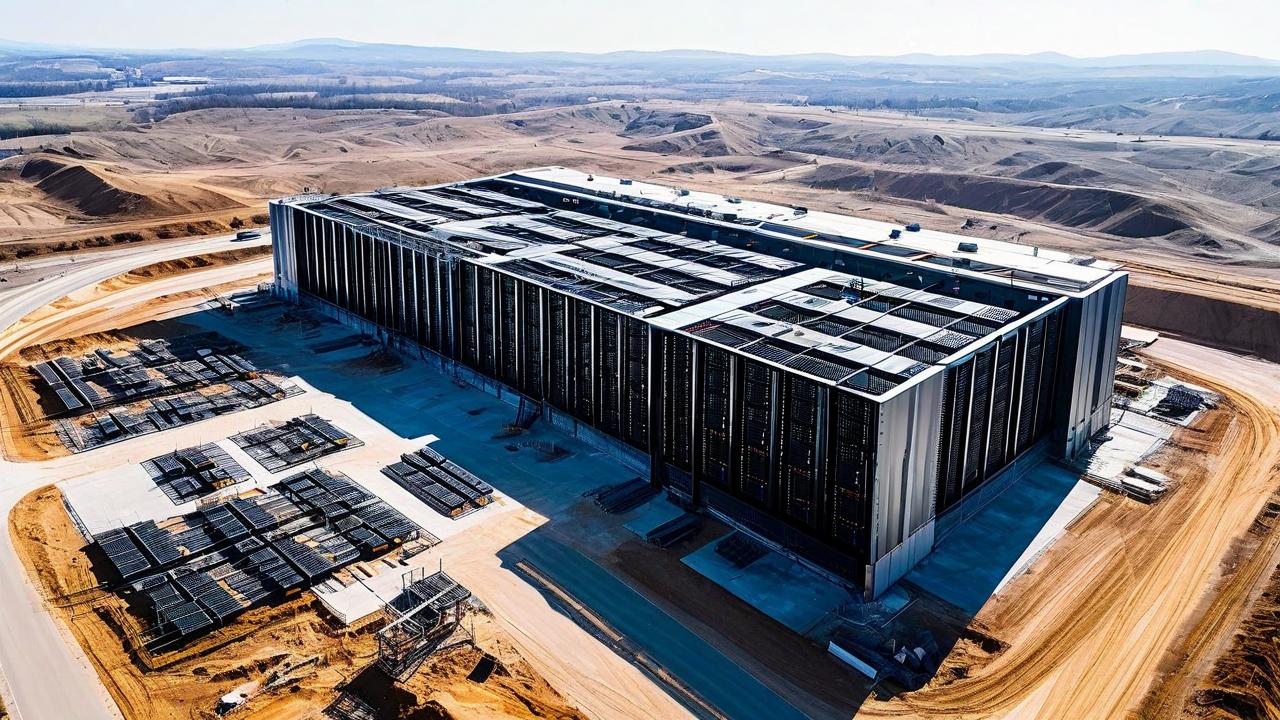
DA Davidson analyst Gil Luria warns that Oracle faces significant constraints in compute capacity and capital. He identified data center construction, including delays at a New Mexico facility, as a primary bottleneck. Additionally, substantial debt from the Cerner acquisition limits financial flexibility, making debt paydown essential.
Despite these supply-side risks, Luria emphasized that demand remains robust. He suggested Oracle could sell any available compute capacity and might achieve better pricing by selling on the open market rather than locking in long-term contracts. Competitors like Space Exploration Technologies Corp. (NASDAQ: SPCX) and Meta Platforms Inc. (NASDAQ: META) are securing large deals, which could result in positive surprises for Oracle.
Earnings Estimates And Guidance
Analysts expect Oracle to post first-quarter revenue of $19.14 billion, up from $14.93 billion a year earlier. This forecast is just below the record quarterly revenue of $19.18 billion reported in the fourth quarter. Wall Street expects first-quarter earnings per share of $1.74, compared with $1.47 in the year-ago quarter.
Oracle has guided EPS for Q1FY27 at $1.72 to $1.76 against a consensus estimate of $1.61. Revenue guidance stands at $18.96 billion to $19.25 billion versus estimates of $19.13 billion. The company affirmed its full-year fiscal 2027 revenue outlook of $90 billion and non-GAAP EPS of $8.05.
What the Numbers Show
The divergence between analyst caution and options market optimism highlights a split in risk assessment. While DA Davidson cites physical buildout challenges and leverage as headwinds, the options market’s preference for calls suggests traders believe demand strength and potential open-market pricing power will outweigh these constraints. The upcoming Consumer Price Index report adds another volatility catalyst, factored into the 11% implied move.
Share Performance
Oracle shares were down 3.46% at $156.04 at the time of publication on Thursday. Benzinga Edge rankings place Oracle in the 92nd percentile for Growth, though price trends point to short-term weakness.





 19
19













 Create Custom Screeners
  Access 200+ Pre-built Filters
  Use 50+ Readymade Screener





