

Oracle faces risk from $300B OpenAI deal and high debt load


- S&P Global cut Oracle’s rating to BBB-, citing heavy debt and reliance on OpenAI for half of its $638 billion contracted revenue
- OpenAI agreed to buy $300 billion of Oracle compute capacity starting in 2027, averaging $60 billion annually against $40 billion current revenue
- Oracle plans to raise $20 billion via equity offering this year to fund $90 billion-$95 billion capex expected in fiscal 2027
- Kalshi traders price a 48% chance of an OpenAI IPO announcement by March 31, 2027, aligning with the start of Oracle payments

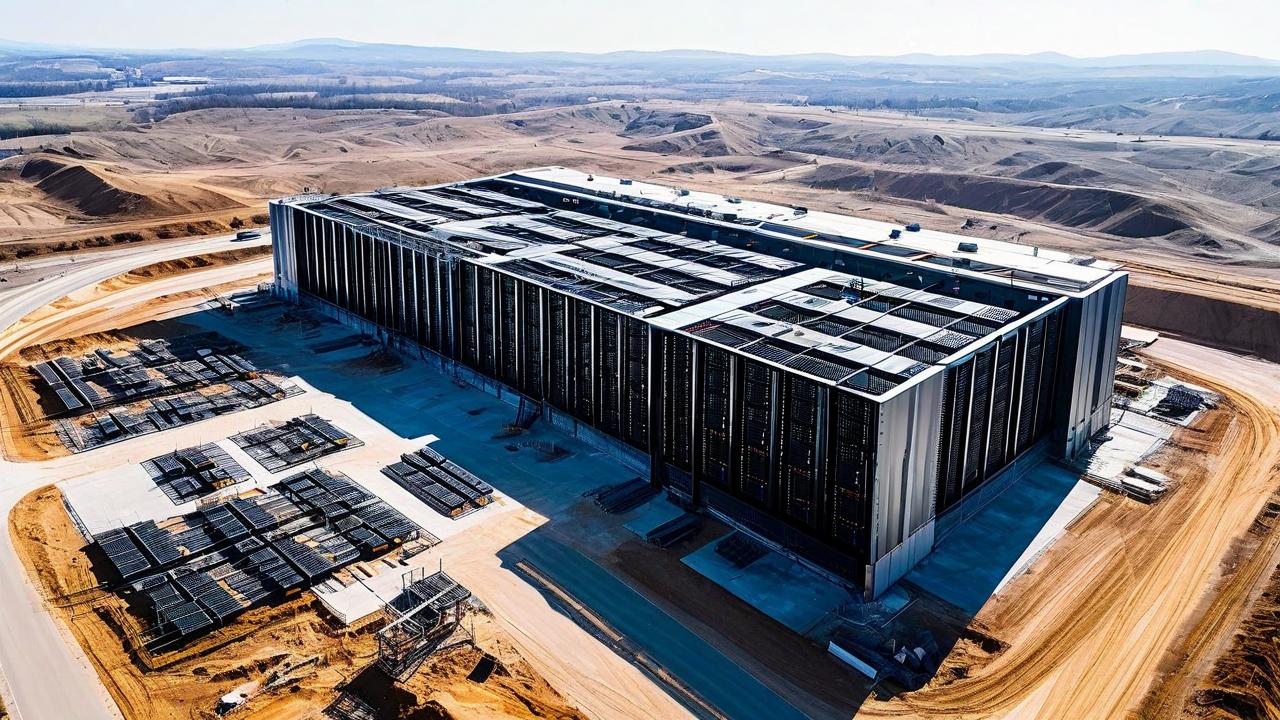

*this image is generated using AI for illustrative purposes only.
Oracle (NYSE: ORCL) could become a weak link in the artificial intelligence boom if OpenAI encounters financial difficulties, according to Council on Foreign Relations senior fellow Sebastian Mallaby. The warning highlights Oracle’s reliance on borrowing to fund data-center expansion and its significant exposure to OpenAI’s future performance.
Mallaby noted that competitors such as Alphabet, Amazon, Microsoft and Meta entered the AI expansion with stronger balance sheets. Oracle, by contrast, has depended heavily on debt financing. S&P Global cut Oracle’s credit rating to BBB- on July 9, leaving it one notch above junk status.
Exposure to OpenAI
S&P Global estimated that roughly half of Oracle’s $638 billion in contracted future revenue is tied to OpenAI. The ratings agency expects Oracle to spend $90 billion to $95 billion on capital expenditure in fiscal 2027. To help fund this expansion, Oracle plans to raise another $20 billion through an equity offering this year.
Despite these costs, strong demand supports the strategy. Customers are prepaying or supplying hardware for $75 billion of Oracle’s largest AI contracts. Additionally, Oracle’s cloud infrastructure revenue grew 77% in fiscal 2026.
The $300 Billion Commitment
OpenAI has agreed to purchase roughly $300 billion of Oracle computing capacity over five years starting in 2027. This commitment averages about $60 billion per year, which exceeds OpenAI’s current reported annualized revenue of around $40 billion.
Mallaby emphasized that the $40 billion figure represents revenue, not cash available to fund commitments. Consequently, OpenAI will need to continue growing rapidly and raising outside capital to support obligations of this scale.
What the Numbers Show
The disparity between OpenAI’s $60 billion annual commitment to Oracle and its $40 billion annualized revenue indicates a structural funding gap. This divergence suggests that OpenAI cannot rely solely on current operational cash flows to meet its compute contracts, necessitating continuous external capital infusion or significant revenue acceleration before the 2027 start date.
Market Sentiment on IPO
An initial public offering could provide OpenAI with additional capital as its Oracle commitments begin ramping in 2027. Kalshi traders currently price an 85% chance that OpenAI does not announce an IPO by December 31. However, they assign a 48% probability to an announcement by March 31, 2027.
This pricing points to early 2027 as the more plausible window for OpenAI to access public markets just as its financial obligations to Oracle increase.
OpenAI CEO Sam Altman remains confident in the company’s ability to use the capacity profitably. He described parts of the wider compute buildout by other firms as “unsustainable silliness,” noting that some neoclouds promise huge capacity without sufficient revenue or committed customers. Altman acknowledged that a broader economic downturn could affect OpenAI’s ability to pay for the compute it has committed to.

How might Oracle's reliance on debt financing impact its ability to weather a potential economic downturn if OpenAI's revenue growth slows?
What are the implications for Oracle's credit rating and borrowing costs if OpenAI delays its IPO beyond early 2027?
Could the disparity between OpenAI's $60 billion annual commitment and its $40 billion revenue force renegotiations of the contract terms before 2027?
 15
15













 Create Custom Screeners
  Access 200+ Pre-built Filters
  Use 50+ Readymade Screener





