

Nvidia's $3.5 billion MediaTek investment sparks circular financing debate


- Nvidia invests $3.5 billion in MediaTek convertible bonds to deepen AI partnership
- Deal covers AI infrastructure, local computing, and automotive verticals using NVLink Fusion
- Critics raise concerns about circular financing risks within Nvidia's ecosystem
- Investors argue strategy builds long-term competitive moat rather than artificial demand
- Investment provides Nvidia with creditor protection and potential equity upside

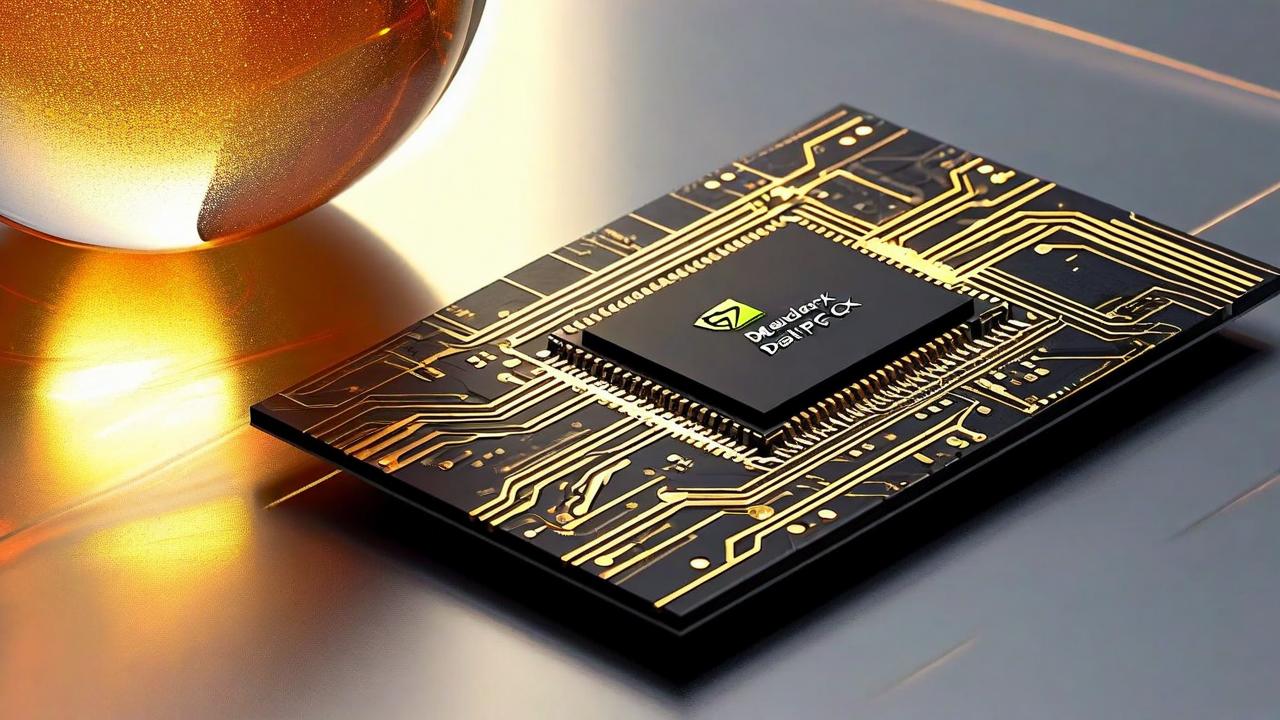

*this image is generated using AI for illustrative purposes only.
Nvidia (NASDAQ: NVDA) has invested $3.5 billion in convertible bonds issued by MediaTek (TWSE: 2454), a move that has reignited Wall Street concerns about "circular financing" within the AI sector. The partnership aims to build next-generation AI computing platforms spanning cloud infrastructure, local AI computing, and automotive applications.
The investment underscores Nvidia’s commitment to expanding its ecosystem beyond proprietary silicon. By adopting the Nvidia NVLink Fusion platform, MediaTek will enable hyperscalers and cloud service providers to develop custom XPUs that integrate seamlessly into Nvidia’s rack-scale AI factories.
Collaboration Areas
The companies are aligning their technologies across three primary verticals:
- AI infrastructure: MediaTek will use the NVLink Fusion ecosystem to help customers build custom AI accelerators compatible with Nvidia’s rack-scale systems.
- Local AI computing: The firms will continue developing Nvidia RTX Spark and DGX Spark PC chips, combining Nvidia GPUs with MediaTek system-on-chip (SoC) designs for consumer PCs and enterprise workstations.
- Automotive: They are advancing software-defined vehicle platforms, integrating MediaTek’s Dimensity Auto with Nvidia’s DRIVE AGX and RTX graphics technologies.
Technical Integration
MediaTek’s adoption of the NVLink Fusion platform provides a prevalidated foundation for multi-die XPU development. This includes:
- NVLink Fusion chiplet: Connects custom XPUs to Nvidia’s scale-up fabric via photonics or electrical interconnects.
- NVLink-C2C: Offers high-bandwidth connectivity between XPUs and Nvidia Rosa CPUs.
- NVHBM: Integrates customized memory to boost bandwidth and energy efficiency.
This approach allows customers to focus on differentiated compute logic while relying on Nvidia and MediaTek for connectivity, packaging, and rack-scale engineering.
Market Reaction and Strategy
The deal comes days after Nvidia faced renewed scrutiny over financing initiatives, including backing AI infrastructure projects. Critics argue these arrangements risk creating a feedback loop where Nvidia finances companies that ultimately become buyers of its own technology.
However, some investors argue critics are overlooking a key distinction: building an ecosystem is not the same as manufacturing demand. Joe Tigay, portfolio manager of the Rational Equity Armor Fund (HDCTX), stated that Nvidia is using current cash flow to strengthen the ecosystem that could drive future growth.
Tigay noted that Nvidia is lending MediaTek its balance sheet, allowing the partner to build compatible chips while Nvidia secures creditor protection and potential equity upside without acquiring the entire company. He argued this makes the investment less circular than financing a direct customer.
What the Numbers Show
The $3.5 billion convertible bond investment represents a significant financial commitment from Nvidia to secure supply chain stability and technological alignment with MediaTek. Unlike typical R&D partnerships, this capital injection ties MediaTek’s financial health directly to Nvidia’s ecosystem expansion. This structure suggests a long-term dependency on MediaTek’s SoC design capabilities for edge and automotive AI deployments, leveraging Nvidia’s balance sheet to accelerate partner growth while maintaining strategic control over the technology stack.

How might the success of the NVLink Fusion platform influence other semiconductor rivals like AMD or Intel to adopt similar open-ecosystem strategies for custom XPUs?
What are the potential risks to Nvidia's balance sheet if MediaTek fails to achieve significant market adoption of these hybrid AI chips within the next 24 months?
Could this convertible bond structure set a precedent for Nvidia financing other key supply chain partners, potentially altering the competitive dynamics of the AI chip market?
 15













 Create Custom Screeners
 Access 200+ Pre-built Filters
 Use 50+ Readymade Screener





