

NVIDIA adds PhysicsNeMo, CUDA-X to Agent Toolkit for autonomous engineering


NVIDIA Corp. added PhysicsNeMo and CUDA-X libraries to its Agent Toolkit to support autonomous engineering workflows. Major partners are integrating these tools for chip design and verification. The stock rose 1% as investors anticipate strong Q4FY26 earnings.


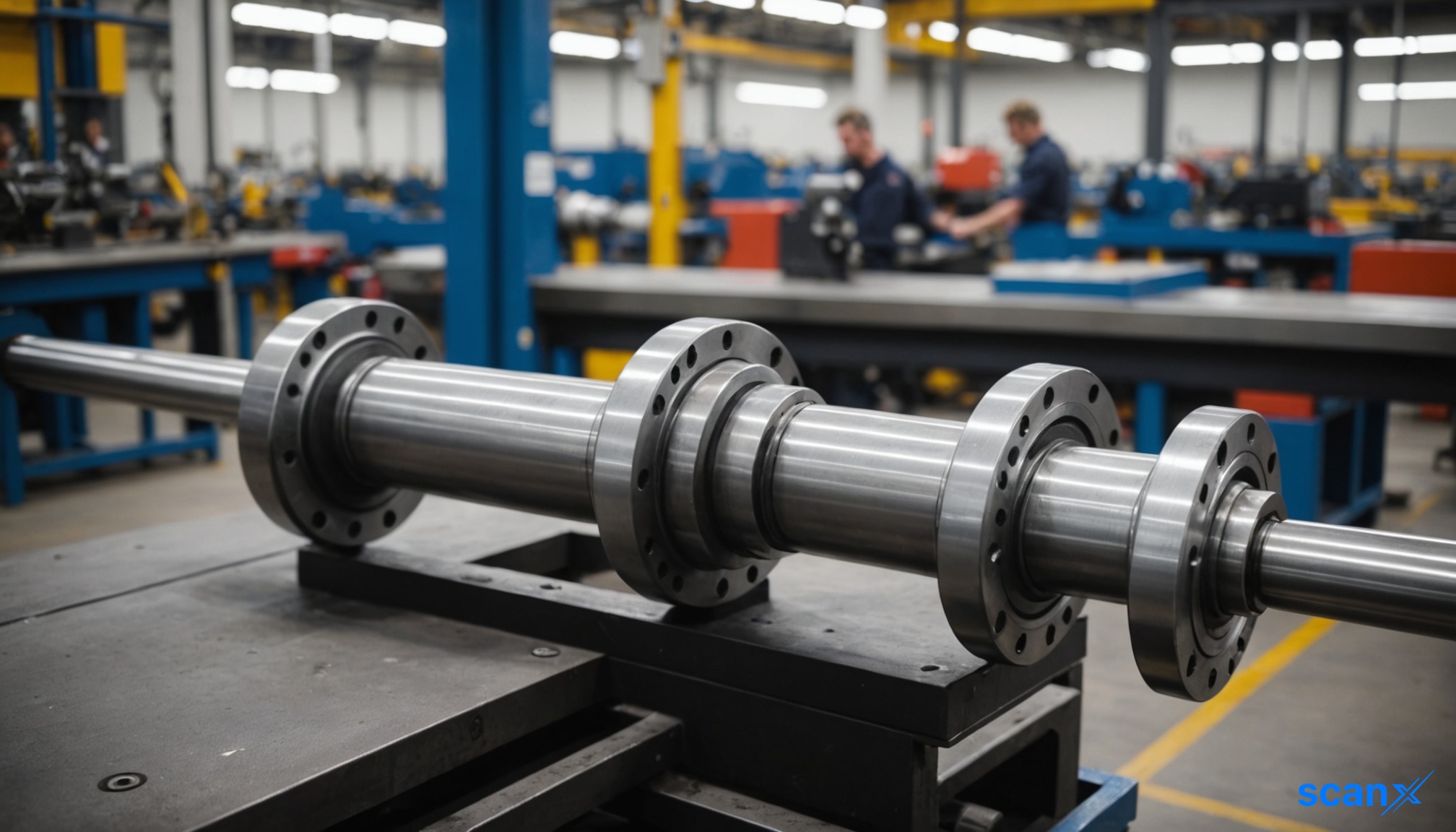
*this image is generated using AI for illustrative purposes only.
NVIDIA Corp. expanded its NVIDIA Agent Toolkit on July 26, 2026, by integrating re-architected NVIDIA PhysicsNeMo libraries and updated NVIDIA CUDA-X libraries. This update enables software developers to build autonomous AI engineers equipped with AI physics skills, accelerated solvers, and quantum chemistry capabilities. The move targets the complex design cycles of chip manufacturing, verification, packaging, and systems engineering. Simultaneously, NVIDIA stock rose about 1% in Tuesday's premarket session as investors returned to large-cap technology stocks, with Nasdaq futures climbing 1.30%.
Product Expansion and Integration
The expansion introduces agent-ready tools designed to transform how products are designed and developed. PhysicsNeMo provides AI physics skills for training and deploying models, while CUDA-X libraries bring accelerated solvers and quantum chemistry capabilities into agentic engineering workflows. Key additions include:
- AI physics skills: PhysicsNeMo libraries help agents train customizable AI physics models for complex design tasks.
- Iterative sparse solvers: The new NVIDIA cuISS (CUDA Iterative Sparse Solvers) library accelerates large sparse linear systems in physics-based simulations.
- Direct sparse solvers: NVIDIA cuDSS (CUDA Direct Sparse Solvers) accelerates complex sparse linear systems central to electronic design automation.
- Quantum chemistry: NVIDIA cuEST (CUDA Electronic Structure Theory) brings high-accuracy quantum chemistry simulations to device-relevant scales.
NVIDIA also highlighted that its Nemotron 3 Ultra open model leads among open models in agentic register-transfer level (RTL) coding, utilizing the ACE-RTL agent from NVIDIA Research.
Industry Adoption
Leading industrial engineering firms are already integrating these technologies. Cadence is using NVIDIA Nemotron and CUDA-X libraries with its AuraStack AI Super Agent to drive advanced packaging and printed circuit board design, delivering up to 20x faster multiphysics performance. Synopsys is leveraging the toolkit with its AgentEngineer to build secure agentic workflows, while Siemens uses NVIDIA NeMo Gym and CUDA-X libraries with its Fuse EDA AI Agent to orchestrate multi-tool workflows. Samsung is applying NVIDIA PhysicsNeMo for chip-scale thermal-stress analysis and using NVIDIA cuLitho for computational lithography.
Technical Indicators and Forecasts
NVIDIA remains in a long-term uptrend, trading 6.8% above its 200-day simple moving average of $192.48. However, shares sit 2.1% below the 50-day SMA of $209.82, signaling potential near-term consolidation. The relative strength index stands at 48.81. Wall Street anticipates earnings of $2.07 per share on revenue of $91.70 billion when results are reported on Aug. 26, 2026.
| Metric | Value |
|---|---|
| 200-day SMA | $192.48 |
| 50-day SMA | $209.82 |
| Support Level | $199.50 |
| Resistance Level | $214 |
| Projected EPS | $2.07 |
| Projected Revenue | $91.70 billion |
What the Numbers Show
The integration of specialized physics and chemistry libraries into the Agent Toolkit signals a shift from general-purpose AI assistance to domain-specific autonomous engineering. By partnering with EDA leaders like Cadence and Synopsys, NVIDIA is embedding its accelerated computing directly into the foundational workflows of semiconductor design, potentially reducing design cycles significantly while maintaining high fidelity.

How might the integration of AI-driven physics simulations by partners like Cadence and Synopsys impact the competitive landscape for traditional EDA software providers?
Could the reduction in chip design cycle times lead to a significant increase in semiconductor supply chain throughput, or will bottlenecks shift to manufacturing capacity?
What are the potential cybersecurity risks associated with autonomous AI agents handling sensitive intellectual property in chip verification and packaging workflows?
 17
17






 Access Market Heat-map & Insights
  Create, Save & Share your Screener
  Use 200+ Screening Filters





