

NUBURU to design blue-laser power for SunCubes underwater platform


NUBURU, via Lyocon, will design blue-laser technology for SunCubes' DEEP LIGHT platform to enable underwater wireless power transfer. Supported by the Italian Navy, the project targets the autonomous underwater vehicle and underwater communication markets, projected to reach billions by 2030. The partnership is subject to regulatory approvals and definitive agreements.

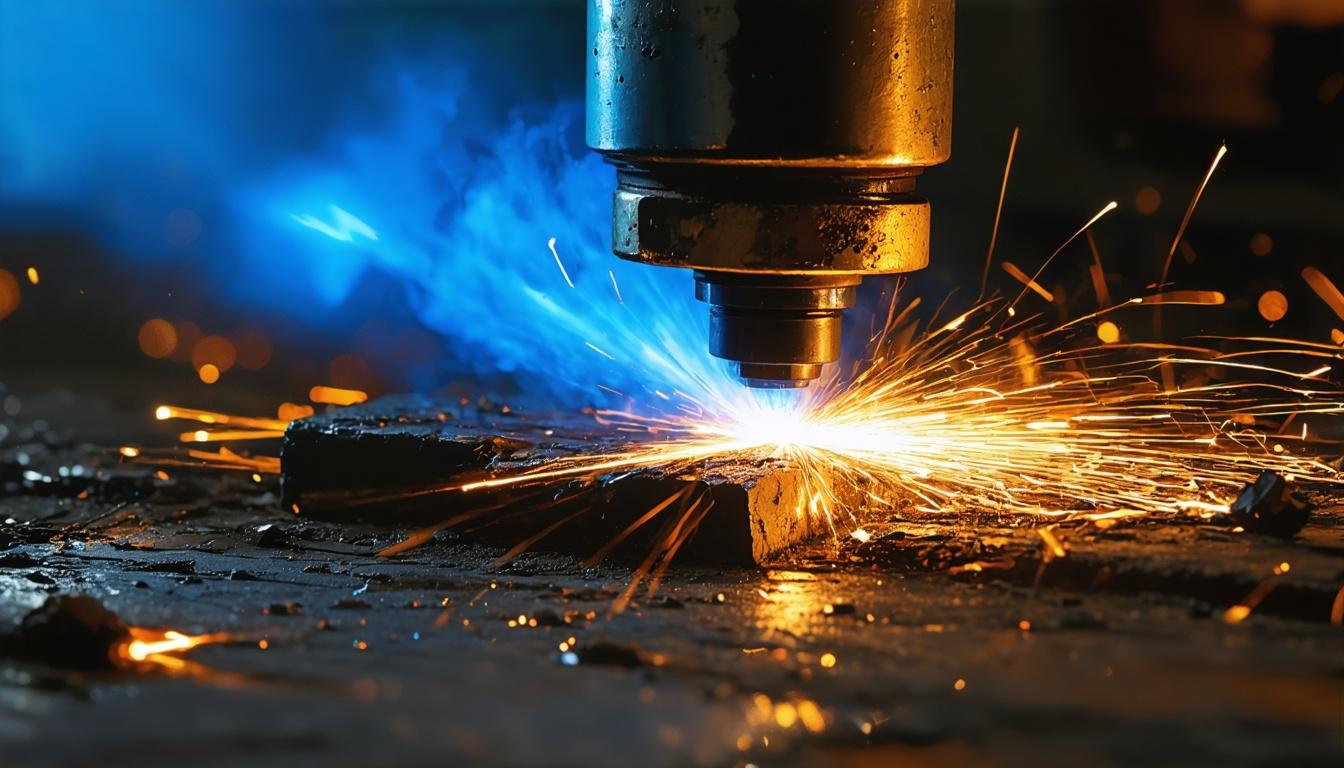

*this image is generated using AI for illustrative purposes only.
NUBURU, through its Italian subsidiary Lyocon, will design blue-laser power-beam solutions for SunCubes' DEEP LIGHT underwater wireless power platform. The collaboration aims to integrate NUBURU's blue-laser technology into submarine environments, enabling contactless recharging and extended operations for autonomous underwater systems. This initiative targets a multi-billion-dollar addressable market across underwater autonomy, subsea power and maritime infrastructure.
SunCubes' DEEP LIGHT project has been recognized and supported by the Italian Navy through the Polo Nazionale della Dimensione Subacquea as a strategic initiative for national underwater technological capabilities. The platform is designed around an underwater energy distribution architecture using a high-power laser transmitter and a receiver integrated into autonomous underwater vehicles. It operates in the blue-green optical window, optimized for marine propagation, to enable contactless energy transfer over distances of several tens of meters.
Under the Head of Terms signed between NUBURU and SunCubes, Lyocon is expected to serve as the laser-source supplier and photonics integration platform. Its role includes blue-laser source design, supply, optical integration and system validation support. The partnership aims to develop next-generation high-performance subsea systems by combining NUBURU's blue-laser capabilities with SunCubes' beam-control and optical power platform.
The strategic value of the project lies in validating NUBURU's blue-laser technology in the demanding underwater domain, which requires high source quality, beam stability and thermal reliability. Independent estimates suggest significant market growth, with the autonomous underwater vehicle market projected to rise from $3.13 billion in 2025 to $4.64 billion by 2030. The underwater wireless communication market is estimated to grow from $2.3 billion in 2024 to $4.3 billion by 2030.
SunCubes' investor ecosystem includes venture capital special purpose vehicles affiliated with CDP Venture Capital SGR S.p.A., an asset manager owned by CDP Equity S.p.A. and Invitalia S.p.A. CDP is Italy's National Promotional Institution, majority-owned by the Italian Ministry of Economy and Finance. NUBURU believes this ecosystem aligns SunCubes with Italy's national innovation priorities in robotics, infrastructure and dual-use technologies.
Market Projections
| Market Segment | 2024/2025 Value | 2030 Value | Source |
|---|---|---|---|
| Autonomous Underwater Vehicle | $3.13 billion | $4.64 billion | MarketsandMarkets |
| Underwater Wireless Communication | $2.3 billion | $4.3 billion | MarkNtel Advisors |
Dario Barisoni, Co-CEO of NUBURU and CEO of Nuburu Defense, stated that the agreement provides a pathway to apply blue-laser technology to underwater domains where optical power and critical infrastructure protection are converging. Paola Zanzola, Executive Director of Lyocon, emphasized that the underwater solution requires blue-laser technology integrated into a demanding optical power architecture, which aligns with Lyocon's capabilities.
The Head of Terms remains subject to definitive documentation, Golden Power clearance, export-control clearance and other customary conditions. The parties intend to continue working toward long-form agreements governing the investment, industrial cooperation and commercialization framework.

What are the specific timelines for completing the definitive documentation and obtaining the necessary Golden Power and export-control clearances?
How will the partnership structure the commercialization framework to capture a share of the projected growth in the autonomous underwater vehicle market?
What are the primary technical risks associated with maintaining beam stability and thermal reliability in deep-sea environments?
 20
20



 Access Market Heat-map & Insights
  Create, Save & Share your Screener
  Use 200+ Screening Filters





