

SpaceX targets Thursday launch as prediction markets raise odds


SpaceX is targeting Thursday for Starship's 13th flight test after an earlier abort, pushing prediction market odds to 55%. The FAA has cleared the company to proceed following a mishap investigation into the previous flight's booster crash. Shares closed lower at $123.99 but rose overnight, as the company focuses on proving rapid reusability to support long-term revenue projections.


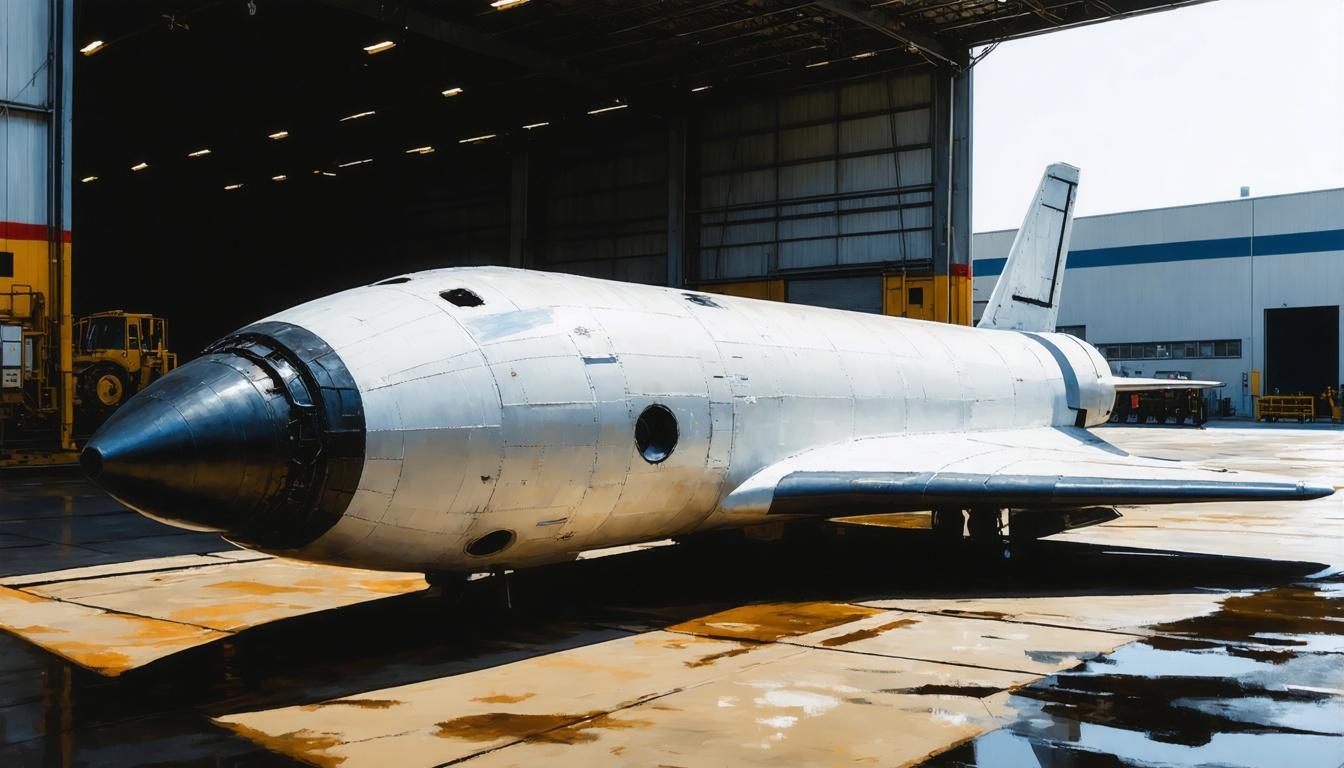
*this image is generated using AI for illustrative purposes only.
Space Exploration Technologies Corp. is targeting Thursday for the thirteenth flight test of its Starship rocket, following an abort seconds before liftoff earlier in the week. The announcement has driven prediction market odds for a successful launch this week to 55%, up from 23% prior to the update. Polymarket bettors have wagered over $440,000 on the outcome, with an 89% probability assigned to a launch by the end of the month. The rules specify that any anomaly or explosion after launch does not affect the outcome.
The upcoming flight aims to complete objectives similar to those of the twelfth test in May. During that mission, the upper stage successfully released 20 test satellites and splashed down safely, but the Super Heavy booster experienced engine failures during its return. The booster crashed hard instead of performing a controlled descent, leading the Federal Aviation Administration to classify the event as a mishap. The FAA has since accepted SpaceX’s corrective actions and cleared the company to proceed with the test flight campaign.
Starship is central to Elon Musk’s plan to expand spaceflight capacity and eventually send humans to Mars. The company has spent more than $15 billion developing the vehicle. The scrubbed mission earlier in the week aimed to deploy 20 next-generation Starlink V3 satellites, each weighing up to 2,000 kilograms and capable of moving 1 terabit per second. These satellites are too large for a Falcon 9 fairing, making Starship the only viable deployment vehicle.
SpaceX shares were up 1.08% in overnight trading after closing 5.43% lower at $123.99 during Friday’s regular session. The stock is trading below its $135 IPO price and sits 18.4% below its 20-day simple moving average of $151.60, signaling short-term bearish momentum. Key resistance is situated at $135.82 near the 20-day exponential moving average, while immediate support is found at $126.30.
Key Technical Indicators
| Indicator | Value |
|---|---|
| Current Price | $123.99 |
| 52-Week Low | $123.99 (New) |
| Prior 52-Week Low | $130.74 |
| 20-Day SMA | $151.60 |
| 50-Day SMA | $87.01 |
| 200-Day SMA | $39.28 |
| June Peak | $225.64 |
The failed launch highlights the technical challenges SpaceX faces in proving rapid reusability, a capability analysts view as essential for the company’s long-term economic model. JPMorgan analyst Seth Seifman has emphasized that the economic driver is not just launch success but the ability to fly the same vehicle repeatedly and quickly. This "airline-like" operations model is necessary to lower launch costs and support projects like orbital data centers. ARK Invest has estimated the orbital data center market could reach $28.5 trillion, while Morgan Stanley has projected $3.3 trillion in revenue for SpaceX by 2040.

Will a successful launch this week be sufficient to reverse the current bearish momentum and push the stock back above its IPO price?
How will the FAA classify the outcome of this flight if the booster again fails a controlled descent, and could that trigger another investigation delay?
What are the specific technical milestones required during this test to prove the rapid reusability necessary for the airline-like operations model?
 15
15









 Access 50+ Readymade Screeners
  Use 200+ Custom Filters
  Get Full Market Insights





