

Merritronix FY26 Results: Net profit nearly doubles, revenue up 37%


- Net profit nearly doubled to ₹154.85 crore in FY26, up from ₹84.33 crore in FY25
- Revenue from operations grew 37% YoY to ₹1,558.96 crore
- EBITDA margin expanded to 17.69% from 13.46%, reflecting operating leverage
- Order book stood at ₹96.06 crore as of June 30, 2026
- Company listed on BSE SME Platform post-FY26 close

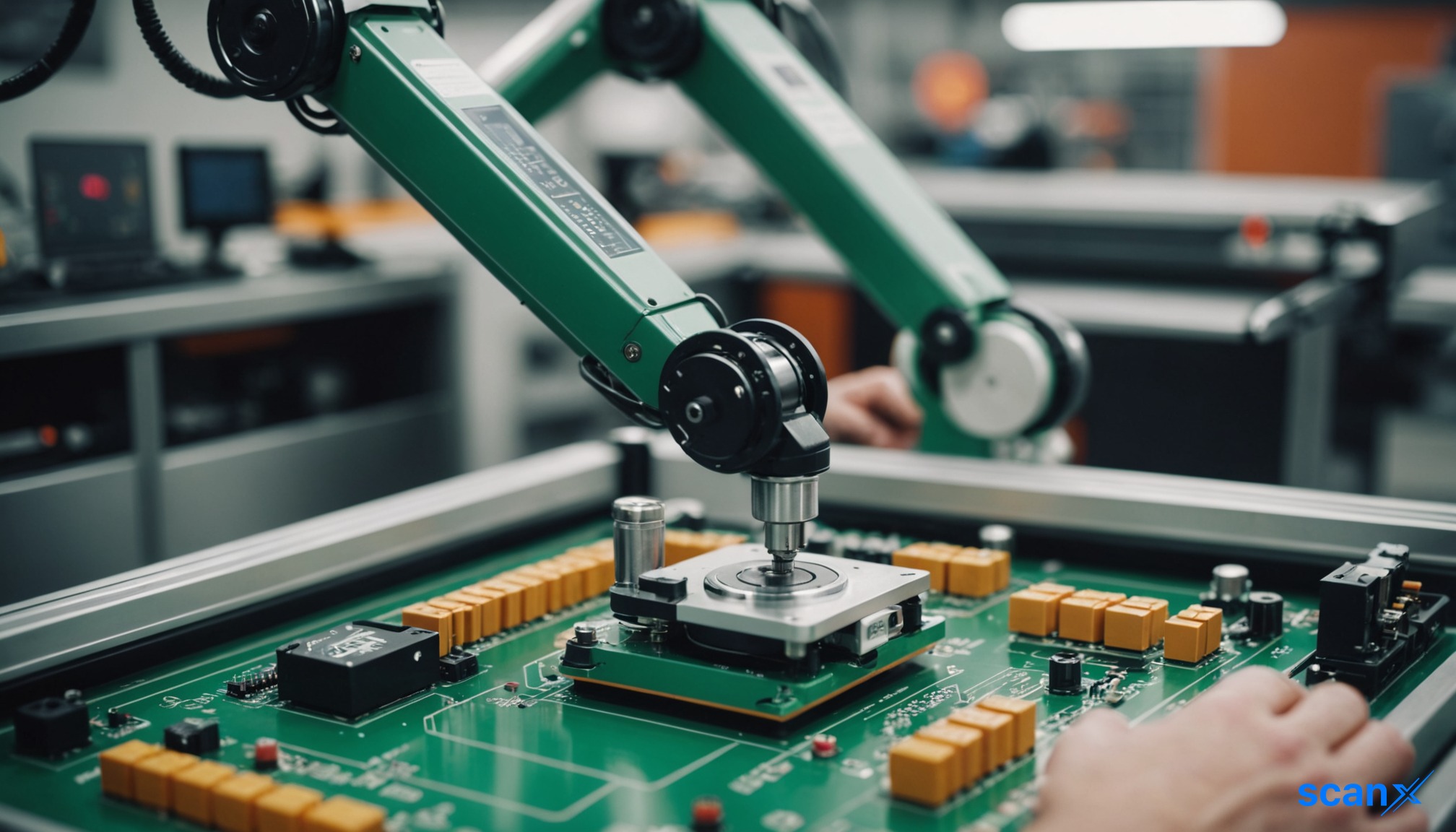

*this image is generated using AI for illustrative purposes only.
Merritronix Limited reported a near doubling of its net profit for FY26, driven by robust demand in the defence and aerospace sectors. The electronics manufacturing services (EMS) provider posted a profit after tax (PAT) of ₹154.85 crore for the year ended March 31, 2026, up from ₹84.33 crore in the previous year.
Revenue from operations grew 37% year-on-year to ₹1,558.96 crore, reflecting higher volumes and an improving business mix. The company’s EBITDA margin expanded to 17.69% from 13.46% in FY25, underscoring improved operating leverage.
Financial Performance
The Hyderabad-based firm demonstrated strong top-line growth alongside significant bottom-line expansion. Total income reached ₹1,560.80 crore, while total expenses stood at ₹1,330.60 crore. The profit before tax (PBT) increased to ₹223.30 crore from ₹126.55 crore in FY25.
| Metric | FY26 | FY25 | Change |
|---|---|---|---|
| Revenue from Operations | ₹1,558.96 crore | ₹1,135.64 crore | +37.0% |
| EBITDA | ₹275.73 crore | ₹152.91 crore | +80.3% |
| EBITDA Margin | 17.69% | 13.46% | +423 bps |
| Profit After Tax | ₹154.85 crore | ₹84.33 crore | +83.7% |
What the Numbers Show
The divergence between revenue growth (37%) and expense growth highlights the scalability of Merritronix’s model. While revenue surged, total expenses grew at a slower pace, allowing EBITDA to grow over 80%. This operational efficiency was further supported by a shift towards higher-value turnkey manufacturing solutions, which now form the bulk of its revenue stream compared to lower-margin job work.
Balance Sheet and Capital Structure
Merritronix strengthened its balance sheet during FY26 through a bonus issue and preferential allotments of equity shares. The company’s net worth increased significantly to ₹525.85 crore. Consequently, the debt-equity ratio improved to 0.82 times from 1.10 times in the previous year.
Short-term borrowings rose to ₹379.02 crore, primarily to fund working capital requirements including inventory and receivables, which expanded alongside sales. Cash and cash equivalents stood at ₹256.96 crore as of March 31, 2026.
Operational Highlights
Aerospace and defence continue to be the core revenue drivers, accounting for 97.81% of total revenue. The company maintained a repeat customer rate of 86.08%, indicating strong client retention among premier public sector undertakings like Bharat Electronics Limited (BEL) and Hindustan Aeronautics Limited (HAL).
As of June 30, 2026, the order book stood at ₹96.06 crore, providing visibility into future revenues. The company also commissioned a new Panasonic NPM D3A SMT line in January 2026 to enhance capacity for high-complexity assemblies.
Strategic Developments
Subsequent to the financial year-end, Merritronix completed its initial public offering and listed on the BSE SME Platform. The listing aims to strengthen the capital base for future capacity expansion and R&D-led capability building. Additionally, the company entered into exclusive manufacturing partnerships with Stuaam Technologies and Analogic Design Technologies to deepen its presence in defence communications and analog electronics.
Historical Stock Returns for Merritronix
| 1 Day | 5 Days | 1 Month | 6 Months | 1 Year | 5 Years |
|---|---|---|---|---|---|
| -5.22% | +8.10% | +38.65% | +192.79% | +192.79% | +192.79% |

How will the recent IPO listing on the BSE SME Platform impact Merritronix's valuation and liquidity compared to its pre-listing private equity structure?
Given that 97.81% of revenue comes from defence and aerospace, what specific strategies is Merritronix pursuing to diversify its customer base and mitigate sector-specific cyclical risks?
Will the expansion of short-term borrowings to fund working capital for inventory and receivables pressure future cash flows, or is it sustainable given the improved debt-equity ratio?
 18
18









 Access Market Heat-map & Insights
  Create, Save & Share your Screener
  Use 200+ Screening Filters





