

Micron rebounds as Cathie Wood warns memory boom may not last


Micron Technology shares rose 0.84% to $945 in Thursday premarket trading, recovering from a previous 7.02% drop. While Cathie Wood warns that high memory prices are cyclical, Micron remains in a long-term uptrend, trading 67.6% above its 200-day SMA. Analysts project significant earnings growth for the Sept. 22 report, with a consensus Buy rating and an average price target of $1,537.50.



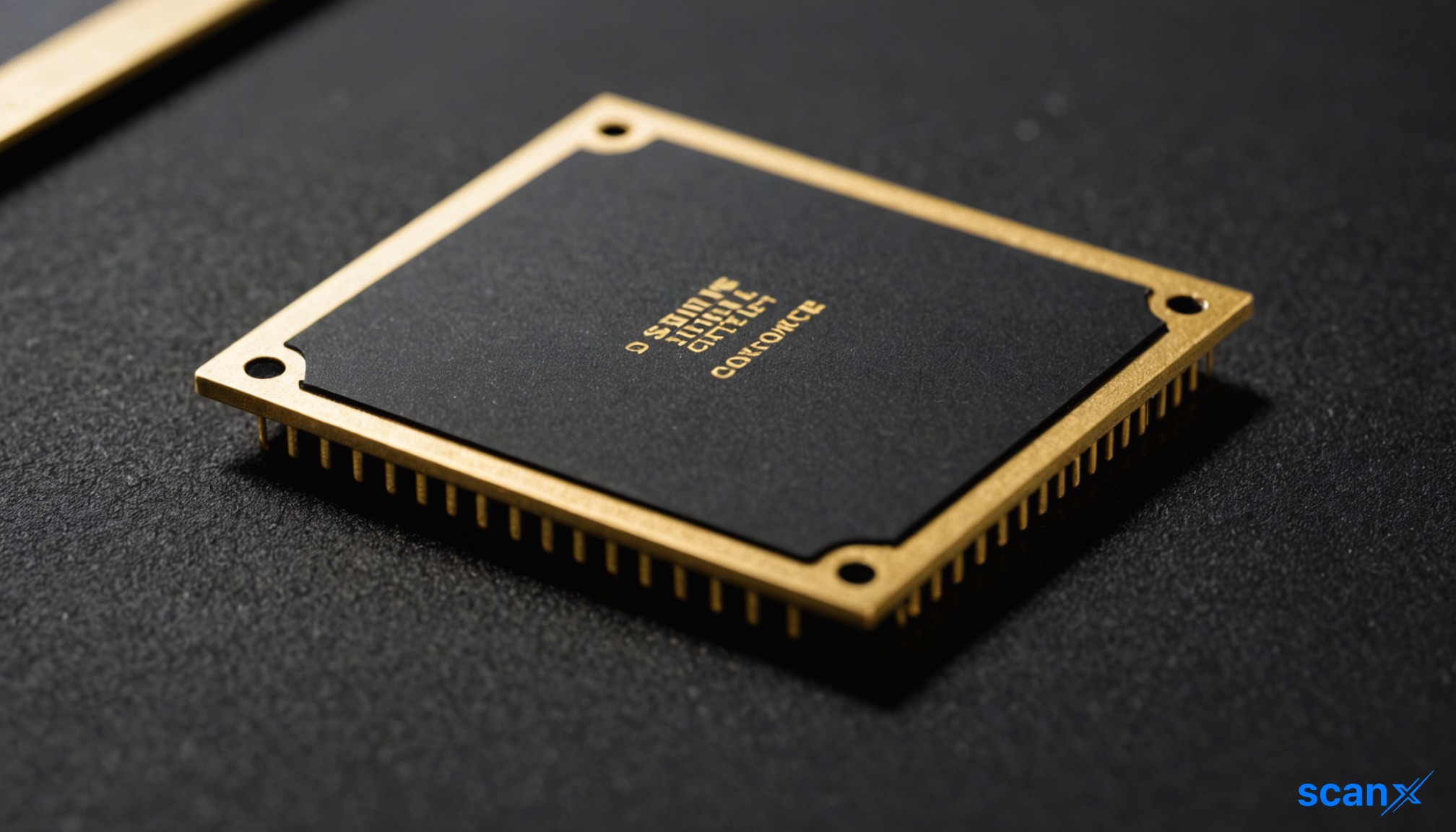
*this image is generated using AI for illustrative purposes only.
Micron Technology Inc. (NASDAQ: MU) shares rose 0.84% to $945 in Thursday premarket trading, marking a continuation of its partial recovery after falling 7.02% in the previous session. The movement occurred while Nasdaq futures gained 0.09% and S&P 500 futures slipped 0.03%.
Cathie Wood Warns Memory Boom May Not Last
The rebound follows comments from Ark Invest CEO Cathie Wood, who stated she is avoiding memory-dependent AI chip stocks. Wood views soaring memory prices as a warning sign rather than an investment opportunity, describing high-bandwidth memory as the "most cyclical" and "most commoditized" part of the semiconductor supply chain.
Wood favors AI chipmakers Cerebras Systems Inc. (NASDAQ: CBRS) and Groq, noting they do not require high-bandwidth memory. She argued that unusually high memory prices could encourage the semiconductor industry to engineer around the bottleneck. Although Wood did not name Micron, the company is one of the world's largest DRAM manufacturers.
Micron has positioned memory as a critical part of the AI buildout. In June, CEO Sanjay Mehrotra called memory a "strategic asset" in the AI era. The company has signed 16 long-term customer agreements representing about $100 billion in cumulative revenue through 2030.
Technical Analysis
With no clear company-specific catalyst on Thursday, Micron’s early gain appears driven by positioning around key technical levels. Buyers have continued to defend the stock after its recent pullback.
Micron remains in a strong long-term uptrend. The stock is trading 67.6% above its 200-day simple moving average of $563.69 and 18.7% above its 100-day SMA of $795.78. However, it remains about 1.9% below its 50-day SMA of $962.32, suggesting the stock is still consolidating after its strong run.
Micron's relative strength index stands at 51.90, signaling neutral momentum and indicating the stock is neither overbought nor oversold. Traders may watch $1,012 as resistance. On the downside, $891.50 could provide support near the 20-day moving average.
Earnings And Analyst Outlook
Micron's next earnings report is estimated for Sept. 22, 2026. Analysts expect earnings of $31.27 per share, up from $3.03 a year earlier. Revenue is expected to reach $50.81 billion, up from $11.31 billion.
Micron carries a Buy consensus rating with an average price forecast of $1,537.50. The stock trades at a price-to-earnings ratio of 21.2. Recent analyst actions include:
- Citigroup maintained a Buy rating on Aug. 7 but lowered its price forecast to $1,150.
- KeyBanc maintained an Overweight rating and raised its forecast to $1,750 on July 14.
- Cantor Fitzgerald maintained an Overweight rating and raised its forecast to $2,000 on June 29.
| Analyst Firm | Rating | Price Forecast | Date |
|---|---|---|---|
| Citigroup | Buy | $1,150 | Aug. 7 |
| KeyBanc | Overweight | $1,750 | July 14 |
| Cantor Fitzgerald | Overweight | $2,000 | June 29 |
Benzinga Edge Rankings
Micron's Benzinga Edge rankings show strong Momentum, Growth and Quality scores. The stock has a Momentum score of 99.62, Growth score of 92.89 and Quality score of 97.41. However, its Value score stands at 31.38, suggesting the stock does not screen as a bargain after its sharp rally.
ETF Exposure
Micron has an 8.91% weighting in the Invesco PHLX Semiconductor ETF (NASDAQ: SOXQ). It also accounts for 8.14% of the State Street SPDR NYSE Technology ETF (NYSE: XNTK) and 8.71% of the Invesco AI and Next Gen Software ETF (NYSE: IGPT). Large fund flows into or out of these ETFs could influence demand for Micron shares.

How might Cathie Wood's prediction that engineers will design around high-bandwidth memory bottlenecks impact Micron's long-term revenue projections and market share in the AI sector?
Given the significant divergence in analyst price targets ranging from $1,150 to $2,000, what specific operational or macroeconomic factors could cause Micron to miss the higher-end forecasts?
With Micron trading at a P/E of 21.2 and a low Value score, is the current valuation justified by its $100 billion in long-term customer agreements, or does it leave the stock vulnerable to a correction if memory prices normalize?
 18
18









 Access 50+ Readymade Screeners
  Use 200+ Custom Filters
  Get Full Market Insights





