

Malibu Boats revises Q4 adj EPS to $0.82 after accounting correction


- Malibu Boats corrected Q4FY26 adjusted EPS to $0.82 from $0.92 due to revised acquisition expenses
- Adjusted EBITDA was lowered to $31.4 million (10.6% margin) from $33.9 million (11.5% margin)
- Net sales surged 42.7% YoY to $295.5 million, driven by Saxdor acquisition contribution
- Full-year free cash flow increased 48.3% to $43.2 million despite GAAP profit decline



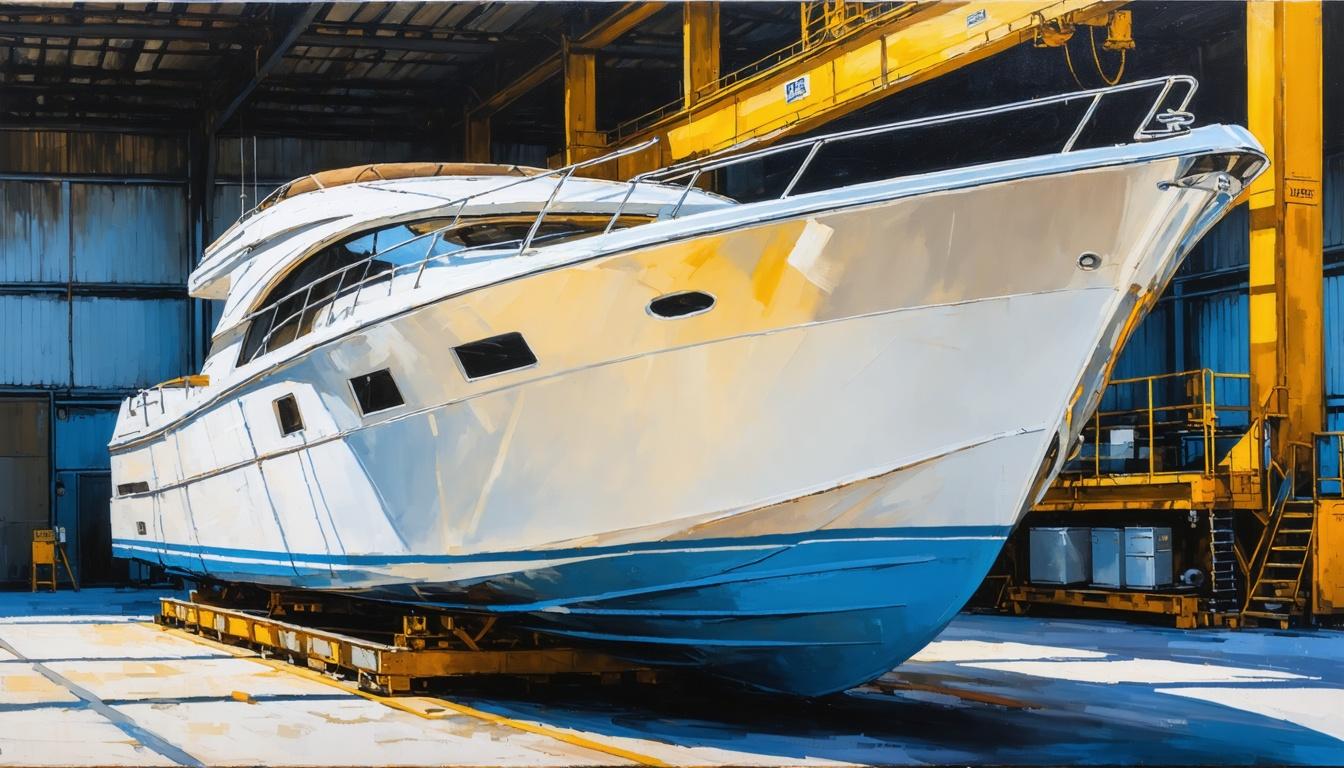
*this image is generated using AI for illustrative purposes only.
Malibu Boats, Inc. (NASDAQ: MBUU) corrected its fourth-quarter fiscal 2026 adjusted earnings per share to $0.82, down from the previously reported $0.92, following a restatement of acquisition-related expenses.
The company announced the correction on August 31, 2026, clarifying that non-GAAP measures for the quarter ended June 30, 2026, were impacted by an adjustment to acquisition and integration expenses. These expenses were revised downward to $4.145 million from $6.698 million. Consequently, adjusted EBITDA was reduced to $31.4 million (10.6% margin) from $33.9 million (11.5% margin), and adjusted net income fell to $15.988 million from $17.961 million. GAAP figures, including net sales and gross profit, remain unchanged.
Financial Performance Highlights
| Metric | Q4FY26 | Q4FY25 | Change | FY26 | FY25 | Change |
|---|---|---|---|---|---|---|
| Net Sales | $295.5 million | $207.0 million | +42.7% | $914.6 million | $807.6 million | +13.3% |
| Gross Profit | $52.2 million | $32.7 million | +59.4% | $146.5 million | $144.1 million | +1.7% |
| GAAP Net Income | $7.4 million | $4.8 million | +53.7% | $1.7 million | $15.2 million | -88.8% |
| Adjusted EBITDA | $31.4 million | $19.7 million | +59.7% | $73.9 million | $74.8 million | -1.1% |
Net sales for the quarter surged 42.7% year-over-year to $295.5 million, driven significantly by the inclusion of the Saxdor segment, which contributed $61.2 million in sales. On a legacy basis, net sales grew approximately 13.2%, supported by increased unit volumes in the Cobalt and Saltwater Fishing segments. Full-year net sales rose 13.3% to $914.6 million.
Gross profit expanded 59.4% to $52.2 million in Q4, lifting the gross margin to 17.7% from 15.8% in the prior-year quarter. This improvement stemmed from a favorable model mix carrying higher margins. Conversely, full-year gross profit rose only 1.7% to $146.5 million, with the annual gross margin contracting 180 basis points to 16.0%, primarily due to higher per-unit material and labor costs across the Malibu, Saltwater Fishing, and Cobalt segments.
Segment Dynamics and Operational Drivers
Revenue growth was largely fueled by the Saxdor segment, which contributed $61.2 million in Q4 sales (180 units) and $84.3 million for the full year (246 units). Legacy brand performance showed mixed results:
- Cobalt: Net sales rose 31.0% to $70.5 million in Q4, driven by an 18.9% increase in unit volumes and favorable model mix.
- Saltwater Fishing: Sales grew 11.1% to $80.9 million, supported by a 2.2% unit volume increase as dealer inventory levels firmed.
- Malibu: Sales increased modestly by 3.2% to $82.9 million despite a 2.5% decline in unit volumes, offset by price increases and mix shifts.
Operating expenses saw notable changes. General and administrative (G&A) expenses surged 68.8% to $31.8 million in Q4, primarily due to acquisition-related costs for Saxdor and higher incentive pay. Selling and marketing expenses grew 25.7% to $6.8 million but contracted as a percent of sales to 2.3%.
What the Numbers Show
A key divergence exists between the company's cash generation and its reported GAAP profitability. While full-year GAAP net income collapsed 88.8% to $1.7 million, free cash flow actually increased 48.3% to $43.2 million. This indicates that the decline in bottom-line earnings was driven largely by non-cash charges—specifically $10.8 million in amortization and $14.8 million in acquisition/integration expenses—rather than a deterioration in core operational cash flows. The business generated $67.5 million from operations, highlighting strong underlying liquidity despite the accounting headwinds from the Saxdor integration.
Balance Sheet and Capital Allocation
As of June 30, 2026, Malibu Boats held $74.4 million in cash against $165.0 million in long-term debt. The company recently completed a refinancing of its credit facility on July 10, extending maturity to July 2031. The new structure includes a $100.0 million term loan and a $250.0 million revolving credit facility, replacing the previous $350 million revolving facility and adding multi-currency capability to support Saxdor's European operations. Net leverage finished the year at approximately 1.2 times.
Management highlighted disciplined capital allocation, authorizing a new $70 million share repurchase program for FY27. During FY26, the company repurchased $33.9 million of Class A Common Stock. Inventory levels rose to $180.1 million from $142.2 million at the end of FY25.
Fiscal 2027 Guidance and Outlook
Looking ahead, Malibu Boats provided the following guidance for the full fiscal year ending June 30, 2027:
- Net Sales: $1.08 billion to $1.12 billion
- Adjusted EBITDA: $101 million to $109 million
CEO Steve Menneto noted that while early signs of industry stabilization are visible, macro disruptions continue to pressure payment buyers. The company expects to complete its first domestically-built Saxdor boats at its Fort Pierce, Florida facility in the first half of FY27. CFO David Black added that Saxdor’s segment adjusted EBITDA margin will improve throughout the year as domestic manufacturing scales, though first-half margins will be lower due to initial investments. The company anticipates low-to-mid-single-digit growth across legacy brands and mid-teens growth at Saxdor.

How will the transition of Saxdor production to the Fort Pierce facility impact gross margins in H1 FY27 compared to current import-based operations?
What specific risks do 'macro disruptions' pose to payment buyers, and could this lead to higher credit losses or reduced demand for Malibu's legacy brands?
Given the 180 basis point contraction in annual gross margin due to material and labor costs, what pricing power does management expect to maintain in FY27?
 20
20









 Access 50+ Readymade Screeners
  Use 200+ Custom Filters
  Get Full Market Insights





