

John Cockerill Q2 revenue up 82% to ₹149 crore; order book at ₹4,500 cr


- Standalone revenue surged 82% YoY to ₹149 crore in Q2 CY26
- Consolidated order book reached ₹4,500 crore, including ₹1,200 crore in new orders
- Management reaffirmed ₹8,000 crore top-line target by calendar year 2030
- One-time consolidation costs impacted profitability but are viewed as transitional
- Jet Vapor Deposition technology discussions are advanced for a potential Asian project


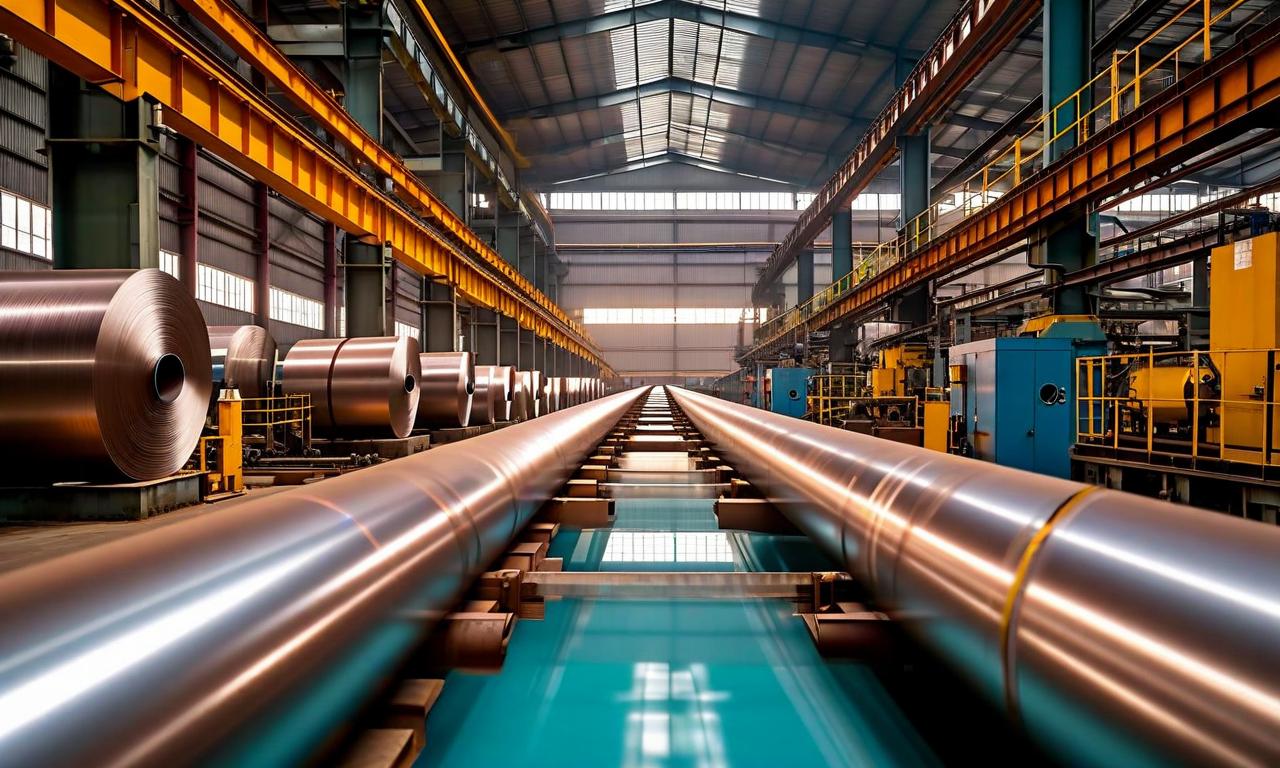
*this image is generated using AI for illustrative purposes only.
John Cockerill India Limited reported standalone revenue of ₹149 crore for Q2 CY26, an 82% year-on-year increase. Consolidated revenue rose 18% YoY to ₹299 crore. The company’s consolidated order book strengthened to ₹4,500 crore as of June 30, 2026.
The earnings call transcript, released on August 20, 2026, provided further context on the financial results for the quarter and half-year ended June 30, 2026. Management highlighted that the robust top-line growth was driven by increased project execution and the strategic consolidation of its global entities in China, Germany, and Belgium under the Indian holding company.
Financial Performance and Margins
Revenue declined sequentially from Q1 CY26. Management attributed this shift to project timing and mix rather than underlying business momentum. In Q1, several older projects neared completion, allowing for the recognition of savings and efficiencies that supported margins. Conversely, Q2 saw the initiation of new projects in their early execution stages, where upfront costs are incurred before progressive revenue recognition builds up.
Profitability was impacted by this project cycle alongside one-time costs related to the consolidation of Chinese, German, and Belgian entities. These integration expenses included transaction, legal, and compliance costs across multiple jurisdictions. Management indicated these are transitional factors aimed at building a more scalable organization. Employee costs may rise slightly due to capacity expansion needs, while other expenses are expected to remain stable or marginally lower.
| Metric | Q2 CY26 (Standalone) | Q2 CY26 (Consolidated) | YoY Change |
|---|---|---|---|
| Revenue | ₹149 crore | ₹299 crore | +82% (S), +18% (C) |
| Order Book | ₹2,200 crore | ₹4,500 crore | N/A |
| New Orders | N/A | ₹1,200 crore | N/A |
What the Numbers Show
A notable divergence exists between the standalone and consolidated revenue growth rates. While standalone revenue jumped 82%, consolidated revenue grew only 18%. This disparity highlights the significant contribution of the newly integrated international entities (China, Germany, Belgium) to the overall group turnover. The consolidation has effectively doubled the reporting base, with subsidiaries contributing approximately ₹150 crore to the consolidated total in Q2. This structural change suggests that future growth comparisons will need to account for this larger, more diversified base rather than relying solely on Indian operations.
Strategic Developments and Technology
The company is advancing its technology portfolio, particularly in Jet Vapor Deposition (JVD). Management described JVD as commercially viable, with advanced discussions underway to close a project in Asia this year. The technology offers customers higher processing speeds and precise zinc coating compared to traditional hot-dip galvanizing. Savings for customers can range from at least ₹1,000 per tonne to up to 20 times that figure, depending on product mix and the avoidance of batch annealing processes for advanced high-strength steels.
Another technology, Volteron, remains in the R&D phase with IP held by the Belgian parent, John Cockerill SA. Management is working on integrating the business case for Volteron but noted it is not yet ready for commercialization.
Geographically, John Cockerill India is strengthening its local presence. The Advanced Coating facility at Taloja became operational in June 2026, currently undergoing testing and trial orders. Additionally, a new office opened in Shanghai to support expansion in China, with plans to open a workshop for special machine assembly in Q3 CY26.
Outlook and Guidance
Management reaffirmed its long-term target of achieving ₹8,000 crore in top line by calendar year 2030. This goal will be driven by organic growth through technologies like JVD and Volteron, as well as external acquisitions. The company is currently investigating several acquisition opportunities to complement its organic strategy.
Regarding the previous guidance of approximately ₹2,000 crore for pro forma consolidated calendar year 2025 revenue, management acknowledged a gap between the guided figure and the actual reported numbers. They indicated that significant improvement in revenue generation is expected in the second half of the year as new projects ramp up execution. Top customers include Tata Steel, JSW, and ArcelorMittal, with the top five customers contributing around 80% of revenue.
Historical Stock Returns for John Cockerill
| 1 Day | 5 Days | 1 Month | 6 Months | 1 Year | 5 Years |
|---|---|---|---|---|---|
| -3.93% | -9.48% | -14.87% | +33.54% | +33.54% | +33.54% |

How will the integration costs from the China, Germany, and Belgium entities impact consolidated EBITDA margins in the near term, and when does management expect these one-time expenses to cease?
Given that JVD is commercially viable, what are the specific regulatory or technical hurdles preventing the immediate closure of the Asian project, and how might this delay affect the 2030 revenue target?
With top five customers contributing 80% of revenue, what strategies is John Cockerill India employing to diversify its client base and mitigate concentration risk amidst potential volatility in steel demand?
 15
15




 Access Market Heat-map & Insights
  Create, Save & Share your Screener
  Use 200+ Screening Filters





