
 NewsJindal Steel Limited Submits Business Responsibility and Sustainability Report for FY2025-26
Jindal Steel Limited Submits Business Responsibility and Sustainability Report for FY2025-26


Jindal Steel Limited filed its BRSR for FY2025-26, reporting a turnover of ₹54,023 crore and a net worth of ₹53,129.6 crore, with metal and metal products contributing 95% of turnover. The company disclosed Scope 1 GHG emissions of 35.63 metric tonnes of CO2 equivalent and Scope 2 emissions of 0.69 metric tonnes of CO2 equivalent, with emission intensity of 2.68 metric tonnes of CO2e per TCS. Total workforce stood at 7,986 employees and 2,521 workers, with all plants assessed for health and safety practices. CSR activities benefited millions of community members across health, education, livelihood, and sanitation programmes, including ₹6.82 crore spent in the Ramgarh aspirational district of Jharkhand.


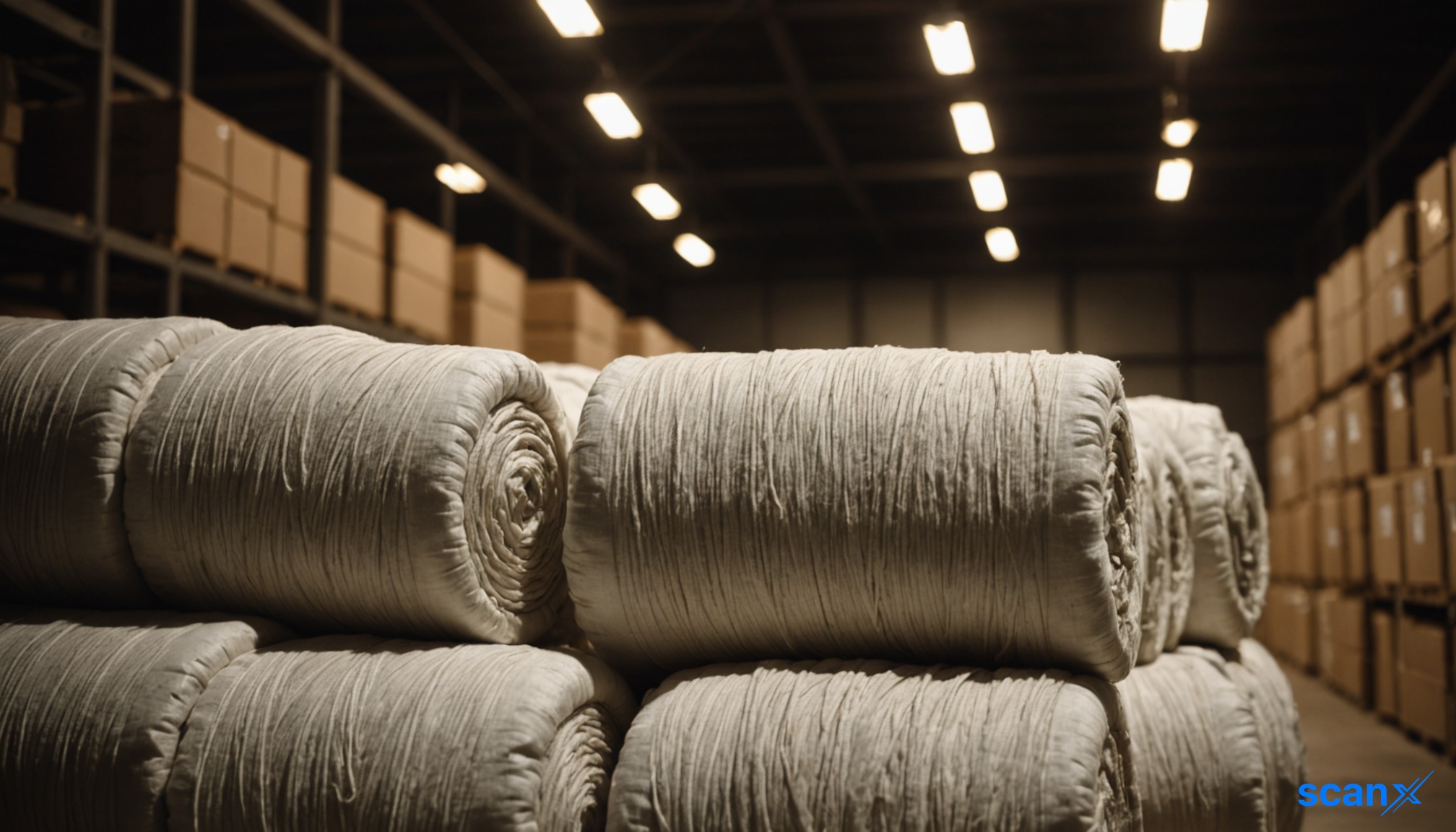
*this image is generated using AI for illustrative purposes only.
Jindal Steel Limited (formerly known as Jindal Steel & Power Limited) has filed its Business Responsibility and Sustainability Report (BRSR) for the financial year April 1, 2025 to March 31, 2026, in compliance with Regulation 34 of the SEBI (Listing Obligations and Disclosure Requirements) Regulations, 2015. The report has been prepared on a standalone basis and carries reasonable assurance for core indicators from TUV SUD. The document forms an integral part of the company's Integrated Report for FY2025-26 and is available on the company's official website.
Corporate and Financial Overview
Jindal Steel Limited, incorporated in 1979, is listed on both BSE Limited and the National Stock Exchange of India Limited. The company's paid-up capital stands at ₹102 crore. Key financial parameters disclosed in the BRSR are summarised below.
| Parameter: | Details |
|---|---|
| Turnover: | ₹54,023 crore |
| Net Worth: | ₹53,129.6 crore |
| Primary Business Activity: | Metal and Metal Products (95% of turnover) |
| NIC Code: | 2410 |
| Export Contribution (% of turnover): | 4.86% |
| National Plants & Offices: | 13 plants, 46 offices (Total: 59) |
| International Offices: | 1 |
| National Markets (States): | 28 |
| International Markets (Countries): | 35 |
The company's operations span 13 national plants and 46 domestic offices, with an international presence across 35 countries. Exports account for 4.86% of total turnover.
Workforce Composition and Employee Well-Being
As of the end of FY2025-26, Jindal Steel's total workforce comprised 7,986 employees and 2,521 workers. The gender distribution across categories is detailed below.
| Category: | Total (A) | Male No. | Male % | Female No. | Female % |
|---|---|---|---|---|---|
| Permanent Employees: | 5,451 | 5,171 | 94.86% | 280 | 5.14% |
| Other than Permanent Employees: | 2,535 | 2,408 | 94.99% | 127 | 5.01% |
| Total Employees: | 7,986 | 7,579 | 94.90% | 407 | 5.10% |
| Permanent Workers: | 345 | 329 | 95.36% | 16 | 4.64% |
| Other than Permanent Workers: | 2,176 | 2,100 | 96.51% | 76 | 3.49% |
| Total Workers: | 2,521 | 2,429 | 96.35% | 92 | 3.65% |
Of the Board of Directors (total: 7), 2 members are female, representing 28.57%. Among Key Management Personnel (total: 5), no female representation was recorded. The company reported 6 differently abled permanent and other-than-permanent employees, all male, and zero differently abled workers. Well-being expenditure—covering health insurance, accident insurance, maternity benefits, and day care facilities—amounted to 0.49% of total revenue in FY2025-26, compared to 0.06% in FY2024-25. All permanent and other-than-permanent employees and workers are covered under health and accident insurance.
Environmental Performance and GHG Emissions
Jindal Steel's environmental disclosures for FY2025-26 include greenhouse gas (GHG) emissions, air quality metrics, and resource management data, all independently assured by TUV SUD. Key emissions parameters are presented below.
| Parameter: | Unit | FY2025-26 | FY2024-25 |
|---|---|---|---|
| Total Scope 1 Emissions: | Metric tonnes of CO2 equivalent | 35.63 | 32.69 |
| Total Scope 2 Emissions: | Metric tonnes of CO2 equivalent | 0.69 | 0.66 |
| Scope 1 & 2 Intensity (per TCS): | Metric tonnes of CO2e/TCS | 2.68 | 2.74 |
| Total Scope 3 Emissions: | Metric tonnes of CO2 equivalent | 47.25 | — |
| Scope 3 Intensity (per rupee of turnover): | — | 0.087 | — |
| Scope 3 Emission Intensity (optional metric): | — | 5.22 | — |
| NOx: | kg/TCS | 1.08 | 1.79 |
| SOx: | kg/TCS | 3.47 | 3.88 |
| Particulate Matter (PM): | kg/TCS | 0.50 | 0.59 |
The company has committed to achieving net zero carbon emissions by 2047, with an aspiration to reach this milestone by 2035. Key GHG reduction initiatives include increasing scrap usage in steelmaking, expanding rooftop solar capacity (15 MW commissioned), waste heat recovery systems at the Electric Arc Furnace and Plate Mill Reheating Furnace, and CO2 capture through bioreactors for Spirulina cultivation. The Raigarh facility, classified as a Designated Consumer under the Government of India's PAT scheme, was awarded 26,460 Energy Saving Certificates (ESCerts) under PAT Cycle-I and 7,798 ESCerts under PAT Cycle-II.
Occupational Health, Safety, and Governance
Jindal Steel's Occupational Health and Safety Management System (OHSMS) is certified to ISO 45001:2018 and covers the entire workforce, including permanent employees, contract workers, and third-party service providers. Safety incident data for FY2025-26 and FY2024-25 is presented below.
| Safety Metric: | Category | FY2025-26 | FY2024-25 |
|---|---|---|---|
| LTIFR (per one million-person hours worked): | Employees | 0.04 | 0.15 |
| LTIFR (per one million-person hours worked): | Workers | 0.39 | 0.07 |
| Total Recordable Work-Related Injuries: | Employees | 4 | 27 |
| Total Recordable Work-Related Injuries: | Workers | 16 | 85 |
| No. of Fatalities: | Employees | 1 | 1 |
| No. of Fatalities: | Workers | 5 | 8 |
| High Consequence Injuries (excl. fatalities): | Employees | 0 | 0 |
| High Consequence Injuries (excl. fatalities): | Workers | 0 | 0 |
All plants and offices were assessed for health and safety practices and working conditions during the year. The company has deployed technology-enabled safety solutions including the IoT-enabled Suraksha Card, AI-powered speed monitoring cameras, and the JinSafe digital reporting platform. The AAINAA (Advance Action in Industries to Abate Accidents) initiative was launched as a model workplace safety programme.
On governance, Jindal Steel's Board-approved policies include a CSR Policy, Code of Conduct, Whistle Blower Policy, Remuneration Policy, Related Party Transaction Policy, and Dividend Distribution Policy, among others. No monetary or non-monetary penalties were reported under Principle 1 for FY2025-26. The number of days of accounts payables stood at 70 in FY2025-26, compared to 55 in FY2024-25.
CSR Initiatives and Community Impact
Jindal Steel's CSR programme covers health, education, livelihood, sanitation, sports, and community development across its operational regions. The company spent ₹6.82 crore on CSR projects in the Ramgarh aspirational district of Jharkhand. Selected CSR project beneficiary data is highlighted below.
| CSR Project: | Beneficiaries | % from Vulnerable/Marginalized Groups |
|---|---|---|
| Jindal Aarogyam Hospital: | 1,15,739 patients treated | 85% |
| Kishori Express (adolescent anaemia): | 80,571 adolescent girls | 100% |
| Vatsalya (IMR/MMR reduction): | 1,45,252 women and children | 100% |
| Shubhangi (menstrual hygiene): | 2,20,223 adolescent girls | 100% |
| HIV/AIDS counselling & testing: | 1,08,486 individuals screened | 100% |
| SNEH (destitute/vulnerable care): | 22,76,028 community members | 100% |
| Chilled Water Van/Drinking Water: | 99,90,499 community members | 100% |
| Sports Infrastructure: | 15,054 players | 100% |
The company's community grievance redressal mechanism is aligned with the National Guidelines on Responsible Business Conduct (NGRBC, 2018) and operates through dedicated Grievance Committees at each location, chaired by the CSR Head. Approximately 90% of inputs were sourced sustainably, and scrap steel as a percentage of recycled or reused input material to total material increased to 10% in FY2025-26 from 6.34% in FY2024-25. The company reported zero data breaches and zero product recalls during the year.
Historical Stock Returns for Jindal Steel
| 1 Day | 5 Days | 1 Month | 6 Months | 1 Year | 5 Years |
|---|---|---|---|---|---|
| +1.48% | +3.49% | -4.55% | -14.42% | +4.37% | 0.0% |

How will Jindal Steel's aggressive net-zero aspiration by 2035 impact its capital expenditure allocation and competitive positioning against peers targeting the 2047 deadline?
What specific technological or operational strategies will the company deploy to further increase scrap steel usage beyond the current 10% to mitigate Scope 3 emissions?
Given the low female representation in Key Management Personnel (0%), what concrete initiatives is Jindal Steel planning to implement to improve gender diversity in leadership roles in the coming fiscal years?
 17
17







 Create Custom Screeners
  Access 200+ Pre-built Filters
  Use 50+ Readymade Screener





