
 NewsJindal Saw Q4 FY26 Earnings Call: Revenue and Profit Decline Amid MENA Conflict, Export Disruptions, and Domestic Headwinds
Jindal Saw Q4 FY26 Earnings Call: Revenue and Profit Decline Amid MENA Conflict, Export Disruptions, and Domestic Headwinds


Jindal Saw Limited reported a sharp decline in Q4 FY26 and full-year FY26 financial performance, with standalone PAT falling 50% sequentially in Q4 to INR114 crores and full-year consolidated PAT declining 37% to INR925 crores versus INR1,458 crores in FY25. The underperformance was driven by the suspension of all MENA region exports since March 2026 due to military conflict, sluggish Jal Jeevan Mission execution, a temporary API monogram suspension on seamless pipes, and a INR48 crores foreign exchange cost from rupee depreciation. Despite these headwinds, standalone net debt reduced to INR2,453 crores as of March 31, 2026, and the company is advancing strategic expansions in Abu Dhabi and Saudi Arabia. Management guided for domestic capex of INR500 crores to INR600 crores for the current fiscal year and indicated that Q1 of FY27 is also likely to remain impacted.


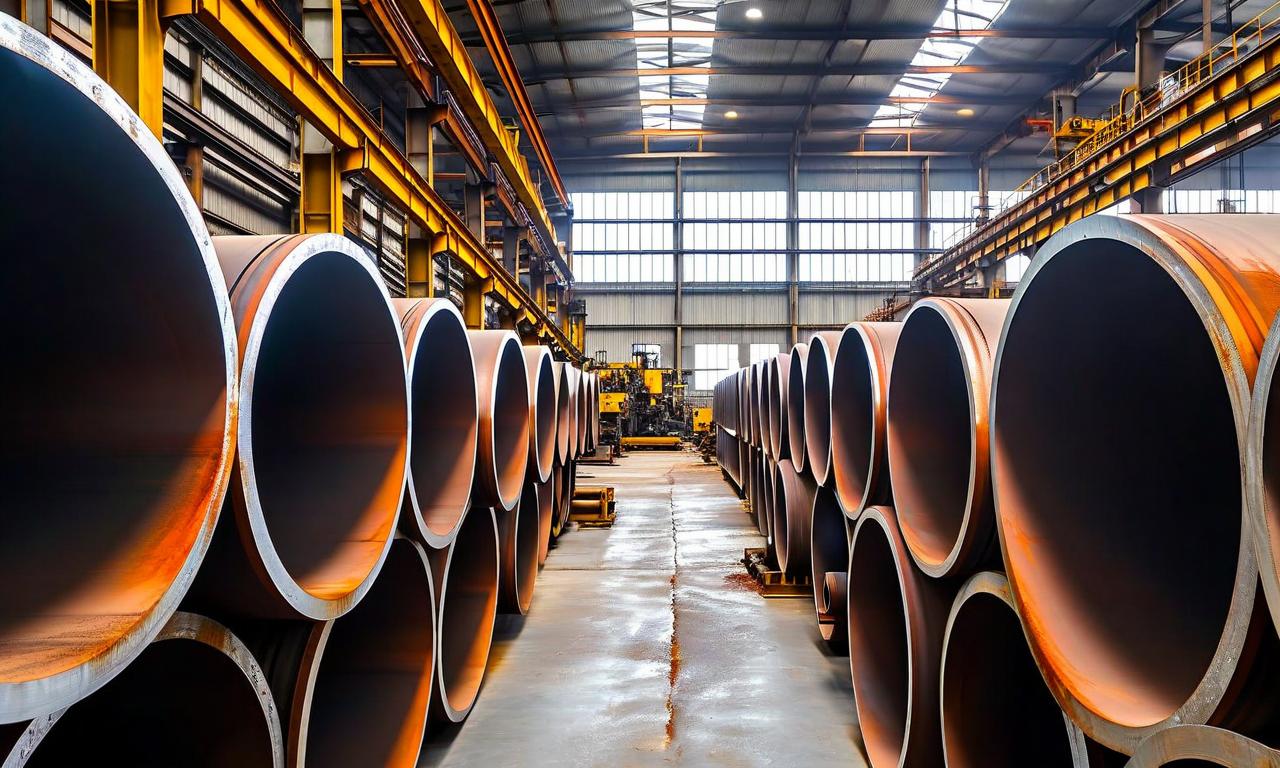
*this image is generated using AI for illustrative purposes only.
Jindal Saw Limited reported a broad-based decline in financial performance for Q4 FY26 and the full fiscal year FY26, as the company navigated a confluence of challenges including the suspension of MENA region exports, sluggish domestic water infrastructure execution, and a temporary regulatory setback in its carbon seamless pipe segment. The results were discussed during the company's Q4 FY26 Earnings Conference Call held on April 28, 2026, hosted by ICICI Securities Limited, with key management representatives including Vinay Kumar Gupta, Rajeev Goyal, and Narendra Mantri addressing analysts and investors.
Q4 FY26 Financial Performance
The company's Q4 FY26 results reflected a sequential decline across all key financial metrics on both standalone and consolidated bases. The following table summarises the quarterly performance:
| Metric: | Q4 FY26 (Standalone) | Q3 FY26 (Standalone) | Change |
|---|---|---|---|
| Total Income: | INR3,852 crores | — | ~-7% vs Q3 FY26 |
| EBITDA: | INR413 crores | INR527 crores | Decline of INR22 crores |
| PAT: | INR114 crores | INR227 crores | -50% |
| Metric: | Q4 FY26 (Consolidated) | Q3 FY26 (Consolidated) | Change |
|---|---|---|---|
| Total Income: | INR4,657 crores | INR4,963 crores | -6% |
| EBITDA: | INR504 crores | INR632 crores | -20% |
| PAT: | INR124 crores | INR248 crores | -50% |
Management noted that the Q4 performance fell short of its earlier expectation of exceeding Q3 results, primarily due to the deferment of export shipments to the MENA region and the impact of a sharp rupee depreciation. The company reported a foreign exchange cost of INR48 crores during the quarter, driven by the rupee's decline from INR88.88 per dollar to INR94.84 per dollar.
Full Year FY26 vs FY25: Steep Year-on-Year Decline
The full-year comparison underscores the extent of the financial deterioration, particularly on the standalone basis where the decline in profitability was most pronounced.
| Metric: | FY26 (Standalone) | FY25 (Standalone) | Change |
|---|---|---|---|
| Total Income: | ~INR14,745 crores | INR18,178 crores | ~-19% |
| EBITDA: | INR1,835 crores | INR3,456 crores | -47% |
| PAT: | INR784 crores | INR1,874 crores | -58% |
| Metric: | FY26 (Consolidated) | FY25 (Consolidated) | Change |
|---|---|---|---|
| Total Income: | ~INR17,987 crores | INR20,948 crores | ~-14% |
| EBITDA: | INR2,306 crores | INR3,548 crores | -35% |
| PAT: | INR925 crores | INR1,458 crores | -37% |
Management attributed the full-year decline primarily to weakness in the ductile iron pipe segment amid ongoing water infrastructure sector challenges, and to the deferment of high-margin export shipments due to the MENA conflict.
Debt Profile and Balance Sheet Strength
Despite the revenue and profitability pressures, the company's debt profile remained relatively contained. As of March 31, 2026, standalone net debt reduced to INR2,453 crores compared to INR3,154 crores in the previous year, with long-term debt standing at only INR529 crores. On a consolidated basis, net institutional debt reduced to INR2,528 crores from INR3,346 crores as of December 31, 2025, with long-term debt at INR692 crores. Management highlighted the company's strong liquidity position and deleveraged balance sheet as a critical buffer during the period of business volatility.
Key Operational Challenges
Management outlined several factors that weighed on Q4 FY26 and full-year FY26 performance:
- MENA Export Suspension: All export shipments have been suspended since March 1, 2026, following the activation of force majeure clauses due to the outbreak of military conflict in the MENA region. The company holds a robust export order book, including a 6 lakh metric ton job contract from Saudi Arabia, with approximately 2 lakh tons of buyer-supplied steel currently held at its facilities. Approximately 30,000 to 40,000 metric tons of material was ready for shipment but was deferred.
- Jal Jeevan Mission Slowdown: Despite positive policy announcements, project execution on the ground remained sluggish, impacting the ductile iron pipe business. Management noted that Q4 sales for the water business were predominantly backed by state-level funding rather than central Jal Jeevan Mission disbursements.
- API Seamless Pipe Suspension: Following an API audit, non-conformances were identified in the carbon seamless pipe segment, resulting in a suspension letter prohibiting the use of the API monogram on seamless pipes. All non-conformances have been addressed and closed. Auditors appointed by API authorities are scheduled to revisit the Nashik facility in May 2026 for verification. The company is leveraging flexible manufacturing capabilities to redirect production towards alternative seamless pipe products in the interim.
- Foreign Exchange Impact: A sharp depreciation of the rupee from INR88.88 per dollar to INR94.84 per dollar resulted in a foreign exchange cost of INR48 crores during Q4 FY26.
Subsidiary and Joint Venture Performance
The Abu Dhabi subsidiary delivered approximately 48,000 tons of pipes in Q4 FY26, compared to 52,000 tons in Q3 FY26, as regional conflict disrupted operations. As of March 31, 2026, the subsidiary holds an order book of approximately $180 million, equivalent to approximately 171,000 metric tons, representing approximately 9 months of operational visibility. In the Jindal Hunting joint venture, where Jindal Saw holds a 51% stake and Hunting holds 49%, the venture generated revenue of approximately INR149 crores with a PAT of INR43.20 crores, compared to revenue of INR177 crores and PAT of INR51.50 crores in FY25.
Strategic Initiatives and Capital Expenditure Outlook
Management outlined several strategic initiatives aimed at positioning the company for recovery and growth:
- A carbon seamless pipe plant is being set up in Abu Dhabi through a wholly owned subsidiary, with land secured and equipment ordering and LC establishment underway. A long-term lease agreement with AD Ports for the land parcel has been signed.
- In Saudi Arabia, a joint venture has been established with Buhur Group, with Jindal Saw holding 51% and Buhur Group holding 49%, to set up LSAW and HSAW facilities. Land for one of the projects has been secured and LCs established for select equipment.
- For domestic capital expenditure, management guided for INR500 crores to INR600 crores in the current fiscal year, following INR800 crores spent in FY26. For the subsequent year, capex is expected in the range of INR400 crores to INR500 crores.
Management acknowledged that Q1 of the current fiscal year is also expected to be impacted by the persisting challenges, particularly the ongoing MENA export suspension and the API seamless pipe regulatory timeline. The company expressed confidence in its ability to ramp up operations quickly once conditions in the MENA region normalise, given its fully booked order book and strong balance sheet.
Historical Stock Returns for Jindal SAW
| 1 Day | 5 Days | 1 Month | 6 Months | 1 Year | 5 Years |
|---|---|---|---|---|---|
| -0.22% | -0.26% | -12.35% | +34.77% | +33.16% | +366.19% |

If the MENA conflict persists beyond FY27, how might Jindal Saw restructure its export strategy to reduce geographic concentration risk and diversify its international revenue streams?
With the API audit revisit scheduled for May 2026, what is the potential revenue and margin recovery trajectory for the carbon seamless pipe segment if the API monogram is reinstated, and how quickly can the Nashik facility return to full capacity?
Given the Jal Jeevan Mission's persistent execution delays, what structural reforms or policy triggers would be needed to accelerate ground-level water infrastructure spending and meaningfully revive Jindal Saw's ductile iron pipe volumes?
 20
20




 Access 50+ Readymade Screeners
  Use 200+ Custom Filters
  Get Full Market Insights





