

Iraq backs ConocoPhillips gas deal, Mediterranean pipeline plan


Iraq's cabinet has authorized a major gas field development deal with ConocoPhillips and a consortium for the Akkas field. Concurrently, the government approved a memorandum of understanding for a new oil pipeline through Syria to the Mediterranean, aiming to reduce reliance on the volatile Strait of Hormuz. The cabinet also initiated bidding for the Integrated Qayyara Project to boost production from the 800 million barrel reserve.

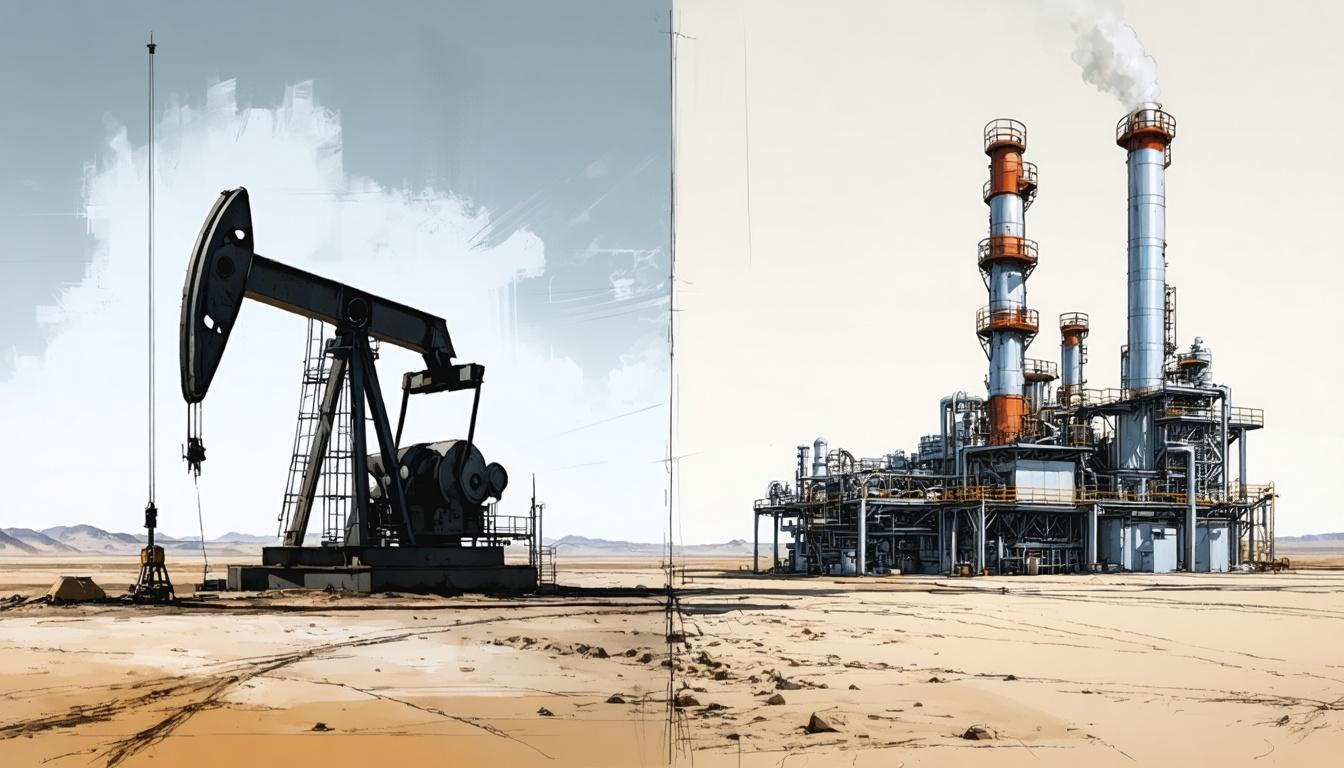

*this image is generated using AI for illustrative purposes only.
Iraq’s cabinet authorized the Ministry of Oil to sign a contract with a consortium including ConocoPhillips Co. (NYSE: COP) for the exploration and development of the Akkas gas field, while simultaneously approving a memorandum of understanding for a new oil pipeline through Syria to bypass geopolitical risks in the Strait of Hormuz.
The Akkas field, located near the Syrian border, is one of Iraq’s largest undeveloped gas reserves and is critical to reducing the country’s reliance on gas imports. The consortium also includes Los Angeles-based private investment firm TI Capital and Novaterra Energy, which states its commitment to investing in Syria to rebuild and enhance the country’s energy security.
Strategic Pipeline Development
In a move to diversify export routes, the cabinet authorized Basra Oil Co. to sign an agreement between Iraq’s Ministry of Oil and Syria’s Ministry of Energy for a pipeline linking Iraqi oil production to global markets via the Mediterranean Sea. This project provides Iraq with its second direct oil export outlet to the Mediterranean, reducing dependence on the Persian Gulf and the Iraq-Turkey pipeline to Ceyhan, which has faced repeated disruptions.
Shipments through the Strait of Hormuz have become precarious during the US–Iran war, as Tehran threatens tankers and maritime traffic, restricting oil flows to global markets. Baghdad has started reconnecting energy infrastructure with neighbors to secure more stable export options, reviving ties discussed since the toppling of Bashar al-Assad in 2024. A previous pipeline once carried Iraqi crude from Kirkuk to Baniyas on the Syrian coast but was shut down due to war and sanctions.
The cabinet’s statement did not disclose details regarding the pipeline’s capacity, completion timeframe, or financing structure.
Integrated Qayyara Project Bidding
The cabinet also authorized the ministry to put up for bidding the Integrated Qayyara Project to develop oil infrastructure and raise production rates. Located in northern Iraq, the Qayyarah field holds roughly 800 million barrels of heavy crude and currently produces about 33,000 barrels a day.
ConocoPhillips Expands Iraq Footprint
ConocoPhillips is poised to increase its presence in Iraq this summer. On July 17, the company announced it had agreed to terms with BP p.l.c. (NYSE: BP) to acquire a 42% interest in BP Energy Company of Kirkuk Ltd. (BP ECKL). This acquisition supports the ongoing redevelopment of four large-scale oil fields in the Kirkuk area.
BP ECKL holds the Development and Production Contract (DPC) for the Baba and Avanah domes of the Kirkuk oil field and three adjacent fields: Bai Hassan, Jambur, and Khabbaz. The DPC includes an initial gross recoverable resource of more than 3 billion barrels of oil equivalent, with additional exploration potential in the contract area.
What the Numbers Show
The strategic pivot toward Mediterranean exports via Syria highlights a significant shift in Iraq’s risk management strategy amidst escalating tensions in the Strait of Hormuz. By developing the Akkas gas field alongside the Qayyara heavy crude assets, Iraq aims to address both domestic energy deficits and international export diversification simultaneously. The involvement of private capital through TI Capital and Novaterra Energy signals a broader opening of Iraq’s energy sector to non-state actors in neighboring regions.

How might the involvement of private firms like TI Capital and Novaterra Energy in Syria impact the geopolitical stability of the region and Iraq's diplomatic relations with Western nations?
What are the estimated construction timelines and capital expenditures required to revive the Iraq-Syria pipeline, and how does this compare to the cost of maintaining current Strait of Hormuz exports?
Could ConocoPhillips' expanding footprint in Kirkuk, combined with the new Akkas gas deal, trigger a bidding war among other international oil majors for remaining Iraqi assets?
 17
17












 Access Market Heat-map & Insights
  Create, Save & Share your Screener
  Use 200+ Screening Filters





