

Indian Oil releases Q1FY27 earnings call transcript on Aug 1


Indian Oil Corporation Ltd posted a Q1FY27 standalone net loss of ₹2,661.37 crore, driven by declining EBITDA and higher debt. The earnings call transcript, released on August 1, 2026, highlights governance issues regarding independent directors and ongoing refinery expansion projects.



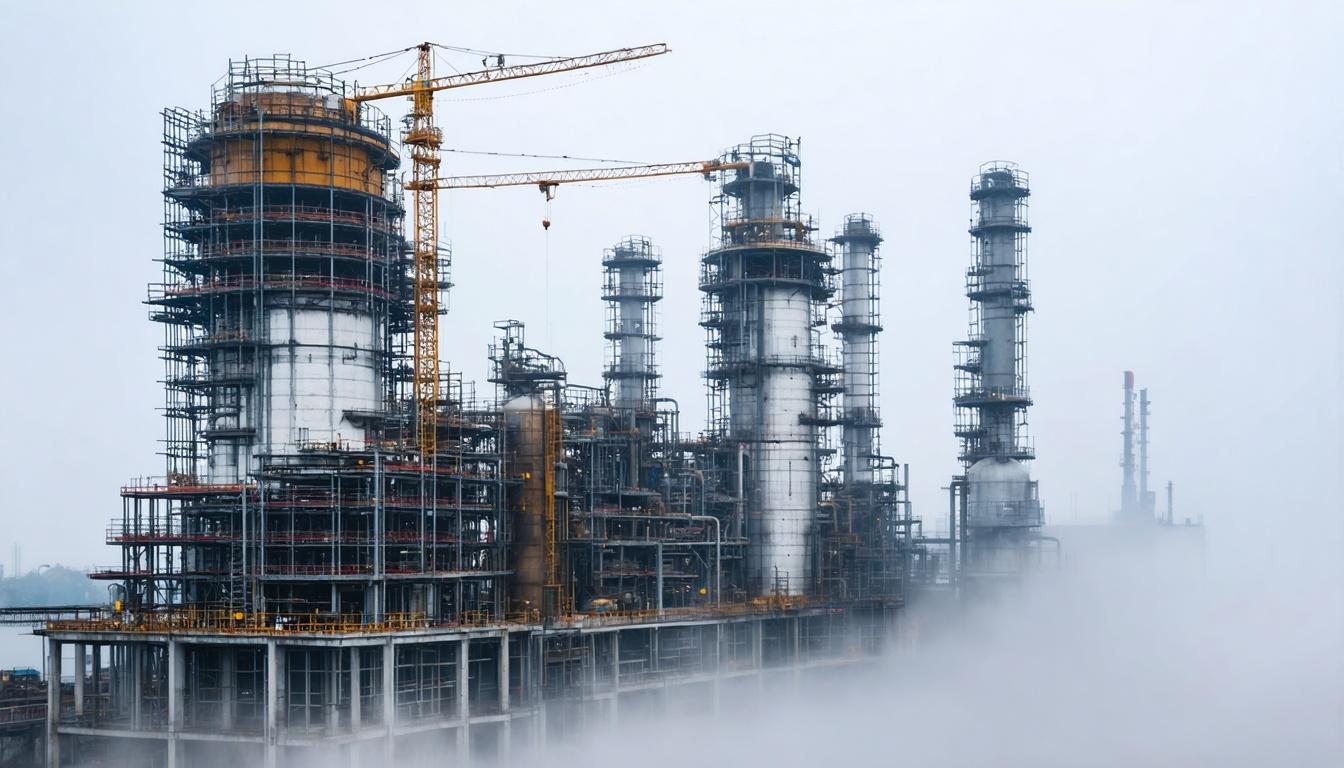
*this image is generated using AI for illustrative purposes only.
Indian Oil Corporation reported a standalone net loss of ₹2,661.37 crore for the quarter ended June 30, 2026 (Q1FY27), reversing a net profit of ₹11,377.51 crore in the preceding quarter. The sharp deterioration in profitability was driven by a collapse in operating margins, alongside a significant rise in debt levels to ₹1,41,453 crore. On August 1, 2026, the company held a conference call with analysts to discuss these financial results, with the transcript subsequently released under Regulation 30 of the SEBI (Listing Obligations and Disclosure Requirements) Regulations, 2015.
Financial Performance Overview
The Maharatna oil marketing company recorded revenue from operations of ₹2,75,971.77 crore in Q1FY27, up from ₹2,32,855.33 crore in Q4FY26. However, EBITDA contribution declined sharply to ₹2,332 crore from ₹22,345 crore in the previous quarter, with EBITDA margin contracting significantly. Profit before tax stood at a loss of ₹3,274 crore compared to a profit of ₹15,322 crore earlier. Interest expenditure decreased slightly to ₹1,610 crore from ₹1,849 crore, while interest income fell to ₹252 crore from ₹342 crore. The company reported a Gross Refining Margin (GRM) of $15.59 per barrel, net of SAED.
| Metric | Q1FY27 Standalone | Q4FY26 Standalone | Change |
|---|---|---|---|
| Revenue from Operations | ₹2,75,971.77 Cr | ₹2,32,855.33 Cr | Higher |
| Net Profit / (Loss) | ₹(2,661.37) Cr | ₹11,377.51 Cr | Swung to loss |
| EBITDA Contribution | ₹2,332 Cr | ₹22,345 Cr | Sharp Decline |
| Debt Level | ₹1,41,453 Cr | ₹1,10,668 Cr | Increased |
Operational Highlights
Refinery throughput declined to 19.2 million metric tons (MMT) from 19.7 MMT in Q4FY26, with capacity utilization dropping to 109.4% from 113.9%. Distillate yield improved slightly to 80.2% from 79.0%, while fuel and loss percentage decreased to 8.0% from 8.1%. The utilization of high sulphur crude fell to 48.9% from 61.3%. Pipeline throughput increased to 28.5 MMT from 27.7 MMT, with capacity utilization rising to 79.9% from 78.3%. In marketing operations, inland sales of petroleum products fell to 22.542 MMT from 23.267 MMT. High-Speed Diesel (HSD) sales rose to 10.866 MMT from 9.938 MMT, while Motor Spirit (MS) sales increased to 4.522 MMT from 4.100 MMT. Conversely, LPG sales dropped significantly to 3.085 MMT from 3.997 MMT.
Capital Expenditure and Projects
The company incurred provisional capex of ₹6,461 crore in Q1FY27 against a target of ₹32,700 crore for FY27. Major projects are progressing towards their commissioning dates. The Panipat Refinery Expansion (15 MMTPA to 25 MMTPA) is at 94.0% physical progress, expected to be commissioned by December 2026. The Gujarat Refinery Expansion (13.7 MMTPA to 18 MMTPA) stands at 89.2% progress, targeted for November 2026. The Barauni Refinery Expansion (6 MMTPA to 9 MMTPA) is at 91.6% progress, also due in December 2026. The PX-PTA Complex at Paradip Refinery is at 94.6% progress, expected by August 2026. Additionally, the New Mundra Panipat Crude Oil Pipeline is mechanically completed and under commissioning.
Material Disclosures and Governance
As of June 30, 2026, the cumulative net negative buffer for domestic LPG under-recoveries stood at ₹29,729.95 crore. The Ministry of Petroleum and Natural Gas had approved compensation of ₹14,486 crore via letters dated October 3 and October 24, 2025. For Q1FY27, the company recognized ₹3,621.51 crore as revenue from operations regarding this buffer. Statutory auditors highlighted that the company did not have the minimum number of Independent Directors required under the Companies Act, 2013, and SEBI (Listing Obligations and Disclosure Requirements) Regulations, 2015. Consequently, the Audit Committee, Nomination & Remuneration Committee, and CSR Committee were discontinued effective March 28, 2026, and had not been reconstituted by the reporting date.
What the Numbers Show
The divergence between rising revenue and collapsing margins indicates significant pressure on refining economics and inventory valuation adjustments during the quarter. While the recognition of ₹3,621.51 crore in government compensation provided some offset, it was insufficient to counterbalance the operational headwinds in the core petroleum products business. The persistent governance gap regarding independent directors adds a layer of regulatory risk, potentially impacting investor confidence despite strong capital expenditure progress on key expansion projects.
Historical Stock Returns for Indian Oil Corporation
| 1 Day | 5 Days | 1 Month | 6 Months | 1 Year | 5 Years |
|---|---|---|---|---|---|
| -2.66% | -4.93% | -4.20% | -3.00% | -12.32% | +57.24% |

How will the upcoming commissioning of the Panipat and Barauni refinery expansions in late 2026 impact Indian Oil's debt servicing capacity given the current ₹1.41 lakh crore debt burden?
What is the timeline for the Ministry of Petroleum to clear the remaining ₹15,243 crore of the cumulative LPG under-recovery buffer, and how might delays affect future cash flows?
Could the regulatory non-compliance regarding Independent Directors lead to SEBI penalties or delisting risks that would outweigh the operational benefits of the new refinery capacities?
 18
18









 Access Market Heat-map & Insights
  Create, Save & Share your Screener
  Use 200+ Screening Filters





