

Hindalco commissions 30,000-tonne superfine PPT ATH plant in Belagavi


- Hindalco commissions India’s first greenfield PPT ATH plant in Belagavi
- Initial capacity set at 30,000 tonnes per annum, expandable to 60,000 tonnes
- Facility operates entirely on renewable energy sources including solar and wind
- Product targets domestic demand for halogen-free flame retardant cables
- Aims to reduce import dependence for specialty alumina materials

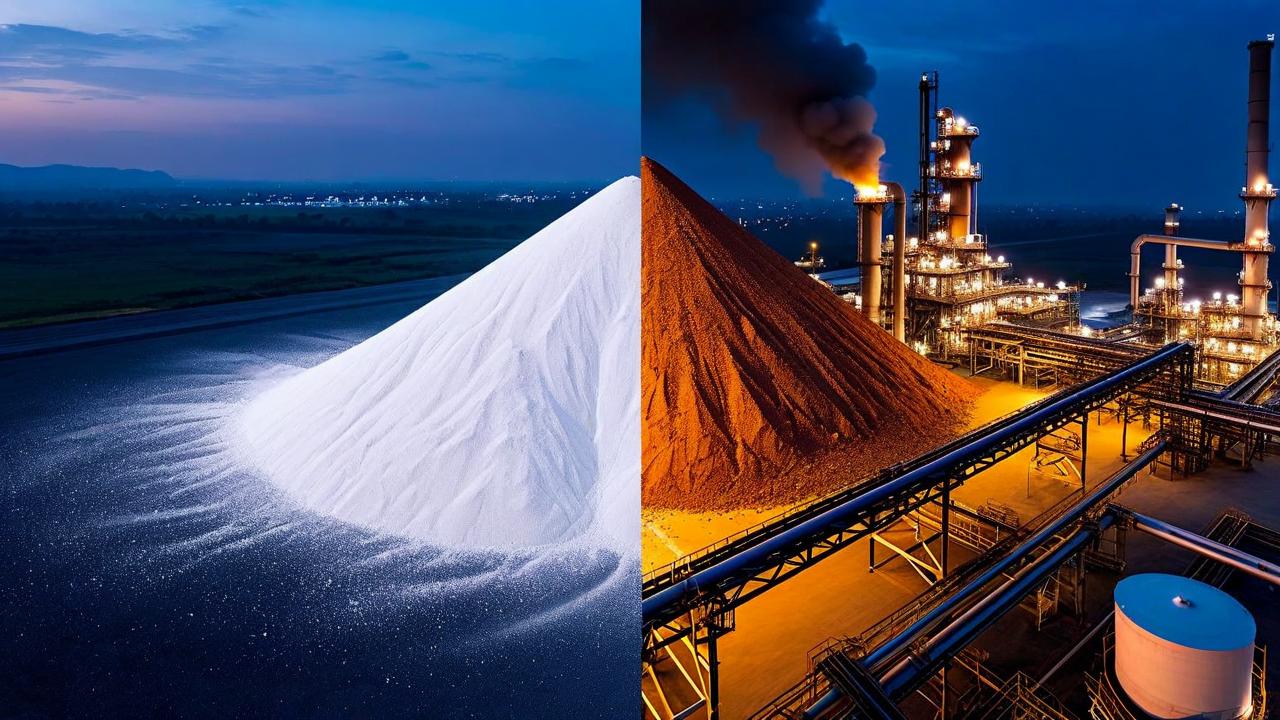

*this image is generated using AI for illustrative purposes only.
Hindalco Industries has commissioned India's first greenfield Precipitated Aluminium Trihydrate (PPT ATH) plant in Belagavi, Karnataka, on August 27, 2026. The facility boasts an annual capacity of 30,000 tonnes, marking a significant step toward domestic self-reliance in cable fire safety materials.
Capacity and market impact
The new plant is designed to meet almost the entire domestic demand for safer cables from the wire and cable industry. While the initial Phase 1 capacity stands at 30,000 tonnes per annum, the facility is designed for phased expansion to 60,000 tonnes, allowing Hindalco to scale production in line with growing domestic market needs.
Prior to this development, India relied on imports for this grade of material. The commissioning addresses a critical gap in the specialty materials supply chain, particularly as the Bureau of Indian Standards (BIS) introduced IS 17048:2018 for Halogen-Free Flame Retardant (HFFR) cables, aligning Indian standards with global safety benchmarks.
| Development | Details |
|---|---|
| Plant type | Superfine PPT ATH |
| Location | Belagavi, Karnataka |
| Initial capacity | 30,000 tonnes per annum |
| Expansion potential | Up to 60,000 tonnes |
| Commissioning date | August 27, 2026 |
Sustainability and innovation
A key differentiator of the Belagavi facility is its commitment to sustainability. It is the world's only specialty alumina plant to operate entirely on renewable energy, sourcing power from biomass, solar, and wind sources. This approach supports the production of high-performance specialty materials with a lower environmental footprint.
The parent Belagavi refinery achieved a GHG intensity of 0.44 tCO₂e per tonne of alumina year-to-date in FY26. The plant incorporates automated controls for critical processes and a fully integrated manufacturing ecosystem, enabling stringent control over feedstock quality and product consistency. The technology and R&D were developed in-house through Hindalco's flask-to-factory innovation journey.
Applications and strategic importance
PPT ATH is a high-value, halogen-free flame-retardant material used in HFFR cables, polymer insulators, thermal insulation, composites, and paints. In cable applications, it helps suppress flame propagation and smoke generation without releasing halogen acid gases.
Demand for such materials is rising due to stricter fire-safety standards, increasing adoption of electric vehicles (EVs), and infrastructure growth. Satish Pai, Managing Director of Hindalco Industries, noted that the investment reflects the company's focus on moving up the value chain and delivering advanced solutions for emerging customer needs in India and global markets.
Saurabh Khedekar, CEO of Alumina Business at Hindalco, added that the addition of Superfine PPT ATH strengthens their Specialty Alumina portfolio. He highlighted that their InnoSafe solution enhances fire safety by retarding flame spread and suppressing smoke, offering an indigenous, world-class solution that reduces import dependence.
Historical Stock Returns for Hindalco Industries
| 1 Day | 5 Days | 1 Month | 6 Months | 1 Year | 5 Years |
|---|---|---|---|---|---|
| -0.57% | +0.60% | -9.52% | -13.10% | +13.10% | +79.81% |

How will the transition to domestic PPT ATH production impact pricing structures for Indian wire and cable manufacturers currently reliant on imports?
What is Hindalco's projected timeline and capital expenditure plan for scaling the Belagavi facility from 30,000 to 60,000 tonnes per annum?
Could Hindalco's renewable-energy-powered model for specialty alumina set a new industry benchmark that competitors will need to match to maintain global export competitiveness?
 15
15










 Access 50+ Readymade Screeners
  Use 200+ Custom Filters
  Get Full Market Insights





