

Himax unveils eDP TDDI chip for large-format automotive displays


- Himax unveils HX83196/7 series integrating touch, display driver, and eDP interface
- Single chip supports 17-inch 3K displays; cascaded setup supports 30-inch 6K displays
- Eliminates need for bridge ICs and additional Tcons to reduce cost and complexity
- Features eDP 1.4 DSC compression and HDR10+ support for improved efficiency and quality
- Multiple customer projects are currently in the design-in stage

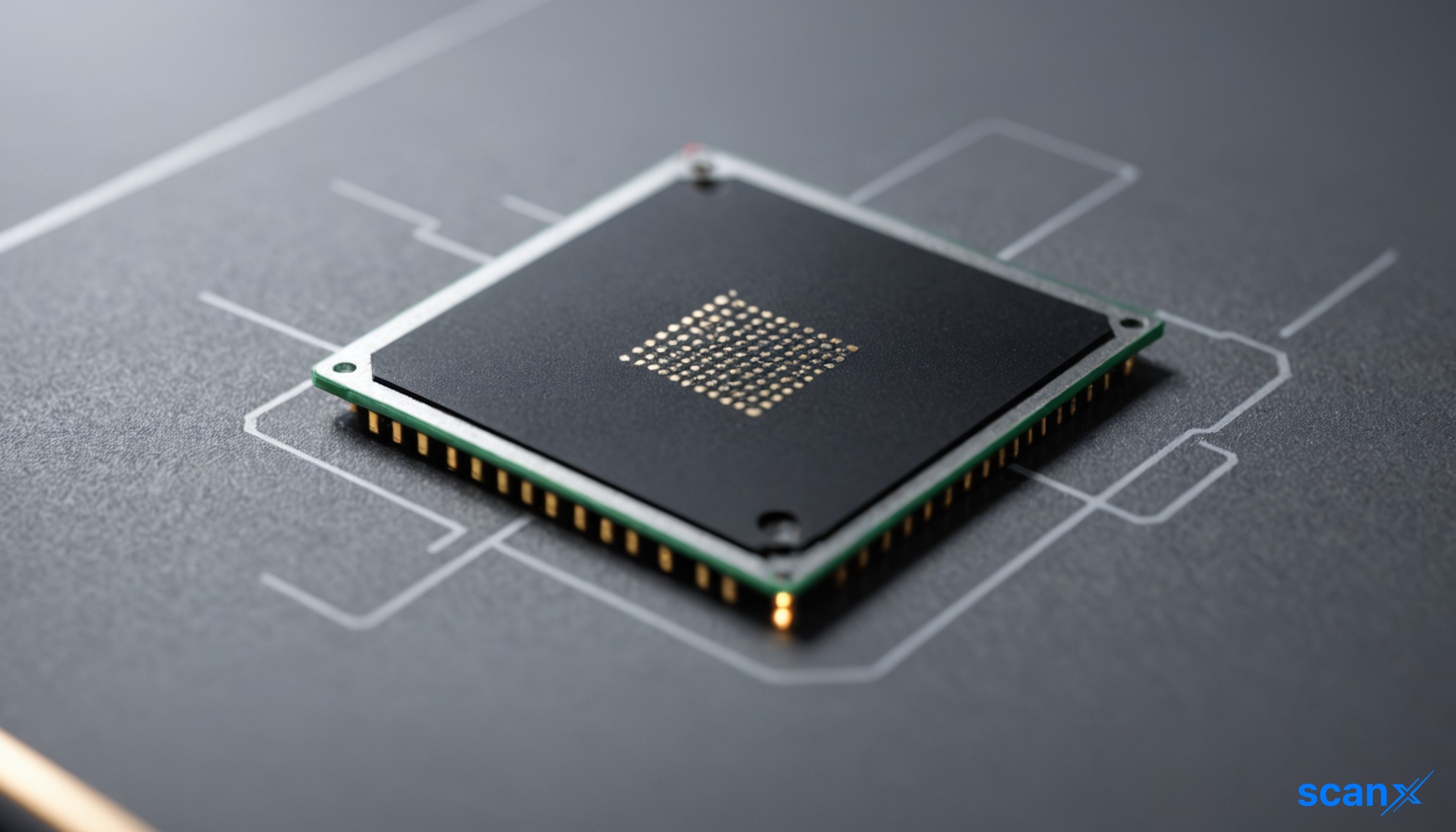

*this image is generated using AI for illustrative purposes only.
Himax Technologies Inc (NASDAQ: HIMX) unveiled the HX83196/HX83197 series, an industry-leading automotive Touch and Display Driver Integration (TDDI) with high-speed embedded DisplayPort (eDP) interface support.
The fabless semiconductor manufacturer announced the new solution on Sept. 8, 2026, from Tainan, Taiwan. The chips integrate touch, display driver, and eDP transmission functions into a single unit to address demands for large-format, high-resolution displays in next-generation smart cars.
Technical Specifications
The new eDP TDDI adopts eSRE (eDP Stream Regeneration Engine) technology. This allows direct reception and transmission of high-bandwidth eDP signals, enabling cascaded configurations for flexible system design.
| Feature | Specification |
|---|---|
| Single-chip support | Up to 17 inches, 3K resolution |
| Cascaded support | Up to 30 inches, 6K resolution |
| Touch channels | 1,280 |
| Source channels | 2,560 |
| Refresh rates | 60Hz and 90Hz |
The HX83197 variant incorporates local dimming technology into the TDDI. This eliminates the need for an additional timing controller (Tcon), enhancing contrast and detail while improving cost efficiency.
System Architecture Benefits
Integrating an eDP 1.2 interface removes the requirement for an eDP-to-OLDI bridge IC used in conventional architectures. For single-display applications, the chip supports a Direct DP architecture. This allows the system-on-chip (SoC) to transmit eDP signals directly to the TDDI over a single cable without an additional SerDes, simplifying design and reducing costs.
The solution integrates eDP 1.4 Display Stream Compression (DSC) technology. This reduces bit rate and power consumption associated with high-resolution image transmission and helps mitigate electromagnetic interference (EMI). Support for HDR10+ enhances contrast across bright and dark areas.
Additionally, the architecture supports an on-panel Ambient Light Sensor (ALS). Placing the ALS directly on the panel frees up display bezel space for a streamlined design.
Market Position
Ming-Cheng Chiu, Executive Vice President of the Touch and Display Business Unit at Himax, stated the company has been engaged in the automotive display IC market for nearly two decades. He noted that multiple customer projects are already underway as the market trends toward larger, higher-resolution displays.
Himax plans to showcase the new eDP TDDI at the upcoming SID Vehicle Displays and Interfaces Symposium in Detroit, U.S.

How might Himax's Direct DP architecture influence the cost structures and design timelines of next-generation electric vehicle infotainment systems?
What is the projected timeline for mass production and vehicle integration of the HX83196/HX83197 series, and which OEMs are currently in the validation phase?
How does Himax's new eDP TDDI solution compare to competing integrated display drivers from firms like Novatek or ChiPTech in terms of power efficiency and EMI mitigation?
 18
18





 Create Custom Screeners
  Access 200+ Pre-built Filters
  Use 50+ Readymade Screener





