

GreenFirst Forest Products turns profitable in Q2 with $5.5 million net income


GreenFirst Forest Products Inc. turned profitable in Q2 with a $5.5 million net income, reversing a Q1 loss. Sales grew 13.68% YoY to $96.1 million, aided by stronger lumber prices and a $16.2 million inventory provision reversal.

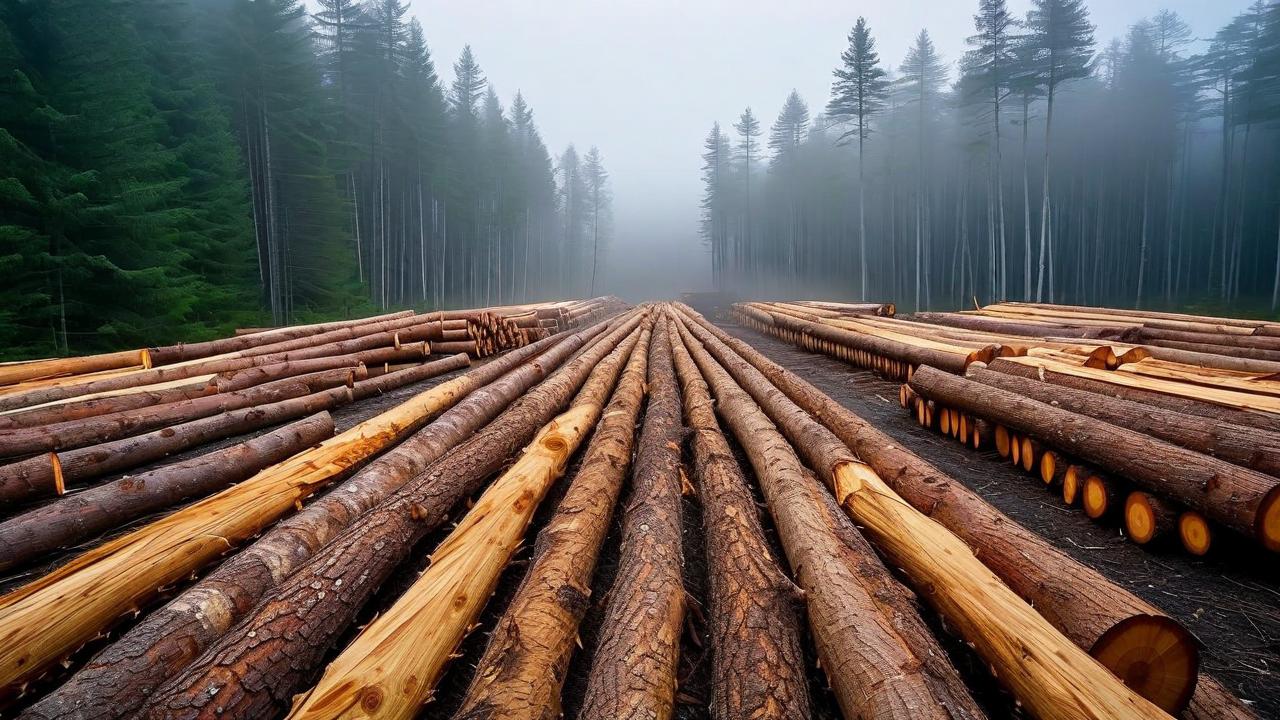

*this image is generated using AI for illustrative purposes only.
GreenFirst Forest Products Inc. (TSX: GFP) reported a net income of $5.5 million for the second quarter ended June 27, 2026, marking a significant turnaround from the net loss of $20.7 million recorded in the first quarter of 2026 and a loss of $(0.42) per share in the same period last year. The profitability shift was primarily driven by stronger benchmark lumber markets, which pushed average realized prices to $764/mfbm from $666/mfbm in the previous quarter, alongside a 10% improvement in total manufacturing costs. Adjusted EBITDA turned positive at $11.8 million, compared to negative $15.1 million in Q1 2026. In a separate corporate development, GreenFirst announced that CEO Joel Fournier will tender his resignation effective October 31, 2026, citing personal reasons, with the Board commencing a search for his successor.
Net sales surged approximately 59% quarter-over-quarter to $96.1 million, up from $60.6 million in Q1 2026. This represents a 13.68% increase year-over-year from sales of $84.538 million in the same period last year. This revenue growth was fueled by higher shipment volumes and improved pricing conditions, despite ongoing pressure from elevated duties and tariffs on Canadian softwood lumber exports. The increase in realized pricing reflected tighter North American supply due to production curtailments and mill closures elsewhere, combined with lean channel inventories and stable underlying demand.
Cost of sales decreased slightly by 1% to $62.1 million in Q2 2026, even as shipment volumes rose significantly. This cost discipline was largely attributable to a $16.2 million reversal of the net realizable value inventory provision, contrasting with a $1.8 million provision recorded in the first quarter. The reversal reflected stronger lumber prices, lower inventory levels, and a more favorable inventory mix consisting of a higher proportion of premium products at quarter-end. Operational improvements at the Chapleau mill, particularly the optimization of the large log line, also contributed to lower manufacturing costs.
Other expenses saw an increase in duties and tariffs, which rose to $21.1 million in Q2 2026 from $12.1 million in Q1 2026, reflecting higher shipment volumes and selling prices. The company was subject to a combined duty rate of 35.16%, which had increased to 45.16% effective October 14, 2025, following the implementation of Section 232 tariffs. Selling, general, and administrative (SG&A) expenses remained relatively flat at $4.3 million, compared to $4.4 million in the previous quarter.
Financial Position and Liquidity
As of June 27, 2026, GreenFirst reported total assets of $209.6 million, an increase from $189.8 million at December 31, 2025. Total liabilities stood at $163.5 million, up from $129.2 million year-end 2025, while total shareholders' equity was $46.1 million, down from $60.6 million. The company maintained $2.8 million in cash on hand. Additionally, GreenFirst had $24.4 million in excess availability under its revolving credit facility, net of $24.0 million drawn and $3.9 million for standby letters of credit. Access under its equipment financing agreement was $15.6 million, with $9.4 million drawn.
| Metric | June 27, 2026 | March 28, 2026 | June 28, 2025 |
|---|---|---|---|
| Net Sales ($ thousands) | $96,099 | $60,621 | $84,538 |
| Operating Income/Loss ($ thousands) | $7,917 | $(18,999) | $(8,828) |
| Net Income/Loss ($ thousands) | $5,503 | $(20,678) | $(9,593) |
| Adjusted EBITDA ($ thousands) | $11,791 | $(15,140) | $(5,161) |
| Diluted EPS ($) | $0.24 | $(0.89) | $(0.41) |
What the Numbers Show
The stark contrast between Q1 and Q2 2026 results highlights the sensitivity of GreenFirst’s margins to both operational efficiency and market pricing. While revenue growth was robust, the primary driver of the return to profitability was not just top-line expansion but a significant non-cash adjustment: the $16.2 million inventory valuation reversal. This accounting adjustment, resulting from stronger lumber prices and improved inventory mix, played a crucial role in reducing cost of sales despite higher volume. Investors should note that while operational improvements at Chapleau contributed to a 10% drop in manufacturing costs, the bottom-line turnaround was heavily supported by this inventory revaluation, suggesting that sustained profitability will depend on maintaining these price levels and operational gains without relying on similar reversals in future quarters.

How sustainable is GreenFirst's profitability given that the Q2 turnaround was heavily driven by a $16.2 million non-cash inventory reversal rather than purely operational cash flow improvements?
What is the Board's timeline and criteria for selecting Joel Fournier's successor, and how might this leadership transition impact the company's strategic direction during a period of market volatility?
With duties and tariffs rising to 35.16% (and potentially higher), how does management plan to maintain margin stability if North American lumber prices soften or supply constraints ease?
 19
19






 Access Market Heat-map & Insights
  Create, Save & Share your Screener
  Use 200+ Screening Filters





