

Garware Hi-Tech Films Q1FY27 Results: Net profit up 60% to ₹133 crore


- Net profit surged 60% YoY to ₹133 crore in Q1FY27
- Revenue increased 28% YoY to ₹633 crore, marking the highest quarterly revenue
- EBITDA jumped 56% YoY to ₹192 crore, with margins crossing 30% for the first time
- Board approved ₹191 crore investment in a new Sun Control Film line
- Company shifted focus to specialty materials, driving margin expansion

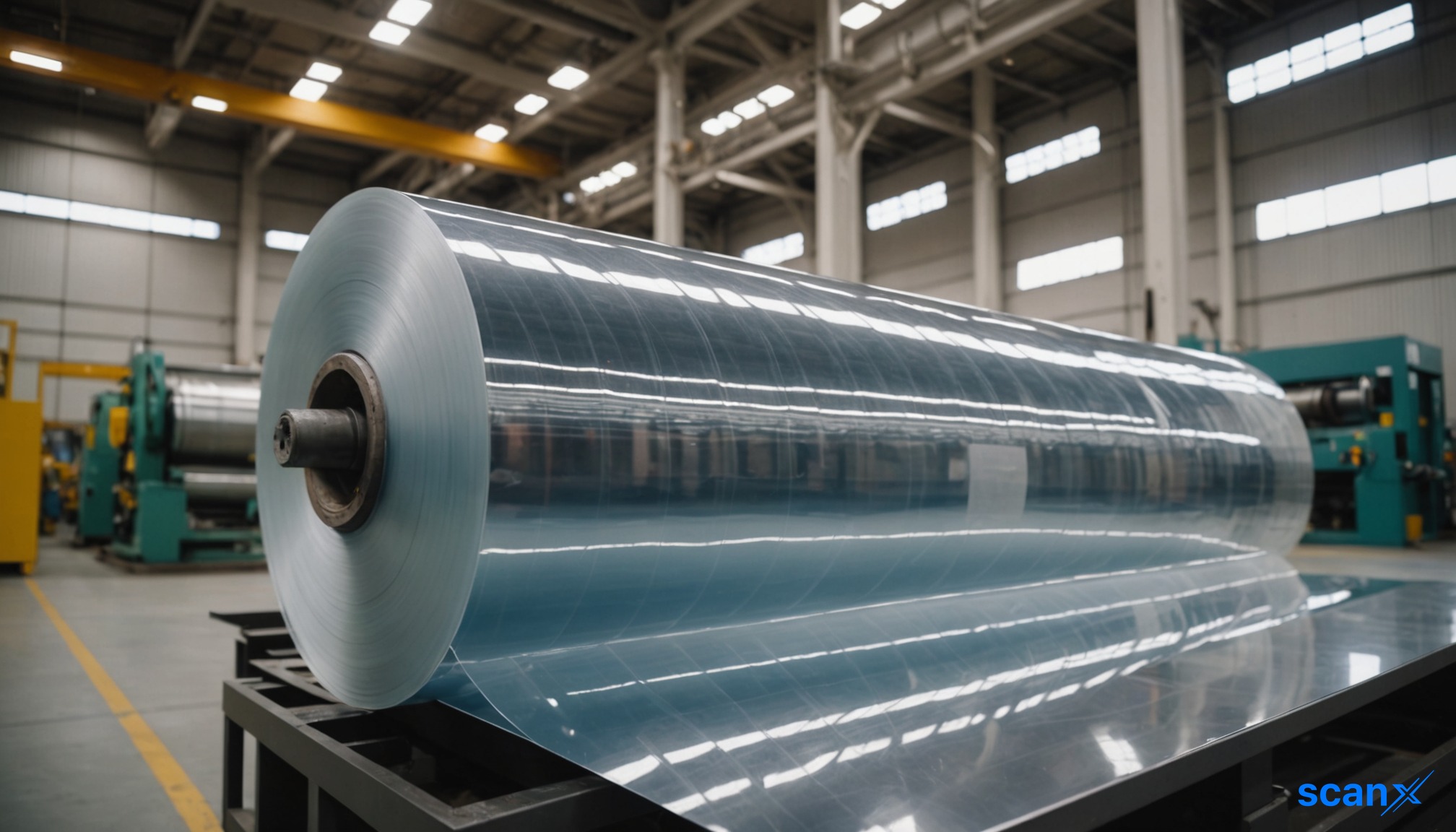

*this image is generated using AI for illustrative purposes only.
Garware Hi-Tech Films delivered its strongest quarter in history in the first quarter of FY27, with net profit rising 60% year-on-year to ₹133 crore. The specialty films manufacturer also recorded a 28% increase in revenue to ₹633 crore, driven by robust demand in high-value segments.
The company’s operational performance saw significant margin expansion, with EBITDA increasing 56% to ₹192 crore. This growth pushed the EBITDA margin above the 30% threshold for the first time, reflecting the benefits of the company's strategic shift toward specialty materials and away from traditional commodity films.
Financial Performance Overview
The recent results follow a strong FY26, where consolidated revenue reached an all-time high of ₹2,120 crore and EBITDA stood at ₹500 crore. The momentum continued into Q1FY27, highlighting improved profitability and execution efficiency.
| Metric | Q1FY27 | YoY Change |
|---|---|---|
| Revenue | ₹633 crore | +28% |
| EBITDA | ₹192 crore | +56% |
| Net Profit | ₹133 crore | +60% |
| EBITDA Margin | >30% | N/A |
Strategic Shift and Capital Allocation
Monika Garware, Vice Chairperson and Joint Managing Director, emphasized that the transformation behind the numbers is more critical than the figures themselves. The company has progressively moved from being predominantly a traditional film manufacturer to a specialty materials and high-value films entity. Key drivers include Paint Protection Films, Sun Control Films, and Architectural Films.
To support this growth, the Board approved a ₹191 crore investment in a new state-of-the-art Sun Control Film line incorporating advanced robotics. Additionally, progress continues on the TPU extrusion project, aimed at strengthening capabilities for the Paint Protection Films business. The management stated that capital allocation remains disciplined, focusing on investments that create sustainable long-term value rather than chasing growth for its own sake.
What the Numbers Show
A comparison between FY26 full-year metrics and Q1FY27 quarterly performance reveals a sharp acceleration in profitability. While FY26 EBITDA was ₹500 crore on revenue of ₹2,120 crore (approx. 23.6% margin), Q1FY27 achieved an EBITDA margin exceeding 30% on ₹633 crore revenue. This divergence indicates that the mix shift toward higher-margin specialty products is yielding disproportionate returns relative to top-line growth, as EBITDA grew nearly twice as fast (56%) as revenue (28%).
Governance and AGM Proceedings
The 69th Annual General Meeting was held on September 23, 2026, at the registered office in Chhatrapati Sambhaji Nagar. Ms. Monika Garware took the chair in the absence of Chairman Dr. S. B. Garware. Members adopted the audited standalone and consolidated financial statements for the year ended March 31, 2026, and declared a final dividend for FY26. Ms. Sonia Garware was re-appointed as a Director retiring by rotation, and the remuneration of Cost Auditors was ratified.
Historical Stock Returns for Garware Hi-Tech Films
| 1 Day | 5 Days | 1 Month | 6 Months | 1 Year | 5 Years |
|---|---|---|---|---|---|
| -1.75% | +0.59% | +5.55% | +73.61% | +129.90% | +721.21% |

How will the ₹191 crore investment in the new Sun Control Film line impact Garware's capacity utilization and margin sustainability once fully operational?
What are the projected timelines for the TPU extrusion project to contribute meaningfully to revenue, and how does this align with current demand trends in the Paint Protection Films segment?
Can Garware sustain EBITDA margins above 30% in subsequent quarters, or is this level likely to normalize as the initial benefits of the product mix shift diminish?
 20
20











 Create Custom Screeners
  Access 200+ Pre-built Filters
  Use 50+ Readymade Screener





