

GAIL AGM voting results show strong dividend support, board reshuffle passes


- GAIL shareholders approved FY26 results showing ₹1,38,697 crore revenue and ₹6,968 crore PAT
- Final dividend of ₹0.50 per share declared, receiving 99.72% voter support
- Director reappointments faced ~34% dissent from public institutions but passed due to promoter votes
- Related-party transactions with key subsidiaries approved with >99% support across all segments

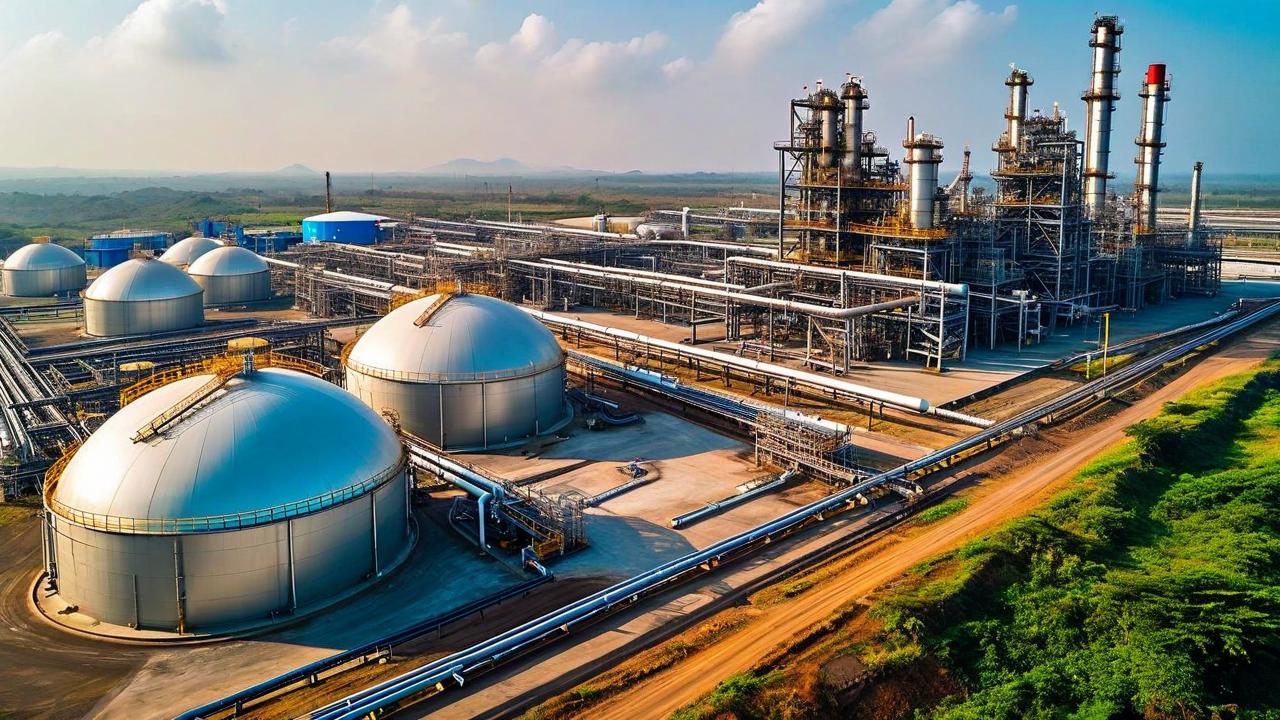

*this image is generated using AI for illustrative purposes only.
GAIL (India) Limited shareholders approved the company’s financial statements for FY26 and declared a final dividend of ₹0.50 per equity share during its 42nd Annual General Meeting held on August 27, 2026.
The meeting, conducted via video conferencing, also saw the re-appointment of two directors retiring by rotation and the approval of new board members and related-party transactions with key subsidiaries.
Financial Performance
Chairman and Managing Director Deepak Gupta highlighted that GAIL delivered steady financial performance despite global geopolitical tensions affecting LNG supply chains. The company reported revenue from operations of ₹1,38,697 crore for FY26, an increase from ₹1,37,288 crore in the previous fiscal year.
Profit before tax stood at ₹8,964 crore, while profit after tax was recorded at ₹6,968 crore. The Comptroller and Auditor General of India conveyed nil comments on the financial statements for the seventeenth consecutive year, affirming the company’s governance standards.
| Metric | FY26 | FY25 |
|---|---|---|
| Revenue from Operations | ₹1,38,697 crore | ₹1,37,288 crore |
| Profit Before Tax | ₹8,964 crore | Not Disclosed |
| Profit After Tax | ₹6,968 crore | Not Disclosed |
Operational Highlights
GAIL transmitted an average of approximately 122 MMSCMD of natural gas through its pipeline network and marketed around 104 MMSCMD during the fiscal year. The National Gas Grid now extends over 18,690 kilometres, with nearly 1,500 kilometres under construction.
The company’s LNG sourcing portfolio stands at 16.56 MMTPA. During FY26, GAIL imported 132 LNG cargoes, including seven spot cargoes. Long-term charter agreements were concluded for two vessels, GAIL Bhuwan and Energy Fidelity, bringing the total accessible fleet to nine LNG vessels.
Strategic Expansions
Several infrastructure projects progressed during the year:
- The Dabhol LNG Terminal achieved year-round operability and received its 1000th LNG cargo. The Board approved a scheme to merge Konkan LNG Limited with GAIL.
- Capacity of the Jamnagar-Loni LPG Pipeline is being expanded from 3.25 MMTPA to 6.5 MMTPA.
- A 60 KTA Polypropylene Unit was commissioned at Pata, increasing integrated complex capacity to 870 KTA.
- Work continues on the 500 KTA PDH-PP Project at Usar, estimated at ₹11,256 crore, and a 1.25 MMTPA PTA plant at Mangalore.
The Board granted in-principle approval for two gas-based fertiliser plants in Maharashtra and Chhattisgarh, involving a combined investment of approximately ₹21,000 crore.
Governance and Appointments
Shareholders approved the following resolutions:
- Re-appointment of R K Singhal and Ayush Gupta as directors.
- Appointment of Rohit Mathur as a Government Nominee Director and Satish Kumar Sinha as Director (Finance).
- Ratification of remuneration for cost auditors.
- Approval of material related-party transactions with Petronet LNG Limited, Indraprastha Gas Limited, Mahanagar Gas Limited, and Ramagundam Fertilizers and Chemicals Limited.
Voting Results Analysis
Detailed voting data released by the company reveals distinct shareholder sentiment across resolutions. While the promoter group voted unanimously in favor of all proposals, public institutional investors showed notable dissent on director appointments.
The dividend declaration received overwhelming support, with 99.72% of votes polled in favor. Similarly, the adoption of financial statements passed with 98.99% support.
However, the re-appointment of retiring directors R K Singhal and Ayush Gupta faced significant opposition from public institutions. For R K Singhal’s re-appointment, public institutional voters cast 33.78% of their votes against the resolution, though it still passed overall with 88.15% support due to promoter backing. A similar pattern emerged for Ayush Gupta, who received 33.79% negative votes from public institutions.
New director appointments also saw mixed reception from public institutions. Rohit Mathur’s appointment as Government Nominee Director received 34.57% negative votes from this segment, while Satish Kumar Sinha’s appointment as Director (Finance) saw 23.71% dissent. Despite this, all resolutions passed with requisite majority.
Related-party transaction approvals with subsidiaries like Petronet LNG, Indraprastha Gas, Mahanagar Gas, and Ramagundam Fertilizers received strong support, with over 99.5% affirmative votes across all categories.
What the Numbers Show
The divergence in voting patterns highlights a split between promoter and public institutional shareholder priorities. While promoters uniformly supported all management decisions, public institutions expressed skepticism toward director reappointments, rejecting roughly one-third of these proposals. This contrasts sharply with the near-unanimous approval (>99%) given to operational matters like dividends and related-party transactions, suggesting institutional comfort with financial outcomes but caution regarding board composition.
Historical Stock Returns for GAIL
| 1 Day | 5 Days | 1 Month | 6 Months | 1 Year | 5 Years |
|---|---|---|---|---|---|
| -0.63% | -2.67% | -4.83% | +8.70% | -6.13% | +58.06% |

How might the significant dissent from public institutional investors regarding director reappointments influence GAIL's future corporate governance reforms or board composition strategies?
What impact will the ₹21,000 crore investment in new gas-based fertiliser plants in Maharashtra and Chhattisgarh have on GAIL's capital expenditure trajectory and debt levels in the coming fiscal years?
With the National Gas Grid expanding by nearly 1,500 km under construction, how is GAIL planning to monetize this additional infrastructure to offset potential margin pressures from volatile global LNG prices?










 Access Market Heat-map & Insights
  Create, Save & Share your Screener
  Use 200+ Screening Filters





