Ford stock slips 2.36% as F-150 supply issue hits Q3 wholesales

scanx
Reviewed by
Ashish TScanX News Team
Key Highlights
  • Ford Motor Co shares fell 2.36% to $12.02 on Wednesday
  • CEO Jim Farley confirmed a supplier disruption reduced Q3 F-150 wholesales
  • NHTSA recalled 41,748 Ford vehicles due to defective exterior lighting
  • Fed rate hike to 3.75%-4% range pressures consumer affordability and borrowing costs
powered bylight_fuzz_icon
52324432

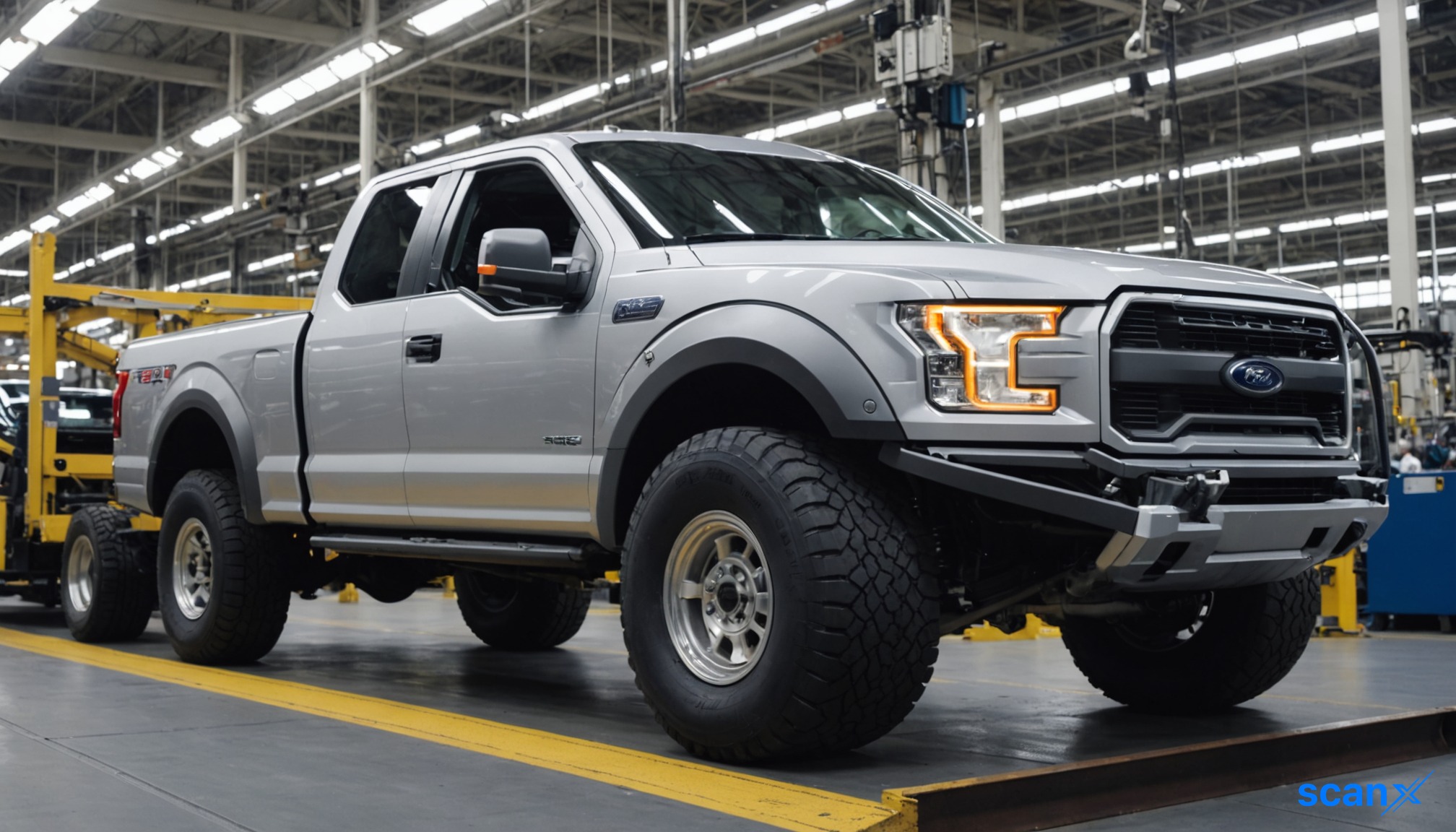
*this image is generated using AI for illustrative purposes only.

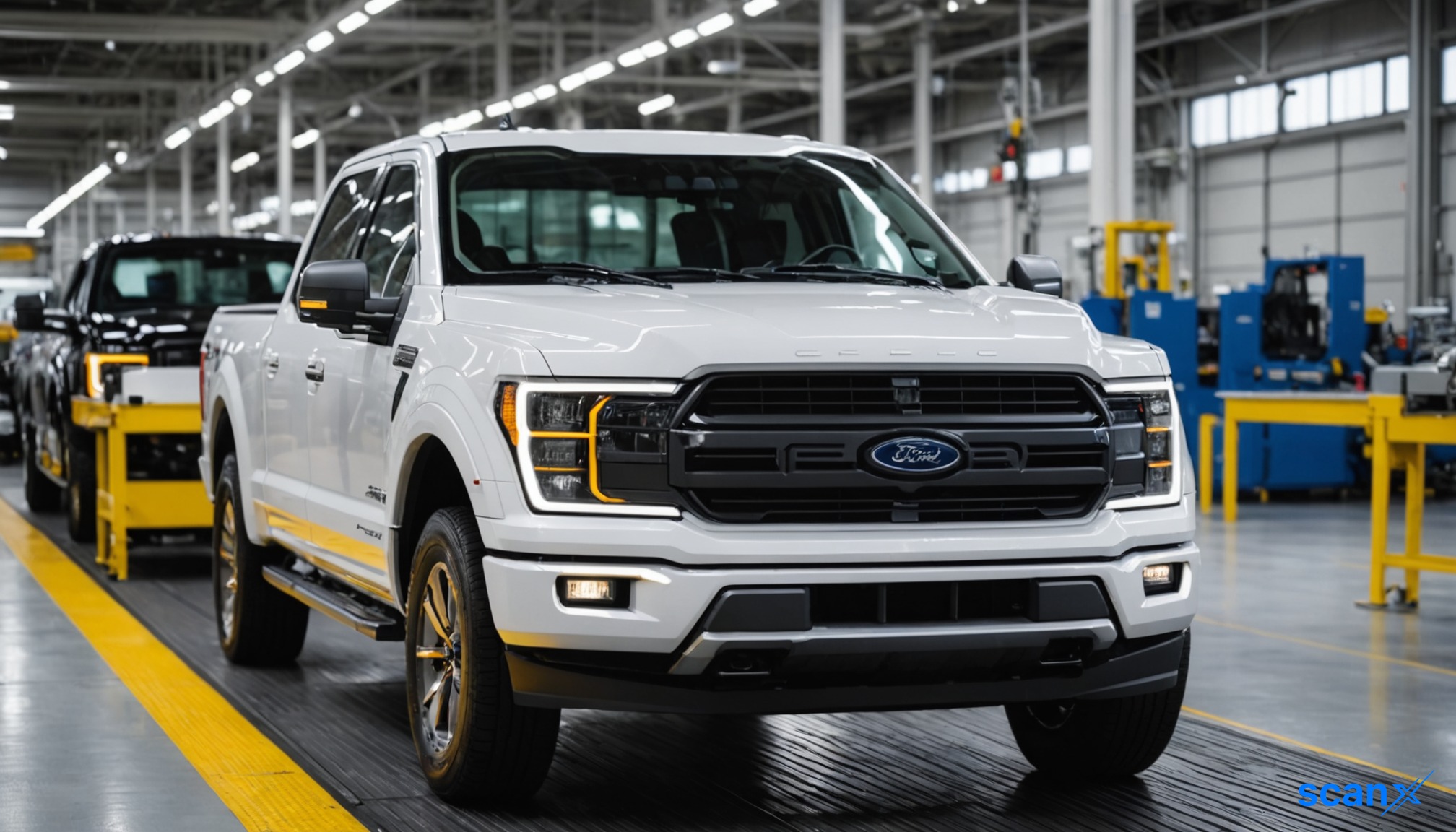
Ford Motor Co (NYSE: F) shares fell 2.36% to $12.02 on Wednesday afternoon. The decline followed confirmation from CEO Jim Farley that a temporary supplier disruption impacted third-quarter wholesale deliveries, compounded by a new vehicle recall.

Farley stated the supply chain bottleneck affecting the top-selling F-150 pickup line has been fully resolved. However, the operational gap is expected to reduce Q3 wholesale volume metrics. Since the F-Series trucks are Ford’s primary profit driver in North America, investors closely monitor these fluctuations for insights into quarterly gross margins and cash flow.

Safety recall impacts Expedition and Super Duty

Adding to the headwinds, the National Highway Traffic Safety Administration announced a recall covering 41,748 Ford vehicles due to defective exterior lighting. The recall affects select Ford Expedition SUVs and F-250, F-350, F-450, and F-550 Super Duty trucks. The regulator noted that a contaminated LED chip within the headlight assembly can cause sudden illumination failure, increasing crash risk.

Rising interest rates squeeze consumer affordability

Ford faces a challenging macroeconomic backdrop following the Federal Reserve’s 0.25% interest rate hike on September 16, which raised the federal funds target range to 3.75% to 4%. This tightening cycle creates a two-pronged headwind: it inflates Ford’s corporate borrowing costs and raises auto loan rates for consumers. Higher financing costs threaten demand for high-margin premium models like the F-Series and Expedition.

Bond markets further pressured sentiment, with the 10-year Treasury yield hitting 5.285% on Wednesday, its highest level since 2007. As Treasury yields benchmark auto loan rates, sustained high financing costs may continue to weigh on dealership traffic and sales volumes.

What the numbers show

The convergence of a specific production constraint (F-150 wholesales) and broad macroeconomic pressure (interest rates) highlights a dual risk profile for Ford. While the supplier issue is resolved, the reliance on high-margin vehicles makes the company particularly sensitive to the current interest rate environment, where higher borrowing costs directly reduce consumer purchasing power for premium segments.

Disclaimer: This article is AI-generated using data from ViewTrade. ScanX is not liable for any inaccuracies.

How might the 5.285% 10-year Treasury yield specifically impact Ford's Q4 sales volume projections for high-margin F-Series trucks?

Will the recent supplier disruption and recall issues trigger a broader review of Ford's supply chain resilience and quality control protocols for future model launches?

How are competitors like General Motors and Stellantis responding to the same interest rate pressures, and could this shift market share in the premium pickup segment?

like17
dislike

Ford, JPMorgan launch Michigan LIFT with $1bn contract and finance targets

scanx
Reviewed by
Shriram SScanX News Team
Key Highlights
  • Ford aspires to award up to $1 billion in contracts to suppliers through Michigan LIFT
  • JPMorganChase targets providing up to $1 billion in debt financing to participating suppliers
  • Initiative aims to attract 10-20 additional industrial buyers by 2036
  • Ford and JPMorganChase contributed $550,000 to Focus: HOPE for workforce training
powered bylight_fuzz_icon
52250425

*this image is generated using AI for illustrative purposes only.

Ford Motor Company (NYSE: F) and JPMorganChase (NYSE: JPM), alongside the State of Michigan, have launched Michigan LIFT, a public-private initiative designed to strengthen US manufacturing competitiveness. The platform aims to connect innovative suppliers with industrial buyers, targeting up to $1 billion in contracts and financing over the next decade.

The initiative, formally known as the Michigan Launchpad for Industrial Innovation & Transformation, addresses barriers such as uncertain demand and delayed financing that hinder supplier expansion. It operates by translating manufacturing challenges into "Open Calls" for suppliers capable of scaling production in Michigan.

Key Commitments and Targets

The founding participants have outlined specific financial and operational goals to drive growth through 2036:

Participant Role Target/Commitment
Ford Motor Company Anchor Industrial Buyer Up to $1 billion in contracts to suppliers
JPMorganChase Capital Provider Up to $1 billion in debt financing
Michigan Central, Newlab, MEDC Ecosystem Partners Attract 10–20 additional buyers representing >$1 billion annual demand
Newlab Execution Support $20 million in-kind support

Operational Framework and Focus Areas

Michigan LIFT focuses on critical sectors aligned with national security and economic resilience priorities. Suppliers seeking to establish or expand production can respond to Open Calls via the platform's website.

The priority sectors include:

  • Robotics and advanced manufacturing automation
  • Advanced energy, including nuclear, semiconductors, and battery storage
  • Advanced mobility, aerospace, propulsion, and critical components
  • Critical minerals mining, processing, and recovery
  • Life sciences manufacturing, including pharmaceutical precursors and medical isotopes

JPMorganChase’s participation is part of its Security and Resiliency Initiative, a $1.5 trillion, 10-year plan to facilitate industries critical to national security. The firm’s involvement builds on its existing $200 million commitment to Detroit, combining business investment with community development.

Workforce Development Support

To address skilled labor shortages, Ford Philanthropy and JPMorganChase announced $550,000 in collective support for Focus: HOPE, a Detroit-based nonprofit. The grant will enhance industrial manufacturing training programs, focusing on robotics, welding, and career placement services. This initiative links the platform’s innovation goals with the talent pipeline required to sustain Michigan’s supplier network.

Disclaimer: This article is AI-generated using data from ViewTrade. ScanX is not liable for any inaccuracies.

How will the $1 billion debt financing from JPMorganChase specifically mitigate the capital access barriers for small-to-mid-sized suppliers compared to traditional lending models?

What specific regulatory or supply chain risks might arise from concentrating critical mineral processing and semiconductor manufacturing in Michigan under this initiative?

Will the 'Open Call' mechanism effectively attract suppliers from outside the Midwest, or is it likely to reinforce existing regional industrial clusters?

like17
dislike

More News on Ford Motor