

Exide Industries Q1FY27 PAT surges 27% as gigafactory starts sampling


Exide Industries posted strong Q1FY27 results with PAT surging 27.1% to ₹407 crore and revenue growing 17.6% to ₹5,305 crore. The earnings call revealed double-digit volume growth across key segments and the commencement of sample deliveries from its Bengaluru gigafactory. Management outlined plans to localize 50-60% of raw materials within three years while maintaining a zero-debt balance sheet.

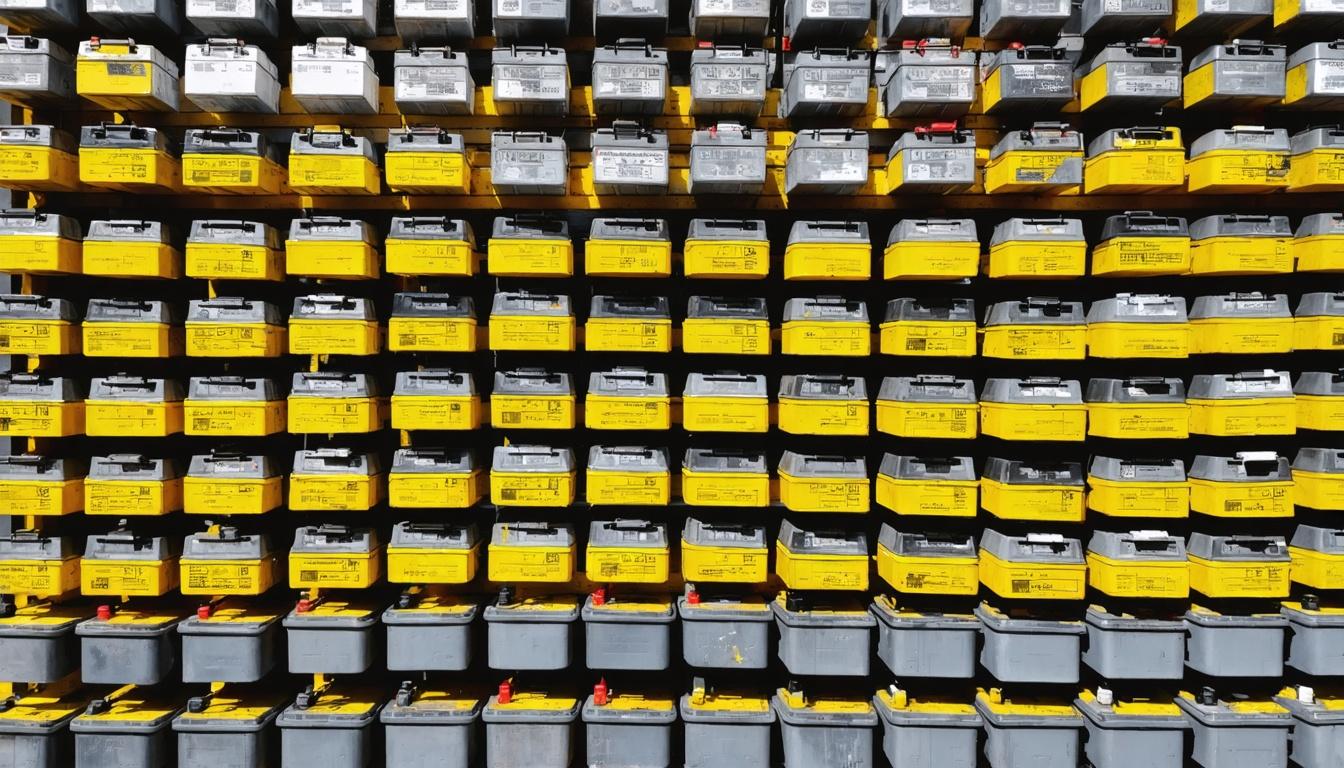

*this image is generated using AI for illustrative purposes only.
Exide Industries Limited delivered a robust start to FY27, with standalone profit after tax (PAT) rising 27.1% year-on-year to ₹407 crore in the quarter ended June 30, 2026. The strong performance was driven by broad-based demand across automotive OEMs, two-wheeler and four-wheeler replacement segments, and exports, alongside record revenue in the solar business. Management highlighted that the quarter benefited from peak summer demand for inverter batteries and continued positive consumer sentiment following GST rationalization. Despite headwinds from elevated input costs and rupee depreciation, the company expanded its EBITDA margin by 20 basis points to 12.4%, reflecting effective cost management and calibrated price adjustments.
Financial Performance
The Board of Directors approved the unaudited financial results on July 30, 2026. Standalone revenue from operations grew 17.6% to ₹5,305 crore, while standalone EBITDA increased 19.5% to ₹655 crore. Consolidated PAT rose 27.8% to ₹351 crore, with consolidated revenue reaching ₹5,528 crore. Exide maintained its zero-debt balance sheet, underscoring strong liquidity. Credit rating agency ICRA affirmed its AAA/Stable outlook and A1+ short-term rating.
During the earnings call held on August 3, 2026, Managing Director and CEO Avik Roy clarified that the top-line growth was supported by both volume and pricing. Volume growth remained double-digit across most segments, including 21% in four-wheeler OEM and 20% in two-wheeler OEM. Year-on-year price corrections contributed approximately 4% to 6% across various categories to offset input cost pressures.
| Metric | Q1FY27 (₹ Cr) | Q1FY26 (₹ Cr) | YoY Change |
|---|---|---|---|
| Standalone Revenue | 5,305 | 4,510 | +17.6% |
| Standalone EBITDA | 655 | 548 | +19.5% |
| Standalone PAT | 407 | 320 | +27.1% |
| Consolidated Revenue | 5,528 | 4,695 | +17.8% |
| Consolidated PAT | 351 | 275 | +27.8% |
Gigafactory Progress & Operational Updates
Exide Energy Solutions Limited (EESL), the wholly-owned subsidiary, achieved critical milestones at its Bengaluru gigafactory. All equipment across four production lines has been installed, and utilities are fully operational. The facility commenced customer sample deliveries from its NMC cylindrical line during Q1FY27, marking the first locally manufactured cells from the plant. LFP prismatic lines have also begun supplying samples for three-wheeler and telecom applications.
Management confirmed a target of 25% to 30% utilization of the lithium-ion gigafactory in its first year of operations. While yields are improving, full-scale yield assessment will only be possible once the plant operates on a three-shift basis. Exide is engaging with three major two-wheeler OEMs, which collectively account for approximately 80% of India’s EV volume, currently in the homologation process. Additionally, discussions have begun with major four-wheeler OEMs for the fourth line, expected to be commissioned by the end of FY27.
On the capital allocation front, the company approved ₹1,400 crore for capital expenditure in FY27, with ₹100 crore invested in July. Cumulative equity infusion into EESL stands at ₹4,902 crore as of July 31, 2026. The Phase 1 capacity is 6 GWh, with expansion potential to 12 GWh funded by operational cash flows.
Supply Chain & Raw Material Strategy
Addressing concerns over raw material sourcing, management noted that while electrolyte and other components are currently imported from China, there are no immediate embargoes affecting raw materials. However, export controls may tighten from November 2026, prompting the company to consider higher inventory levels. Exide is piloting domestic sourcing with Indian manufacturers, aiming to localize 50% to 60% of the bill of materials within two to three years. The company has also completed technology licensing for four to five products before recent Chinese export restrictions on machinery, securing its production roadmap.
What the Numbers Show
Exide’s ability to expand EBITDA margins despite currency headwinds demonstrates effective pricing power and operational efficiency. The transition from lead-acid to lithium-ion manufacturing represents a strategic diversification, leveraging existing distribution networks for aftermarket dominance in three-wheelers and two-wheelers. With solar revenue hitting an all-time high of over ₹400 crore in a single quarter, the company is successfully balancing core business resilience with high-growth new energy initiatives.
Historical Stock Returns for Exide Industries
| 1 Day | 5 Days | 1 Month | 6 Months | 1 Year | 5 Years |
|---|---|---|---|---|---|
| -0.76% | -3.87% | -7.91% | +42.22% | +4.79% | +129.71% |

How might the anticipated tightening of Chinese export controls on battery machinery from November 2026 impact Exide's localization timeline and short-term production costs?
What are the specific financial implications for Exide's cash flow if the gigafactory fails to achieve the targeted 25-30% utilization rate in its first year of operations?
Could the aggressive price corrections (4-6%) required to offset input costs erode Exide's pricing power if raw material inflation persists in subsequent quarters?
 20
20








 Access Market Heat-map & Insights
  Create, Save & Share your Screener
  Use 200+ Screening Filters





