

Exicom Tele-Systems files FY26 sustainability report with ₹89,479.94 lakh turnover


- Exicom Tele-Systems reported a turnover of ₹89,479.94 lakhs for FY26
- Critical Power segment contributed 69.03% of revenue, EVSE 30.97%
- Total energy consumption rose to 15,592.09 GJ with improved intensity
- Water withdrawal increased to 33,292 kilolitres due to new Hyderabad plant
- Battery waste surged to 31.32 metric tonnes amid enhanced collection efforts

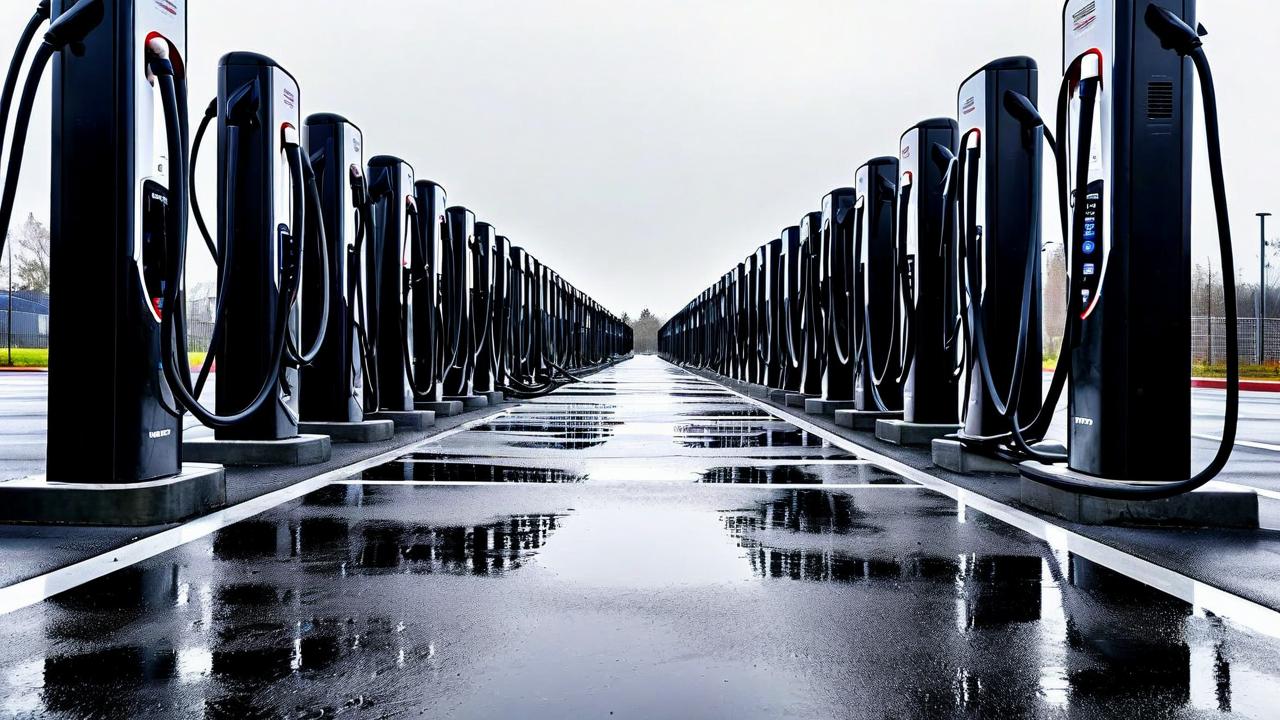

*this image is generated using AI for illustrative purposes only.
Exicom Tele-Systems has submitted its Business Responsibility and Sustainability Report (BRSR) for FY26 to the stock exchanges. The filing, dated August 26, 2026, discloses a total turnover of ₹89,479.94 lakhs and a net worth of ₹93,121.78 lakhs. The report outlines the company’s environmental, social, and governance (ESG) performance across its critical power and electric vehicle supply equipment (EVSE) verticals.
Business Operations and Revenue Split
The company operates through two primary business segments. Critical Power systems, which include DC power conversion and lithium-ion energy storage solutions, contributed 69.03% of the total turnover. The EVSE segment, comprising AC and DC chargers for automotive OEMs and charge point operators, accounted for the remaining 30.97%. Exicom serves customers across 28 states and 7 union territories in India, with exports contributing 8.38% of the total turnover.
Environmental Impact and Resource Efficiency
Exicom reported a total energy consumption of 15,592.09 GJ for FY26, an increase from 15,430.29 GJ in the prior year. Renewable energy sources contributed 819.09 GJ, while non-renewable sources accounted for 14,773.00 GJ. The company’s energy intensity per rupee of turnover decreased to 0.17 GJ/₹ Lakh from 0.21 in FY25.
Water withdrawal rose significantly to 33,292 kilolitres from 6,519 kilolitres in FY25, primarily due to the commencement of operations at the Hyderabad manufacturing facility. The company maintains a zero liquid discharge policy for industrial effluent, treating domestic wastewater via a Sewage Treatment Plant (STP) for reuse in gardening.
Waste Management and Emissions
Total waste generated increased to 102.14 metric tonnes from 95.07 metric tonnes in the previous year. Battery waste saw a notable rise to 31.32 metric tonnes, attributed to enhanced collection mechanisms and regulatory filings. The company recycled 23.1 metric tonnes of waste, up from 8.8 metric tonnes in FY25. Greenhouse gas emissions were reported for the first time in FY26, with Scope 1 emissions at 75.6 metric tons of CO2 equivalent and Scope 2 emissions at 2,811.7 metric tons.
Social Metrics and Governance
The company employed 317 permanent employees and engaged 923 workers at the end of FY26. Female representation stood at 11.04% among employees and 11.59% among workers. Exicom reported no fatalities or high-consequence work-related injuries during the year. The board includes two female directors, representing 29% of the total board composition.
What the Numbers Show
A notable divergence exists between the company’s revenue scale and its related-party transaction exposure. While sales to related parties constitute only 8.13% of total sales, loans and advances to related parties account for 99.71% of total loans and advances. This concentration suggests that the company’s lending activities are heavily directed toward its group entities rather than external third parties.
Key ESG Initiatives
- Installed a 1.25 MW rooftop solar power plant at Hyderabad and Gurugram facilities, meeting approximately 45% of energy requirements.
- Implemented regenerative load testing systems to recover energy during product testing, reducing overall power consumption.
- Achieved 100% coverage of employees and workers with health and accident insurance.
- Maintained zero complaints regarding sexual harassment, discrimination, or child labour.
Historical Stock Returns for Exicom Tele-Systems
| 1 Day | 5 Days | 1 Month | 6 Months | 1 Year | 5 Years |
|---|---|---|---|---|---|
| -3.43% | -10.53% | -18.35% | +20.01% | -5.61% | -38.27% |

How might the significant increase in water withdrawal at the new Hyderabad facility impact Exicom's long-term operational costs and ESG ratings given regional water scarcity concerns?
What strategic steps is Exicom planning to take to reduce its heavy reliance on non-renewable energy sources, considering only ~10% of its total energy consumption currently comes from renewables?
Given that related-party transactions constitute 99.71% of loans and advances, how does management plan to mitigate potential governance risks or improve capital efficiency for external stakeholders?
 20
20










 Create Custom Screeners
  Access 200+ Pre-built Filters
  Use 50+ Readymade Screener





