

Dhampur Sugar Mills shareholders adopt FY26 financials, confirm ₹2.00 dividend


- Shareholders adopted audited financial statements for FY26 with 99.99% approval
- Interim dividend of ₹2.00 per share confirmed as final dividend for FY26
- Subhash Pandey re-appointed as Whole Time Director for three years at ₹80 lakh annual pay
- Anuj Khanna re-appointed as Independent Director for a five-year term starting June 2026
- Dissent recorded on executive minimum remuneration resolutions, with ~3.7% voting against



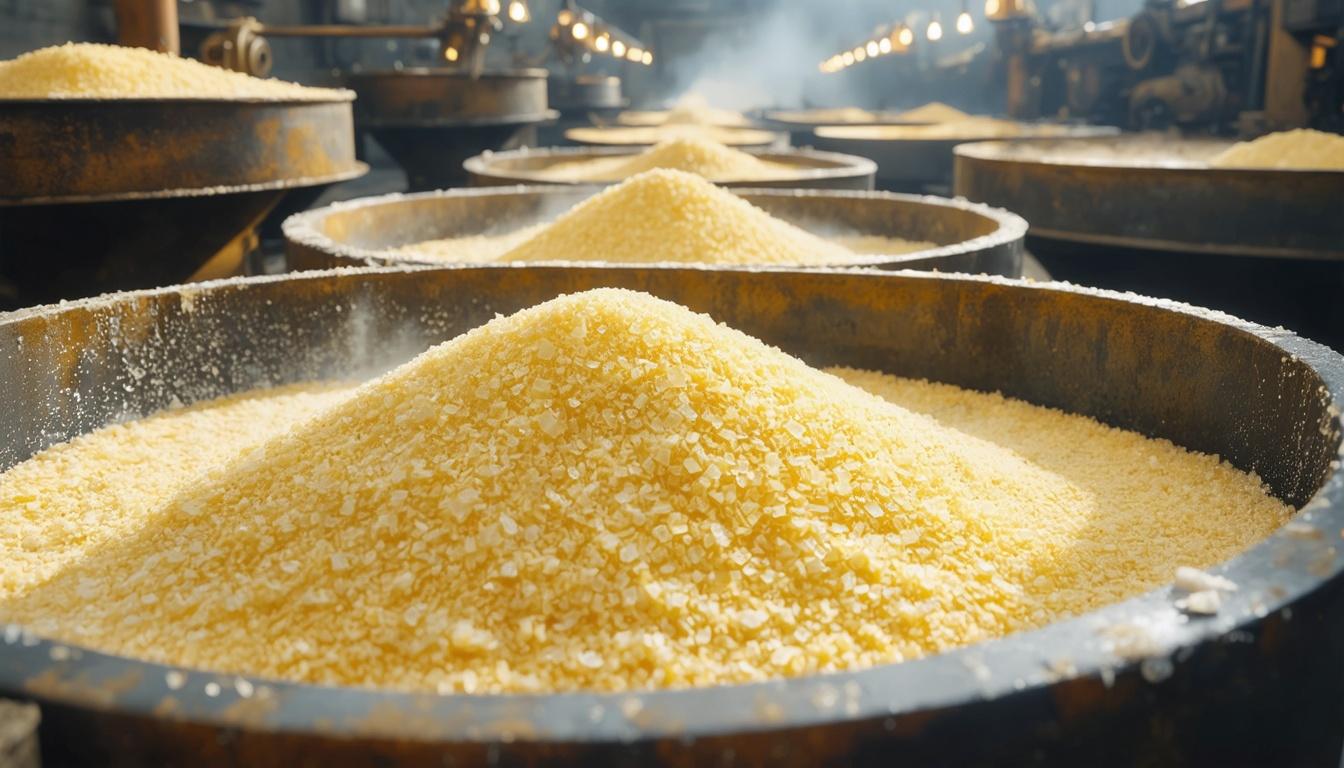
*this image is generated using AI for illustrative purposes only.
Dhampur Sugar Mills shareholders adopted the audited standalone and consolidated financial statements for the fiscal year ended March 31, 2026, during the 91st Annual General Meeting held on August 26, 2026. The meeting, conducted via video conferencing, also confirmed the payment of an interim dividend of ₹2.00 per equity share as the final dividend for the year.
The company reported improved operational and financial performance for FY26, driven by enhanced sugarcane quality, better sugar recovery, and higher sales volumes. Management highlighted lower costs in maize-based ethanol production as a key factor supporting margins. Additionally, the Chairman addressed strategic initiatives, including a proposed foray into the NBFC sector and exploration of value-added chemicals from bio-streams.
Key resolutions passed
Shareholders approved nine resolutions with requisite majorities. The adoption of annual accounts received overwhelming support, with 99.99% of valid votes cast in favor. The confirmation of the final dividend similarly secured 99.99% support.
| Resolution | Votes in Favour | Votes Against | % Favorable |
|---|---|---|---|
| Adoption of Annual Accounts | 33,755,909 | 73 | 99.99% |
| Confirmation of Final Dividend (₹2.00/share) | 33,795,042 | 70 | 99.99% |
| Re-appointment of Subhash Pandey (WTD) | 33,788,163 | 6,549 | 99.98% |
| Re-appointment of Anuj Khanna (Ind. Dir.) | 33,788,338 | 6,374 | 99.98% |
The meeting also ratified the remuneration of cost auditors at ₹2.00 lakh plus taxes for FY27 and approved commission payments to non-executive independent directors, capped at 1% of net profits for FY26.
Executive remuneration and director appointments
Special resolutions regarding minimum remuneration for executive directors drew notable dissent compared to other agenda items. The proposal to pay minimum remuneration to Chairman Ashok Kumar Goel in case of inadequate profits during FY28 received 96.30% votes in favor, with 990,387 votes against. A similar resolution for Vice Chairman and Managing Director Gaurav Goel passed with 96.14% support, recording the same number of dissenting votes.
The board saw continuity in leadership roles. Subhash Pandey was re-appointed as Whole Time Director for a three-year term commencing September 25, 2026, with an annual remuneration of ₹80 lakh. Anuj Khanna was re-appointed as Non-Executive Independent Director for a five-year term effective June 7, 2026.
Strategic outlook and shareholder engagement
During the session, eleven members raised queries which were addressed by the management. The company emphasized its commitment to shareholder value through recent interim dividends and equity share buy-backs. The management reiterated its focus on identifying new growth opportunities beyond traditional sugar and ethanol operations, specifically targeting the NBFC sector and bio-based chemical derivatives.
Historical Stock Returns for Dhampur Sugar Mills
| 1 Day | 5 Days | 1 Month | 6 Months | 1 Year | 5 Years |
|---|---|---|---|---|---|
| +2.46% | +9.97% | +26.92% | +48.05% | +47.77% | -28.77% |

What specific regulatory approvals are required for Dhampur Sugar Mills to enter the NBFC sector, and what is the anticipated timeline for obtaining them?
How will the proposed shift toward value-added bio-based chemicals impact the company's capital expenditure requirements and return on invested capital in the next fiscal year?
Given the 3.7% dissent on executive remuneration, how might this shareholder sentiment influence future governance reforms or board composition changes?
 19
19













 Create Custom Screeners
  Access 200+ Pre-built Filters
  Use 50+ Readymade Screener





