The Buckle board member Angie Klein resigns effective August 2026

scanx
Reviewed by
Jubin VScanX News Team
Key Highlights
  • Angie J. Klein resigns from The Buckle board effective August 30, 2026
  • Resignation due to obligations from a new professional role
  • Klein served on the board since December 2019
  • Chairman Daniel J. Hirschfeld thanked her for her contributions
powered bylight_fuzz_icon
49460636

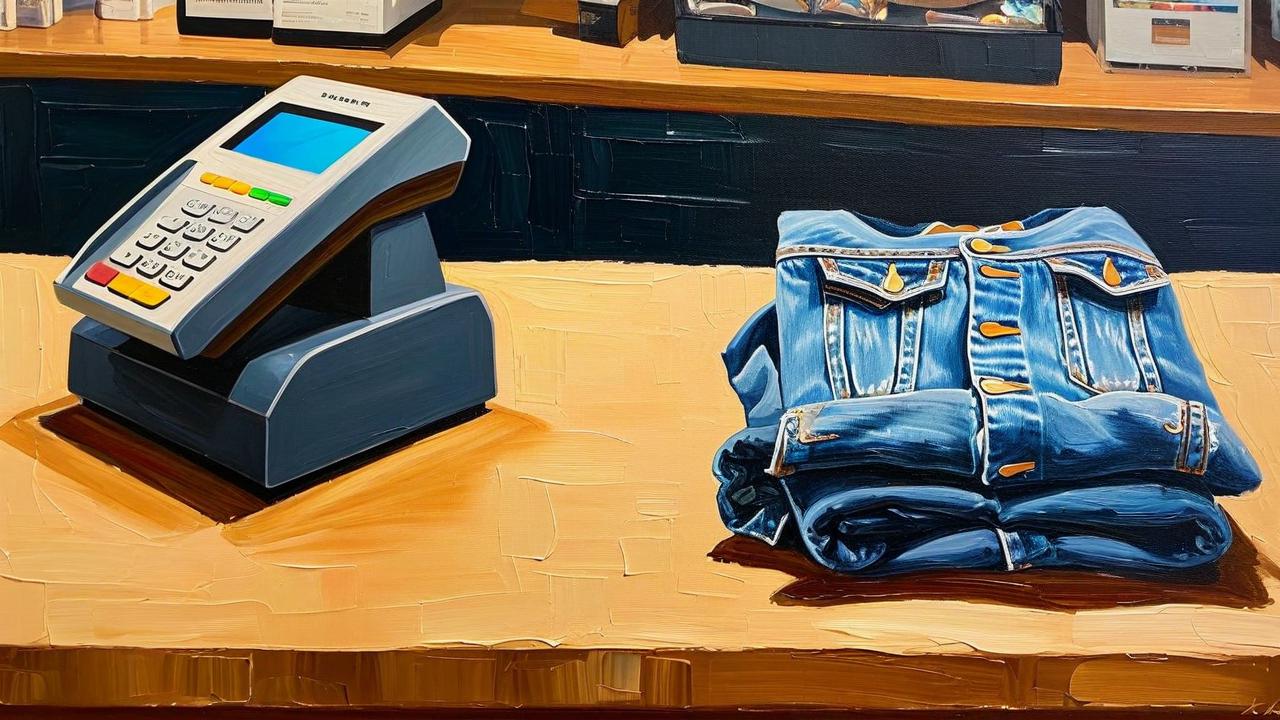
*this image is generated using AI for illustrative purposes only.

The Buckle, Inc. (NYSE: BKE) announced that Angie J. Klein has tendered her resignation from the company’s Board of Directors, effective August 30, 2026.

Klein cited obligations related to her new professional role as the reason for stepping down. She has served as a director since December 2019, contributing to the board for nearly seven years.

Board Reaction

Daniel J. Hirschfeld, Chairman of the Board, thanked Klein for her contributions and insights during her tenure as a valued board member.

Klein expressed gratitude for the opportunity to serve, highlighting her oversight of corporate social responsibility initiatives and her support for nominating and governance efforts. She stated she was proud of the work accomplished with the team.

About The Buckle

The Buckle operates 447 retail stores across 42 states. Headquartered in Kearney, Nebraska, the specialty retailer focuses on apparel, accessories, and footwear, including its exclusive denim brand, BKE.

Disclaimer: This article is AI-generated using data from ViewTrade. ScanX is not liable for any inaccuracies.

Has The Buckle identified a successor for Angie Klein, and what specific expertise will the new board member bring to replace her oversight of CSR and governance?

How might the transition of board leadership impact The Buckle's strategic focus on its exclusive denim brand and broader apparel inventory management?

Will Klein's departure signal a broader restructuring of the Board's composition to address evolving challenges in the specialty retail sector?

like19
dislike

Buckle Q2 EPS $0.87 beats estimate; women's sales jump 9.5%

scanx
Reviewed by
Jubin VScanX News Team
Key Highlights
  • Q2 FY26 diluted EPS was $0.87, beating the $0.81 estimate
  • Net sales rose 4.6% YoY to $319.8M, topping estimates
  • Women's sales jumped 9.5%, accounting for 50% of total sales
  • Gross margin expanded 40 bps to 47.8%, aided by tariff refunds
  • Operating margin narrowed to 17.4% from 18.4% due to higher SG&A
powered bylight_fuzz_icon
48855365

*this image is generated using AI for illustrative purposes only.

The Buckle, Inc. (NYSE: BKE) reported second quarter fiscal 2026 diluted earnings per share of $0.87, beating the analyst consensus estimate of $0.81. Net sales rose 4.6% year-over-year to $319.8 million, surpassing the estimated $314.6 million. The stock traded higher on Friday following the results.

For the full first half (26 weeks ended August 1, 2026), net income expanded significantly to $91.3 million from $80.2 million in the prior year period. Diluted earnings per share climbed to $1.79 from $1.59. Total revenue for the six-month stretch reached $608.6 million, marking a 5.3% year-over-year increase.

Sales and Traffic Dynamics

Comparable store net sales increased 2.1% in the quarter and 3.5% over the 26-week period. Online sales contributed modestly to growth, rising 2.3% to $44.6 million in the quarter and 2.5% to $92.2 million for the half-year. Average unit retail increased about 4.5%, while average transaction value climbed roughly 3.5%.

Metric Q2 FY26 Q2 FY25 Change
Net Sales $319.8 million $305.7 million +4.6%
Comparable Store Sales +2.1% — —
Online Sales $44.6 million $43.6 million +2.3%

Segment Performance

Women’s sales jumped 9.5% and accounted for 50% of quarterly sales, up from 47.5% a year earlier. Women’s denim sales increased 11%, while alternative pants sales surged nearly 50%. Women’s tops rose about 10.5%.

Meanwhile, the men’s business was roughly flat. Men’s denim sales fell about 3.5%, although men’s tops grew 3.5%. Buckle’s kids business increased 11%.

Margin and Operational Efficiency

Gross margin increased 40 basis points to 47.8%. Merchandise margin improved 110 basis points, including a 65-basis-point benefit from tariff refunds. Excluding tariff refunds, merchandise margin still improved 45 basis points, helped in part by a higher mix of private-label sales. Strong regular-price sales, fewer markdowns, and new products posting solid sell-through rates also supported margins.

However, operating margin narrowed to 17.4% from 18.4% as Buckle increased spending on marketing, store labor, and other expenses. Income from operations declined slightly to $55.8 million from $56.3 million in the prior year quarter, despite gross profit expanding to $153.0 million from $145.0 million.

What the Numbers Show

A divergence emerged between top-line growth and operational profitability. While net sales rose 4.6%, income from operations declined slightly. This contraction occurred despite gross profit expanding, suggesting that selling and general administrative expenses—which rose to $97.2 million from $88.7 million—outpaced the benefits of higher sales volume and gross margin expansion. The improvement in merchandise margin was partially offset by increased operating expenditures.

Balance Sheet Position

Cash and cash equivalents stood at $264.8 million as of August 1, 2026, compared to $249.5 million at the end of the fiscal year. The company ended the quarter with $322.9 million in cash and investments. Inventory levels increased to $161.4 million from $139.5 million at the start of the fiscal year, reflecting build-up ahead of peak seasons. Total current liabilities were $231.5 million, with accounts payable rising to $73.2 million from $47.7 million at the previous fiscal year-end.

Buckle operated 446 stores at the end of the quarter, up from 440 stores a year earlier.

Disclaimer: This article is AI-generated using data from ViewTrade. ScanX is not liable for any inaccuracies.

How sustainable is the 40-basis-point gross margin expansion given that operating expenses outpaced top-line growth, and what specific cost-control measures might Buckle implement in the second half of the fiscal year?

With women's sales driving significant growth while men's business remained flat, will Buckle adjust its inventory allocation or marketing spend to better balance performance across gender segments?

Given the reliance on tariff refunds for a portion of the merchandise margin improvement, how vulnerable is Buckle's profitability to potential changes in trade policy or supply chain costs in the near future?

like15
dislike

More News on Buckle Inc