

Boskalis H1 Results: Net profit falls 35% YoY to EUR 275 million


Boskalis posted a 35% drop in net profit to EUR 275 million and a 19% revenue decline to EUR 1.9 billion in H1 2026. Lower fleet utilization in Dredging & Inland Infra due to geopolitical issues drove the decline, though Offshore Energy remained resilient. The company ended with a net cash position of EUR 862 million.

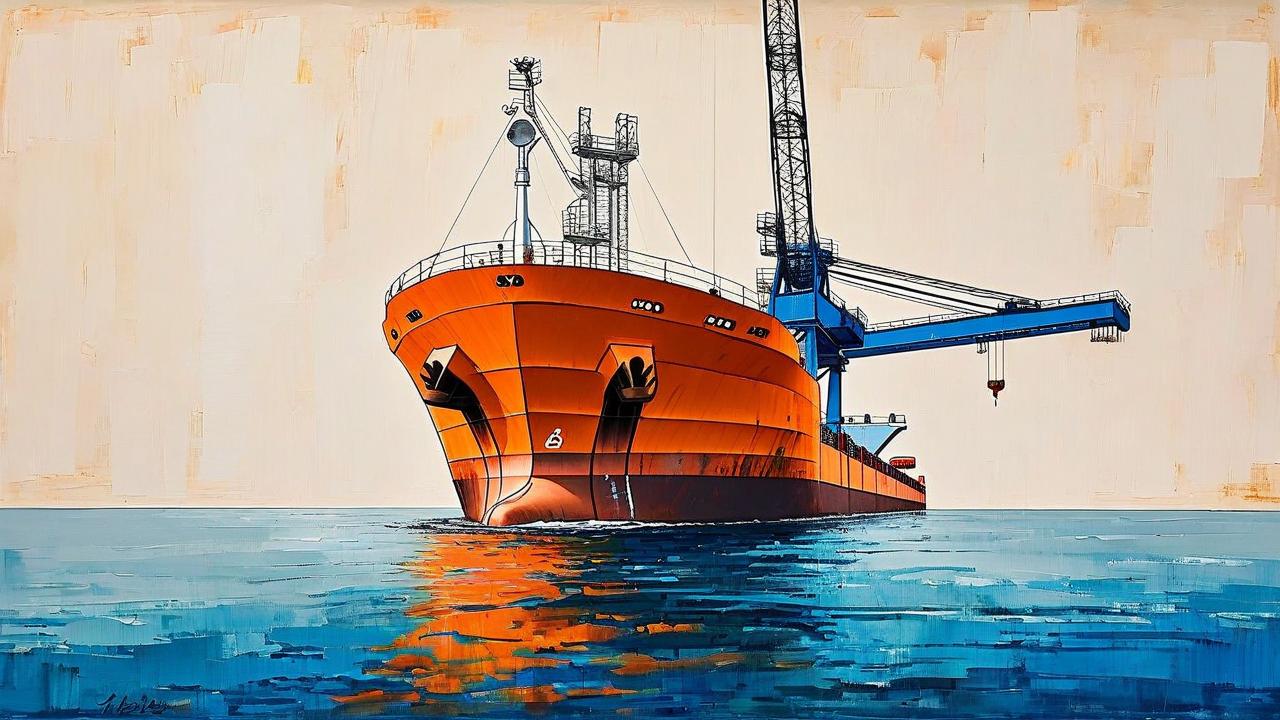

*this image is generated using AI for illustrative purposes only.
Boskalis reported a significant contraction in profitability for the first half of 2026, with net profit falling 35% year-on-year to EUR 275 million, down from EUR 426 million in the same period last year. Revenue declined 19% to EUR 1,902 million, reflecting challenging market conditions characterized by geopolitical uncertainty and subdued client investment appetite across several regions.
The downturn was most pronounced in the Dredging & Inland Infra division, where lower fleet utilization impacted earnings. Geopolitical tensions in the Middle East disrupted operations, leading to extremely low utilization of cutter suction dredgers and reduced occupancy for hopper dredgers and subsea rock installation vessels compared to the exceptionally high levels recorded in H1 2025. Activity levels in Asia also underperformed expectations.
In contrast, the Offshore Energy division delivered a strong performance despite a year-on-year decline in revenue and earnings against an exceptionally strong prior period. The Contracting cluster benefited from excellent project execution on major offshore wind projects, while Subsea Cables performed well supported by ongoing installation activities in Europe and North America. However, the Services cluster saw results below the prior year’s peak, particularly in Marine Survey and Heavy Marine Transport, which were affected by unrest in the Middle East.
Towage & Salvage operations remained stable, with Smit Lamnalco securing contract extensions including a renewal in Gabon. Adjusted for the deconsolidation of Australian and Papua New Guinean activities sold in Q3 2025, revenue was virtually stable. Salvage activities remained quiet with limited emergency response contracts, though results benefited from customary settlements on previously completed projects.
What the Numbers Show
EBITDA margin contracted significantly alongside the revenue decline. With EBITDA falling 26% to EUR 553 million against a 19% revenue drop to EUR 1,902 million, the operating leverage worked against the company during this period. The EBITDA margin stood at approximately 29.1% in H1 2026 (EUR 553 million / EUR 1,902 million), compared to 31.9% in H1 2025 (EUR 748 million / EUR 2,345 million), indicating that fixed costs were less effectively absorbed by the lower revenue base.
Balance Sheet and Order Book
Boskalis maintained a strong financial position, closing the period with a net cash position of EUR 862 million, including lease liabilities, up from EUR 565 million at the end of June 2025. The solvency ratio stood at 56.9%. Available financing capacity amounted to approximately EUR 1.4 billion.
The order book decreased slightly to EUR 6,757 million as of June 30, 2026, from EUR 7,004 million at the end of 2025. This reduction was driven by the Offshore Energy division as large projects moved into execution, partially offset by growth in the Dredging & Inland Infra division following new awards such as the Luleå port deepening project in Sweden.
| Metric | H1 2026 | H1 2025 | Change |
|---|---|---|---|
| Revenue | EUR 1,902 million | EUR 2,345 million | -19% |
| EBITDA | EUR 553 million | EUR 748 million | -26% |
| Net Profit | EUR 275 million | EUR 426 million | -35% |
| Order Book | EUR 6,757 million | EUR 6,181 million* | +9% |
| Net Cash Position | EUR 862 million | EUR 565 million | +53% |
*Order book comparison is against H1 2025 figure provided in source table; year-end 2025 order book was EUR 7,004 million.

How might Boskalis adjust its fleet utilization strategy in the Dredging & Inland Infra division to mitigate the impact of ongoing geopolitical tensions in the Middle East?
Given the contraction in EBITDA margins, what specific cost-cutting measures or operational efficiencies is management planning to implement to protect profitability in H2 2026?
To what extent will the strong performance of the Offshore Energy division's Subsea Cables cluster offset the broader market downturn, and are there new major contracts in the pipeline for 2027?
 20
20





 Access Market Heat-map & Insights
  Create, Save & Share your Screener
  Use 200+ Screening Filters





