

Bajaj Healthcare guides 10-15% FY27 revenue growth on API strength


Bajaj Healthcare Limited posted a 15.8% increase in Q1FY27 PAT to ₹13.7 crore, fueled by a 27.1% surge in domestic API sales. Management guided for 10-15% revenue growth in FY27, highlighting strategic expansions in peptides and oncology.



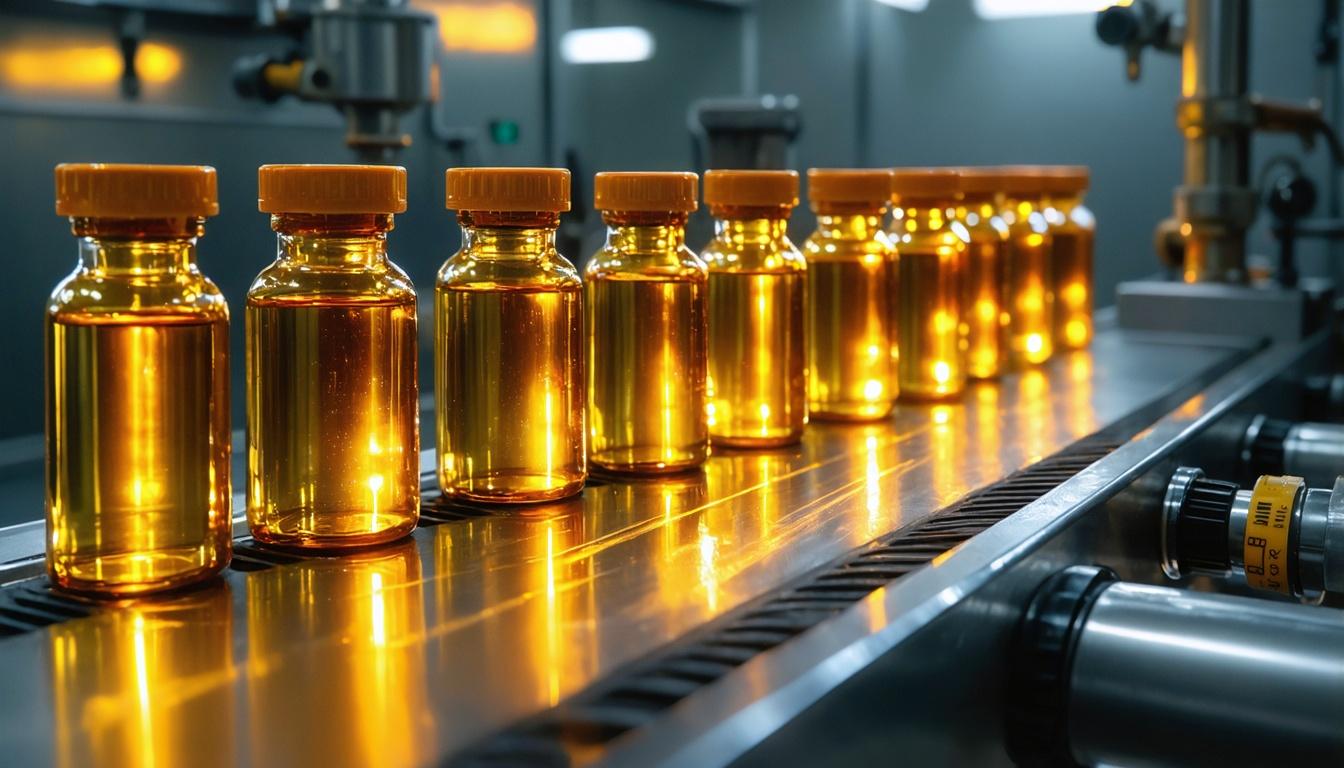
*this image is generated using AI for illustrative purposes only.
Bajaj Healthcare Limited reported a net profit of ₹13.7 crore for the quarter ended June 30, 2026, an increase of 15.8% compared to the same period last year, driven by robust domestic API sales and expanding margins. During its first-ever earnings call on July 21, 2026, management provided forward-looking guidance, projecting revenue growth of 10% to 15% for FY27, supported by stable API prices and volume-led expansion in the domestic segment.
The company’s revenue from operations grew 11.3% year-on-year to ₹165.63 crore, while EBITDA margins expanded to 17.8% from 17.0% in Q1FY26. Managing Director Anil Jain highlighted that domestic API sales rose 27.1% year-on-year to ₹92.26 crore, offsetting a decline in export sales due to geopolitical disruptions in West Asia. The improved financial performance was further bolstered by a sequential revenue growth of 8.2% from ₹153.06 crore in the preceding quarter.
Financial Performance
Profit after tax (PAT) margin improved to 8.3% from 8.0% in the prior year. Gross profit increased 16.2% to ₹80.4 crore, with gross margins expanding to 48.3% from 46.2% in Q1FY26. Chief Financial Officer Rohan Parekh noted that net worth stood at ₹533 crore as of March 31, 2026, up from ₹466 crore last year, with the debt-to-equity ratio improving to 0.45 from 0.48 in FY25.
| Particulars | Q1 FY27 | Q1 FY26 | Y-o-Y |
|---|---|---|---|
| Revenue from Operations | ₹165.63 crore | ₹148.84 crore | 11.3% |
| Gross Profit | ₹80.35 crore | ₹69.13 crore | 16.2% |
| EBITDA | ₹29.56 crore | ₹25.39 crore | 16.4% |
| EBITDA Margin | 17.8% | 17.0% | — |
| Profit After Tax | ₹13.70 crore | ₹11.83 crore | 15.8% |
Strategic Initiatives and Pipeline
Bajaj Healthcare secured a recommendation from the US Securities and Exchange Commission (SEC) for Cenobamate Tablets, a milestone for commercializing this anti-seizure medication. The company expects to generate ₹10–12 crore in revenue from this product in FY27. Additionally, Bajaj Oncocare, launched in 2024, now operates across 23 states with over 15 brands. The company is also advancing its peptide manufacturing facility, targeting commissioning by Q4 2027, with initial production focused on Semaglutide for the Indian market.
What the Numbers Show
The divergence between domestic API growth (27.1%) and export declines highlights a strategic shift towards high-margin domestic markets and specialty formulations. With receivable days improving from 145 to 131 days, management anticipates further working capital optimization. The planned capex of ₹40–50 crore annually will fund backward integration in Vitamin C and other key molecules, aiming to reduce dependency on Chinese raw materials and enhance long-term margins.
Regulatory Disclosure
In an intimation under Regulation 30 of SEBI (LODR) Regulations, 2015, the company confirmed that the transcript of the earnings call held on July 21, 2026, has been uploaded to its website. The company filed two CEP applications during the quarter, bringing cumulative filings to twelve, with eight approved and four under review.
Source: https://lodr-files.dhan.co/lodr-inputs/Company/INE411U01027/9aebc345-6dab-4c87-a71c-8b7e6878bd38.pdf
Historical Stock Returns for Bajaj HealthCare
| 1 Day | 5 Days | 1 Month | 6 Months | 1 Year | 5 Years |
|---|---|---|---|---|---|
| -4.14% | -1.86% | -1.83% | -7.17% | -30.89% | -10.59% |

How might the geopolitical disruptions in West Asia continue to impact Bajaj Healthcare's export volumes and overall revenue mix in the coming quarters?
What specific regulatory hurdles or timeline risks could affect the commissioning of the peptide manufacturing facility by Q4 2027 and its initial Semaglutide production?
Will the planned annual capex of ₹40–50 crore for backward integration in Vitamin C significantly alter the company's cost structure and margin profile by FY28?
 19
19




 Access Market Heat-map & Insights
  Create, Save & Share your Screener
  Use 200+ Screening Filters





