

Apollo Tyres Q4 FY26 Results: 14% Revenue Growth, ₹3,500 Cr CapEx & Margin Outlook


Apollo Tyres reported strong Q4 FY26 results with consolidated revenue of ₹73,356.74 million (+14% YoY) and net profit of ₹6,309.73 million. The company announced ₹3,500 crore FY27 CapEx with ~80% for growth, ₹3,000 crore earmarked for India capacity expansion amid rising rubber costs, while Europe restructuring targets 16%+ EBITDA margins in the medium term.


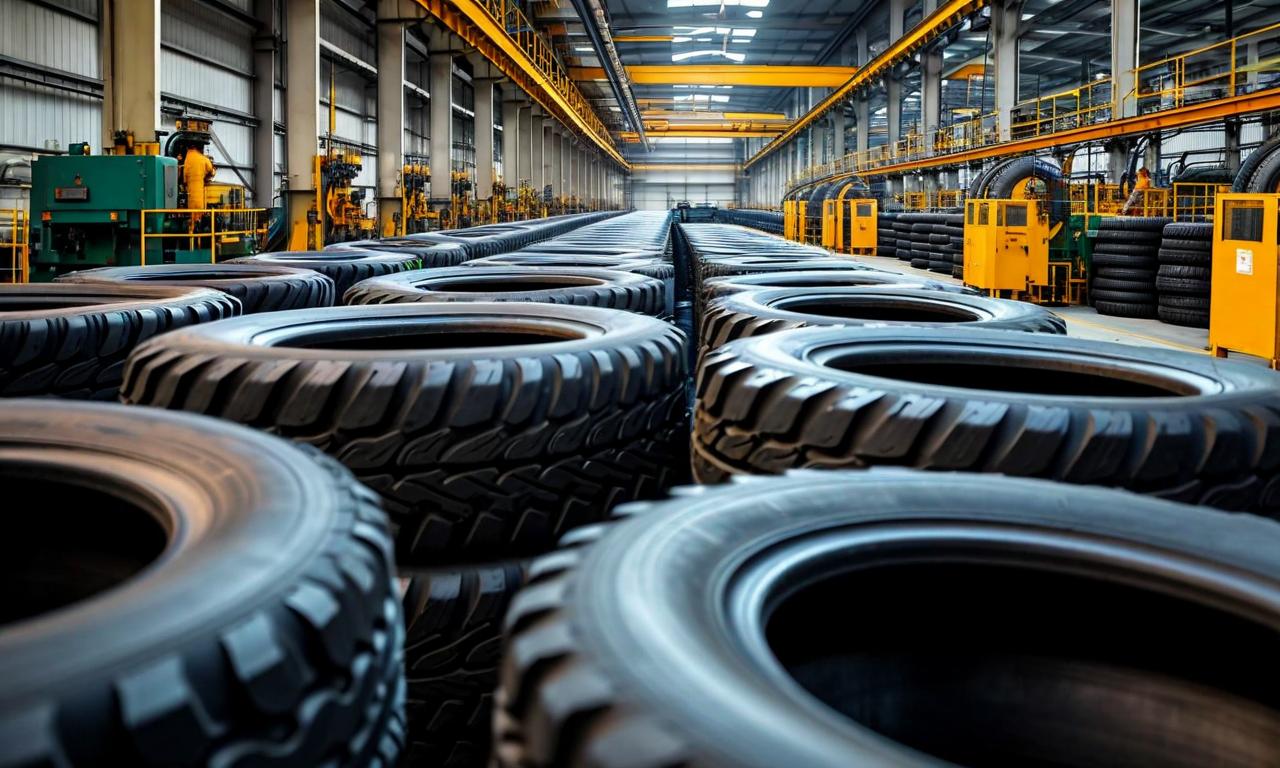
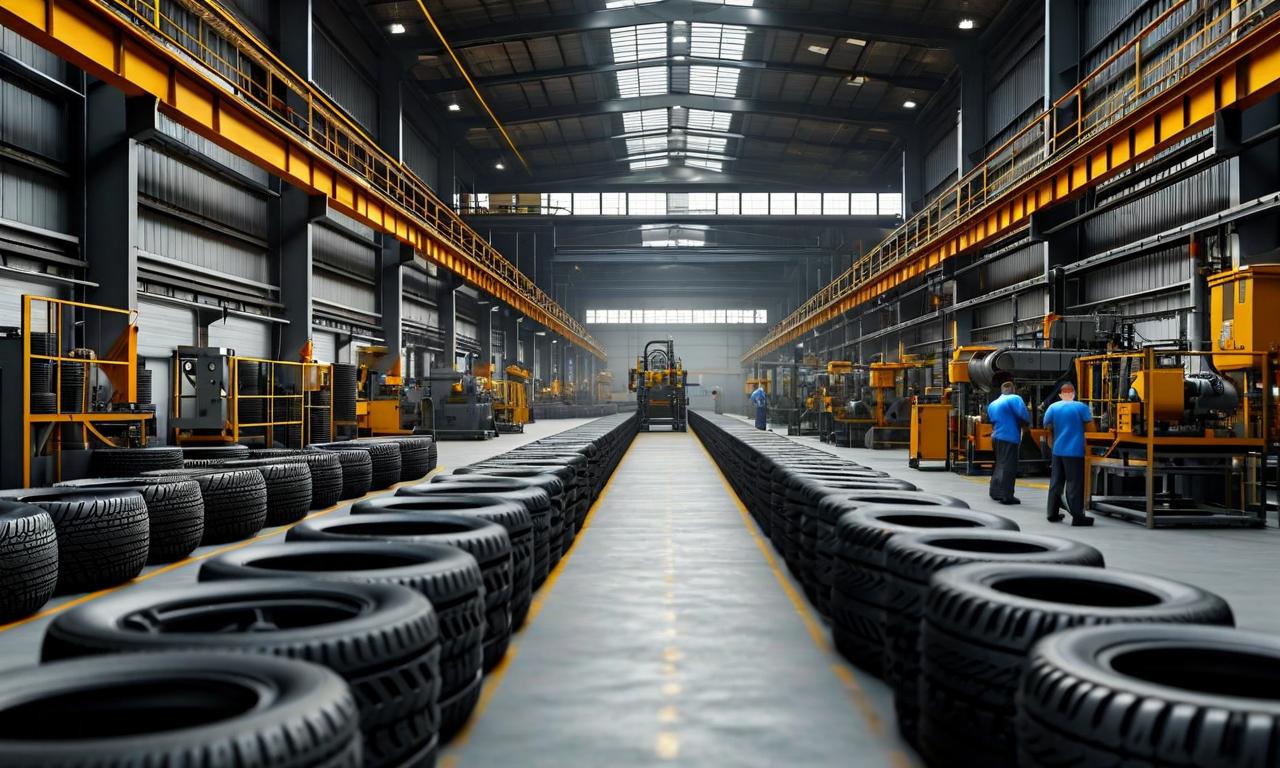
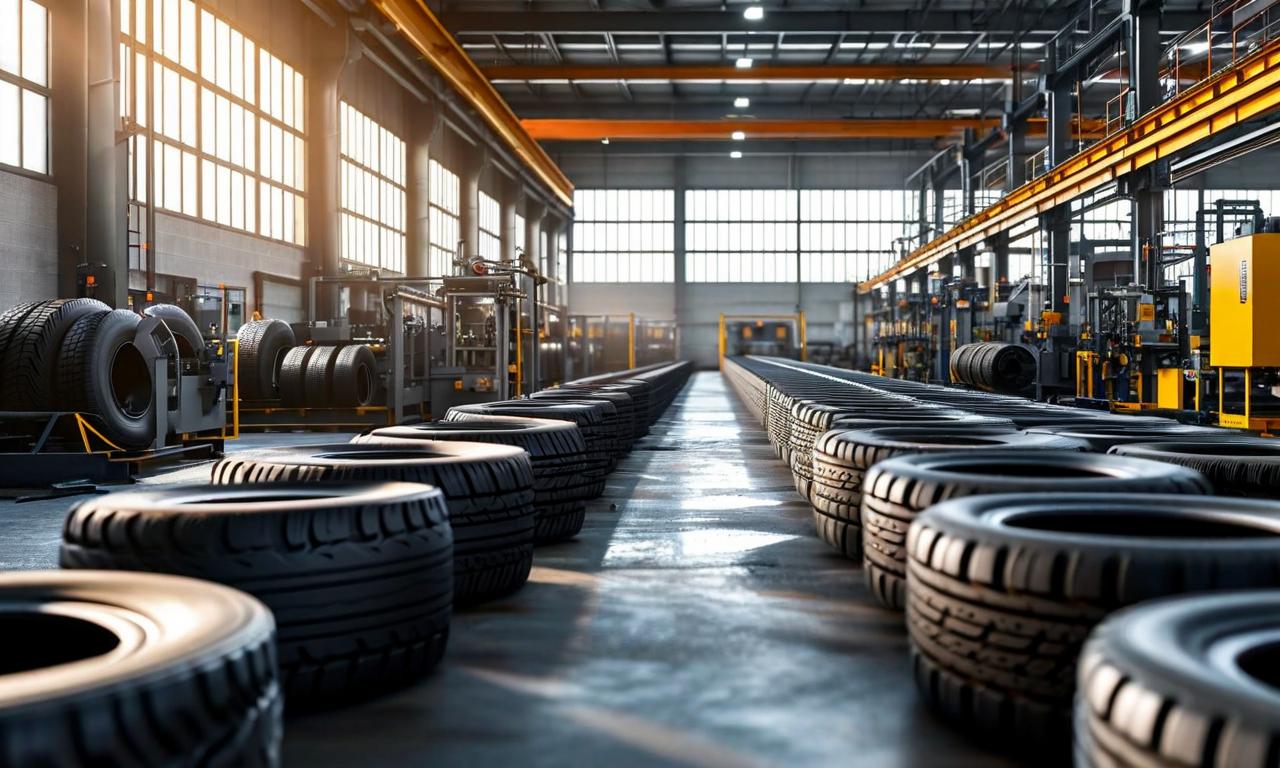
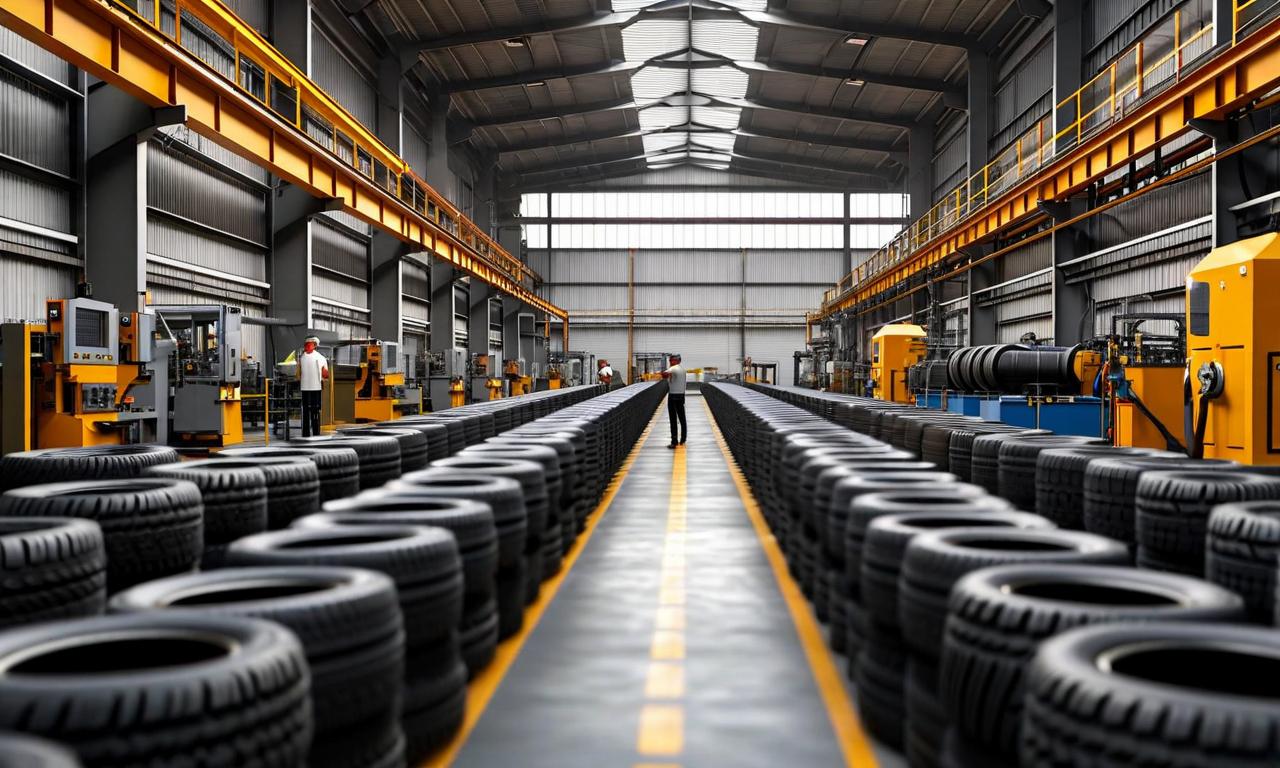
*this image is generated using AI for illustrative purposes only.
Apollo Tyres Ltd. reported its audited standalone and consolidated financial results for the quarter and year ended March 31, 2026, approved by the Board of Directors at its meeting held on May 14, 2026. On a consolidated basis, the company posted a sharp recovery in quarterly profitability, with net profit rising to ₹6,309.73 million from ₹1,846.18 million in the same period last year. Quarterly consolidated revenue from operations climbed to ₹73,356.74 million from ₹64,235.87 million year-on-year, while consolidated EBITDA for Q4 stood at 10.8B Rupees against 8.4B Rupees in the prior-year quarter, with EBITDA margin expanding to 14.69% from 13.04%. On a standalone basis, the company recorded a net profit of ₹9,033.73 million for the quarter, a sharp increase from ₹1,491.63 million in the same period last year. A significant contributor to the year's profitability was the company's decision to adopt the concessional tax regime under Section 200 of the Income Tax Act, 2025, effective from Tax Year 2026-27, which resulted in a net deferred tax liability reversal of ₹5,736.71 million recognised during the year. The applicable tax rate will reduce to 25.17% from the earlier rate of 34.94%, with exemption in MAT.
Q4 FY26 Earnings Conference Call Highlights
At the post-results conference call held on May 15, 2026, Vice Chairman and Managing Director Neeraj Kanwar and Chief Financial Officer Gaurav Kumar addressed analysts and investors. Kanwar noted that Q4 closed with consolidated top-line growth of nearly 14% year-on-year and an EBITDA margin of 14.6%, while the full year delivered consolidated top-line growth of 9% year-on-year with an EBITDA margin of nearly 14.6%. Indian operations witnessed strong double-digit growth in both replacement and OEM markets across all product categories. In Europe, volume growth was low single-digit, with certain international markets impacted by geopolitical developments in West Asia, which added volatility to raw materials, energy, and logistics costs.
Kanwar highlighted that the company's balance sheet remains strong, with consolidated net debt to EBITDA improving significantly from 3.2 times to 0.4 times as of March 2026. Apollo Tyres received OEM approvals from BMW, MINI, Genesis, KIA, and Mahindra during the quarter, and launched upgraded premium products across India and Europe. The company also rolled out a new B2B e-commerce platform in Europe and was recognised by Amazon Web Services as a case study for its use of AI and data technologies. Apollo Tyres was recognised as a Top Employer in 2026, with India Operations receiving the recognition for the first time, and its climate targets received validation from the Science-Based Targets Initiative.
India Operations: Volume Growth and Pricing
Gaurav Kumar reported that India standalone revenue for the quarter was INR 52.4 billion, reflecting growth of 14.3% over the same quarter last year and approximately 2% over the previous quarter. The EBITDA for the quarter stood at INR 7.6 billion, with a margin of 14.6% compared to 11.2% in the same period last year. Volume growth in both OE and replacement segments was high teens, while export volumes recorded mid-single-digit growth. TBR replacement and PCR replacement each posted over 20% growth for the quarter, while TBR OEM also grew over 20% and PCR OEM recorded single-digit growth.
Advertisement and sales promotion spends were elevated during the quarter, running at 4% of sales against a typical 2%, reflecting activation costs related to the BCCI cricket jersey sponsorship. Management indicated that A&P spends would normalise going forward to approximately 2.5% plus of sales over the longer term. The net debt to EBITDA for India operations improved from 1.1 times in March 2025 to 0.7 times at the end of March 2026. Demand in April remained equally strong, with management expecting the same momentum to continue through Q1.
The following table summarises key raw material prices in Q4 and current levels as shared during the call:
| Raw Material: | Q4 Price (per kg) | Current Price (per kg) |
|---|---|---|
| Natural Rubber: | ₹200 | ₹250 |
| Synthetic Rubber: | ₹170 | Not disclosed |
| Carbon Black: | ₹110 | Not disclosed |
| Steel Cord: | ₹155 | Not disclosed |
Management noted that raw material costs are expected to rise in the mid to high teens on a sequential basis in Q1. Apollo Tyres has announced price increases of 6% to 8% for the current quarter in India, implemented in two tranches, with further rounds of price increases expected to be needed beyond this level. For OEM customers, a pricing formula with a three-month lag applies for a portion of the customer base, with the remainder subject to negotiation.
FY27 Capital Expenditure and Capacity Plans
Against a backdrop of rising rubber costs, Apollo Tyres has announced an expansion plan of ₹3,500 crore for FY27, with nearly 80% directed towards growth and capacity expansion projects. The following table outlines the allocation of the planned capital expenditure:
| CapEx Parameter: | Details |
|---|---|
| Total FY27 CapEx: | INR 35 billion (₹3,500 crore) |
| Growth & Capacity Share: | ~80% of total |
| India Allocation: | Close to INR 3,000 crores |
| Europe Allocation (Hungary): | Balance of total CapEx |
| India Focus: | Truck and car tyre capacity expansion |
| Europe Focus: | Passenger car tyre expansion |
Capacity utilisation stood at a high of 90% across both India and Europe operations at the end of Q4. Management confirmed that FY27 CapEx plans are largely committed, with some flexibility available for FY28 if demand conditions change. The consolidated ROCE for FY26 stood at 13.4%, an improvement of approximately 240 basis points compared to FY25.
Europe Operations: Restructuring and Outlook
Europe revenue for the quarter was EUR 170 million, down 1% year-on-year, with market conditions remaining muted. The EBITDA for the quarter stood at EUR 25 million, with a margin of 14.6% compared to 14.3% in the same period last year. Management attributed the multi-year margin compression from historical levels of 16% plus to sluggish market conditions combined with elevated energy costs and salary inflation in Western Europe, with Netherlands salary inflation running at approximately 12% to 13% annually versus a typical 4% to 5%.
The closure of the Enschede plant in the Netherlands remains on track, with the last day of production set for June 30. A non-cash write-off of EUR 43 million has been taken on fixed assets at the plant during the quarter. The total exceptional item impact for the year ended March 31, 2026 on this account aggregated to ₹10,001.24 million. A cash outflow of approximately EUR 55 million, comprising the social plan payout of EUR 50 million and related legal costs, is expected in FY27 as per local legal requirements. Management indicated that the positive margin impact from the restructuring is expected to flow through in H2 of FY27, with a target of returning to and potentially surpassing 16% EBITDA margins in Europe over the medium term. A 2% price increase has been announced in Europe for Q1, with further increases under consideration depending on competitor actions.
The agricultural/OHT segment, which contributed approximately 12% of European revenues, was the only product category where some revenue loss is anticipated post-closure, as this capacity was not replicated in other plants. The OE portion of this segment, approximately 5% to 6% of revenues, was described as loss-making. For all other product categories, supply continuity is expected through the Hungary and India plants.
The following table summarises the Reifencom performance for the quarter as disclosed during the call:
| Metric: | Q4 FY26 |
|---|---|
| Revenue: | EUR 40 billion |
| EBITDA Margin: | Just under 2% |
Standalone Financial Performance
The following table summarises the key standalone financial metrics for the quarter and full year:
| Metric: | Q4 FY26 (₹ Million) | Q4 FY25 (₹ Million) | FY26 (₹ Million) | FY25 (₹ Million) |
|---|---|---|---|---|
| Revenue from Operations: | 52,369.69 | 45,805.11 | 198,162.28 | 181,736.12 |
| Other Income: | 352.71 | 383.29 | 3,127.13 | 1,155.34 |
| Total Income: | 52,722.40 | 46,188.40 | 201,289.41 | 182,891.46 |
| Total Expenses: | 47,839.51 | 43,945.21 | 182,114.46 | 172,778.42 |
| Profit Before Tax: | 4,873.42 | 2,324.85 | 18,841.08 | 9,603.82 |
| Net Profit: | 9,033.73 | 1,491.63 | 16,517.69 | 6,294.26 |
| Basic EPS (₹): | 14.27 | 2.35 | 29.22 | 9.91 |
On a standalone basis, total assets stood at ₹205,323.59 million as at March 31, 2026, compared to ₹203,099.29 million in the prior year. Total equity increased to ₹118,965.60 million from ₹106,720.53 million. The company recognised exceptional items of ₹9.47 million for the quarter ended March 31, 2026, related to a reorganisation exercise for employees, and ₹74.56 million for the full year ended March 31, 2026.
Consolidated Financial Performance
On a consolidated basis, Apollo Tyres reported revenue from operations of ₹73,356.74 million for the quarter and ₹284,706.00 million for the full year, compared to ₹64,235.87 million and ₹261,234.17 million respectively in the prior year. The consolidated net profit for the full year stood at ₹13,724.16 million. The consolidated basic EPS for the quarter stood at ₹9.97 and ₹21.66 for the full year.
| Metric: | Q4 FY26 (₹ Million) | Q4 FY25 (₹ Million) | FY26 (₹ Million) | FY25 (₹ Million) |
|---|---|---|---|---|
| Revenue from Operations: | 73,356.74 | 64,235.87 | 284,706.00 | 261,234.17 |
| Total Income: | 73,708.95 | 64,511.23 | 286,040.05 | 262,115.17 |
| Total Expenses: | 67,533.62 | 60,726.72 | 262,618.80 | 244,968.75 |
| Profit Before Tax: | 6,177.84 | 3,787.45 | 23,427.15 | 17,153.15 |
| Net Profit: | 6,309.73 | 1,846.18 | 13,724.16 | 11,213.20 |
| Basic EPS (₹): | 9.97 | 2.91 | 21.66 | 17.66 |
Consolidated total assets were ₹292,397.17 million as at March 31, 2026, against ₹273,060.20 million in the prior year. Total consolidated equity stood at ₹167,151.67 million compared to ₹147,656.99 million.
Segment Performance
The company operates across three geographical segments: APMEA (Asia Pacific, Middle East and Africa), Europe, and Others. The following table presents segment assets and liabilities for FY26:
| Segment: | Assets FY26 (₹ Million) | Liabilities FY26 (₹ Million) |
|---|---|---|
| APMEA: | 87,468.23 | — |
| Europe: | 39,765.07 | — |
| Others: | 5,091.87 | — |
| Total (before eliminations): | 132,325.17 | 132,325.17 |
| Eliminations: | (7,079.67) | (7,079.67) |
| Net Segment Total: | 125,245.50 | 125,245.50 |
Key Financial Ratios (Standalone)
The following table presents select standalone financial ratios for FY26:
| Ratio: | FY26 | FY25 |
|---|---|---|
| Debt Equity Ratio (times): | 0.20 | 0.27 |
| Current Ratio (times): | 1.24 | 1.14 |
| Operating Margin (%): | 14.51% | 12.05% |
| Net Profit Margin (%): | 9.34% | 3.46% |
| Debt Service Coverage Ratio (times): | 3.20 | 1.63 |
| Interest Service Coverage Ratio (times): | 10.31 | 5.60 |
| Debtors Turnover (times): | 8.64 | 8.78 |
| Inventory Turnover (times): | 6.47 | 6.82 |
| Total Debts to Total Assets (%): | 11.33% | 14.24% |
Analyst View
Morgan Stanley has maintained an Equal-weight rating on Apollo Tyres with a target price of ₹535, citing the company's strong Q4 performance. The brokerage highlighted that revenue, EBITDA, and adjusted PAT rose 14%, 28%, and 69% year-on-year respectively during the quarter. The EBITDA beat estimates, driven primarily by robust performance from the India business.
Dividend and Board Decisions
The board recommended a final dividend of ₹2.50 per equity share (250% on face value of ₹1 each), amounting to ₹1,587.75 million, subject to shareholder approval at the ensuing Annual General Meeting. This is in addition to the interim dividend of ₹3.50 per share (350%) already paid during FY26, bringing the total dividend for the year to ₹6.00 per share (600%). The board also approved the appointment of M/s. BBS Associates, Cost Accountants, as Cost Auditor for FY27, replacing M/s. N.P. Gopalakrishnan & Co. consequent to the completion of their tenure, effective May 14, 2026. Additionally, the board approved seeking shareholder approval for the re-appointment of Ms. Lakshmi Puri (DIN: 09329003) as an Independent Director for a second term of five years, effective from October 29, 2026. The auditors, M/s. S. R. Batliboi & Co. LLP, issued unmodified opinions on both the standalone and consolidated audited financial statements for the year ended March 31, 2026. The listed non-convertible debentures (NCDs) issued by the company aggregate to ₹8,650 million as on March 31, 2026, secured by a pari passu first charge on movable fixed assets.
Historical Stock Returns for Apollo Tyres
| 1 Day | 5 Days | 1 Month | 6 Months | 1 Year | 5 Years |
|---|---|---|---|---|---|
| +0.01% | -0.23% | -8.74% | -1.83% | -14.42% | +79.33% |

With natural rubber prices surging 25% from ₹200 to ₹250/kg and mid-to-high teen sequential cost increases expected in Q1, can Apollo Tyres' announced 6-8% price hikes fully protect EBITDA margins, or will Q1 FY27 margins compress significantly?
Given that capacity utilisation has reached 90% across both India and Europe and ₹3,500 crore in FY27 CapEx is largely committed, how quickly can new capacity come online to meet demand, and what is the risk of losing OEM market share during the capacity ramp-up period?
With the Enschede plant closure expected to deliver margin improvement only in H2 FY27 and a EUR 55 million cash outflow pending, how will Apollo Tyres fund European expansion in Hungary while managing the restructuring costs without straining its recently improved net debt-to-EBITDA ratio of 0.4x?
 16
16






 Create Custom Screeners
  Access 200+ Pre-built Filters
  Use 50+ Readymade Screener





