Amazon stock delivers 24.36% annualized return over 15 years

scanx
Reviewed by
Riya DScanX News Team
Key Highlights
  • Amazon stock delivered a 24.36% annualized return over the past 15 years
  • The company outperformed the broader market by 11.06% annually
  • A $1,000 investment from 15 years ago is now worth $27,295.74
  • Amazon's current market capitalization stands at $2.82 trillion
  • The analysis highlights the power of compounded returns for long-term investors
powered bylight_fuzz_icon
48784213

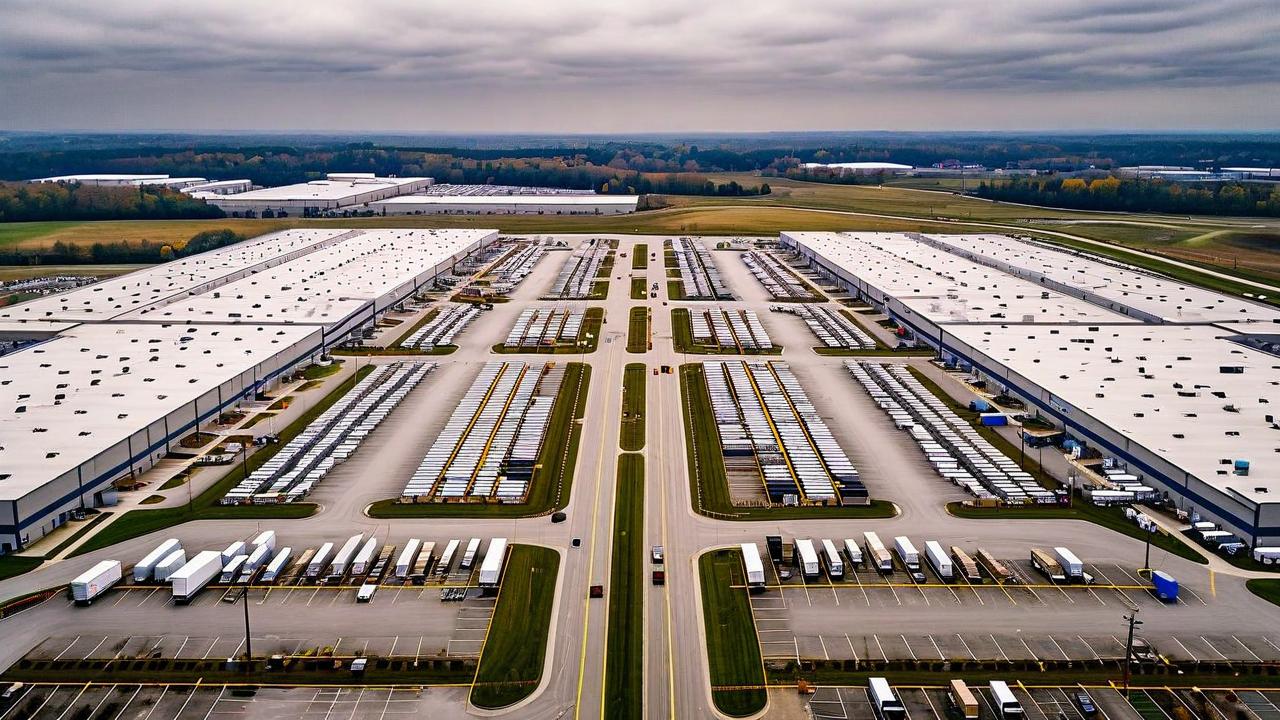
*this image is generated using AI for illustrative purposes only.

Amazon.com (NASDAQ: AMZN) has generated an average annual return of 24.36% over the past 15 years, significantly outperforming broader market benchmarks.

The e-commerce and cloud computing giant currently holds a market capitalization of $2.82 trillion. This valuation reflects sustained growth in its core business segments and expanding profit margins over the review period.

Investment Performance Breakdown

An initial investment of $1,000 in Amazon stock 15 years ago would have grown to $27,295.74 today. This calculation is based on a share price of $262.09 at the time of writing.

Metric Value
Initial Investment $1,000
Current Value $27,295.74
Annualized Return 24.36%
Market Outperformance 11.06%

What the Numbers Show

The data highlights the substantial impact of compounded returns on long-term wealth creation. The 11.06% annualized outperformance against the market indicates that Amazon’s growth trajectory has consistently exceeded average market gains. This divergence suggests strong operational execution and capital allocation efficiency over the 15-year period, allowing investors to capture significant alpha relative to passive market indices.

The transformation of a $1,000 principal into nearly $27,300 underscores the exponential nature of compounding when applied to high-growth assets with consistent positive returns.

Disclaimer: This article is AI-generated using data from ViewTrade. ScanX is not liable for any inaccuracies.

Can Amazon sustain its 24.36% annualized return trajectory given its current $2.82 trillion market capitalization and the law of large numbers?

How might increasing regulatory scrutiny on big tech impact Amazon's future profit margins and operational efficiency?

To what extent will AWS's growth rate decelerate as cloud computing market penetration matures?

like19
dislike

Amazon shares rise 1.8% as Treasury doubles bond buybacks to $4 billion

scanx
Reviewed by
Ritika DScanX News Team
Key Highlights

Amazon.com Inc shares rose 1.84% to $264.22 on Wednesday, driven by a US Treasury announcement to double long-term bond buybacks to $4 billion per operation starting September 9. The move stabilizes yields, supporting tech valuations by lowering discount rates for future cash flows. Simultaneously, Amazon reported an estimated 6 gigawatt expansion of AWS computing infrastructure for 2026 to support generative AI workloads, including SpaceXAI’s Grok 4.6 model.

powered bylight_fuzz_icon
48707093

*this image is generated using AI for illustrative purposes only.

Amazon.com Inc (NASDAQ: AMZN) shares advanced 1.84% to $264.22 on Wednesday afternoon, moving in tandem with the broader mega-cap technology sector. The stock’s gain follows a surprise announcement from the US Treasury Department regarding its debt management strategy.

Treasury Bond Buyback Action Stabilizes Market Rates

The primary catalyst for the market rally is the Treasury Department's decision to double its maximum debt buybacks for long-term government bonds to $4 billion per operation, effective September 9. By absorbing long-term Treasurys, the intervention seeks to ease yield pressures and stabilize market rates.

This action creates a more supportive interest rate environment for high-growth technology companies like Amazon. Mechanically, declining long-term yields reduce the benchmark discount rate used in discounted cash flow models. This expansion lowers the net present value calculation for Amazon’s far-dated, high-margin artificial intelligence cash flows.

Additionally, lower baseline rates reduce corporate borrowing costs and ease consumer credit friction. These factors directly bolster spending power within Amazon’s core e-commerce and logistics ecosystem.

AWS Capacity Expansion & Generative AI Tailwinds

Beyond macroeconomic factors, Amazon continues to build fundamental momentum in its cloud computing division. Enterprise demand for generative AI capacity remains strong, driving infrastructure expansion plans.

AWS is estimated to expand its computing infrastructure by 6 gigawatts in 2026. This capacity addition supports heavy workloads, including SpaceXAI’s newly added Grok 4.6 model on Amazon Bedrock.

What the Numbers Show

The convergence of macro policy and operational expansion highlights Amazon's dual reliance on financial conditions and technological adoption. While the Treasury's $4 billion buyback program addresses the cost of capital via yield suppression, the 6 gigawatt AWS expansion targets revenue growth through AI infrastructure. This juxtaposition suggests that near-term valuation support is being provided by external monetary policy mechanics, while long-term earnings potential remains tied to the successful monetization of significant capital expenditures in cloud computing.

Disclaimer: This article is AI-generated using data from ViewTrade. ScanX is not liable for any inaccuracies.

How might the Treasury's increased bond buyback volume impact the yield curve inversion, and what are the implications for Amazon's long-term debt financing costs?

Given the 6 gigawatt AWS expansion planned for 2026, what is the projected return on invested capital (ROIC) for these AI infrastructure investments relative to traditional cloud workloads?

Could the stabilization of long-term yields trigger a broader rotation into high-duration tech assets beyond mega-caps, potentially altering sector-wide valuation multiples?

like15
dislike

More News on Amazon.com Inc