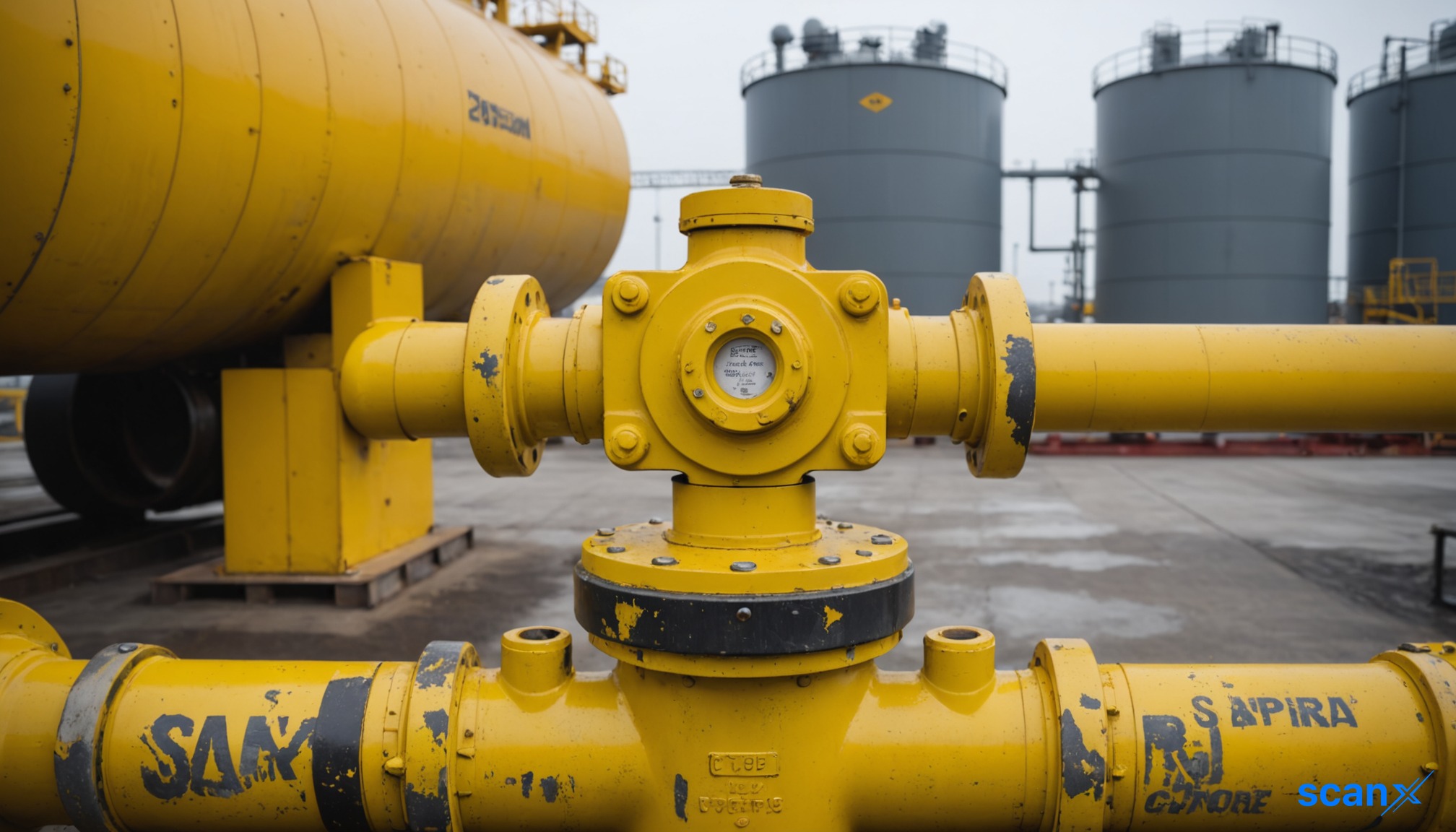
US diesel hits record $6.51 as supply deficit deepens despite WTI drop

scanx
Reviewed by
Ritika DScanX News Team
Key Highlights
  • US diesel prices hit a record high of $6.51/gal on Sep 21, 2026, driven by geopolitical tensions and infrastructure damage.
  • Farm fuel costs rose by $11/acre for corn and $7/acre for soybeans, squeezing margins during harvest season.
  • Strait of Hormuz traffic dropped to four vessels, while the East-West Pipeline remains offline after a drone attack.
  • WTI crude fell 3.16% to $93.04/barrel, diverging from record-high retail diesel prices due to structural supply bottlenecks.
powered bylight_fuzz_icon
51532724

*this image is generated using AI for illustrative purposes only.

The national average price for diesel in the United States reached an all-time high of $6.5107 per gallon on Monday, September 21, 2026. This surge reflects a severe supply disruption that commodity strategists describe as a deficit that "no handshake can refill," driven by geopolitical tensions and infrastructure damage.

Record Prices Impact Agriculture and Freight

The spike to $6.51 per gallon has significantly increased operational costs for key sectors. Economist Steve Hanke noted that farm fuel costs have risen by $11 per acre for corn and $7 per acre for soybeans compared to the previous year.

Independent trucking firms are also facing heightened financial pressure, with some under threat of bankruptcy due to diesel-driven cost increases. The rising expenses are occurring during the critical harvest season, exacerbating strain on agricultural logistics.

Diesel powers tractors, combines and other farm machinery, while also moving crops from farms to elevators, processors and ultimately consumers. U.S. farmers are already facing sharply higher fuel expenses during harvest, and the cost squeeze could feed through to food prices.

Higher food and crop prices could potentially create an unusual setup for agriculture-focused ETFs. One way to capture the commodity side is the Invesco DB Agriculture Fund (NYSE: DBA), which tracks futures on a basket of agricultural commodities rather than owning farming companies. Its exposure therefore differs materially from an agriculture-equity ETF.

That is important because a prolonged energy shock could eventually push agricultural commodity prices higher through increased production and transportation costs. But there is a catch. Farmers do not automatically receive higher commodity prices as higher profits. If diesel, fertilizer, machinery and transportation costs rise faster than crop prices, producers can see their margins deteriorate.

Another route is the Invesco Agriculture Commodity Strategy No K-1 ETF (NASDAQ: PDBA), which provides commodity exposure without directly owning agricultural companies. Invesco lists PDBA alongside DBA in its commodity ETF lineup.

The Equity Side Tells a Different Story

The VanEck Agribusiness ETF (NYSE: MOO) owns companies across the agricultural value chain. Its largest holdings include Deere & Co (NYSE: DE) at 8.65%, Bayer at 8.61%, Corteva Inc (NYSE: CTVA) at 8.08% and Nutrien Ltd. (NYSE: NTR) at 7.03%. The fund also holds Archer-Daniels-Midland Co (NYSE: ADM) and CF Industries Holdings, Inc. (NYSE: CF).

That composition makes MOO an interesting lens for the diesel shock because higher operating costs can affect farmers' equipment purchases and demand for agricultural inputs, while commodity prices, fertilizer prices and food demand can move in the opposite direction.

Higher fuel costs can pressure farmers' cash flows and potentially affect equipment demand, which matters for companies such as Deere and Kubota. At the same time, higher crop prices could support spending on seeds, crop protection and other agricultural inputs, potentially benefiting companies such as Corteva and Nutrien.

Geopolitical Tensions and Supply Constraints

The fuel rally follows weekend meetings in Muscat, Oman, between U.S. officials and Houthi representatives. While Houthis offered safe passage to U.S. and commercial vessels, Saudi Arabian shipping remains excluded from these protections.

Commodity strategist Giacomo Prandelli highlighted that Saudi crude oil export routes remain compromised. Traffic through the Strait of Hormuz dropped to just four vessels on Monday, down from a pre-war average of roughly 125. Additionally, the East-West Pipeline to Yanbu remains offline following a drone attack on September 10. While U.S. Energy Secretary Chris Wright expects the pipeline to return within days, trading estimates suggest repairs could take up to eight weeks.

Prandelli stated that a deal protecting American ships but targeting Saudi vessels protects the "wrong ships for the oil market." Consequently, European refiners like Poland's ORLEN are tendering for alternative grades including Grane, Johan Sverdrup, and WTI Midland.

Market Reaction and Crude Futures

Despite the retail diesel surge, crude oil futures declined during pre-market trading. Brent crude futures settled at $101.60 per barrel, while WTI crude fell 3.16% to $93.04 per barrel, marking the first time WTI has fallen below $100 amid widening refining margins.

Asset Price Change
WTI Crude (Nov 2026) $93.04 -3.16%
Brent Crude (Nov 2026) $101.60 -1.39% (BNO)

ProShares Ultra Bloomberg Crude Oil (NYSE: UCO) fell 1.05% to $52.48, while the United States Oil Fund (NYSE: USO) dropped 1.53% to $151.50. The United States Brent Oil Fund LP (NYSE: BNO) was down 1.39% in premarket trading.

What the Numbers Show

The divergence between falling benchmark crude futures and record-high retail diesel prices indicates a structural supply bottleneck rather than a broad-based commodity rally. With Asian diesel margins crossing $87 a barrel and New York diesel futures hitting all-time highs, the risk premium is not mitigating the physical shortage at the refinery gate. European refiners are tendering for alternative grades such as Grane and Johan Sverdrup, signaling that the protection of U.S. vessels alone is insufficient to resolve the global diesel deficit.

Broader Market Context

Equity markets showed mixed performance amidst the energy volatility. The S&P 500 index has advanced 11.76% year-to-date, while the Nasdaq Composite rose 14.11%. On Friday, the SPDR S&P 500 ETF Trust (NYSE: SPY) closed higher at $761.69, and the Invesco QQQ Trust ETF (NASDAQ: QQQ) rose to $721.45. In premarket trading on Monday, SPY was up 0.62%, QQQ advanced 0.94%, and the State Street SPDR Dow Jones Industrial Average ETF Trust (NYSE: DIA) gained 0.61%.

Disclaimer: This article is AI-generated using data from ViewTrade. ScanX is not liable for any inaccuracies.

How might the prolonged offline status of the East-West Pipeline impact U.S. refinery utilization rates and domestic diesel inventory levels over the next two months?

Could the divergence between falling crude oil prices and record-high diesel costs trigger a shift in consumer behavior or accelerate the adoption of alternative energy sources in the freight sector?

What is the potential for agricultural input companies like Corteva and Nutrien to pass increased production costs onto farmers without significantly reducing demand for seeds and fertilizers?

like15
dislike

Saudi Arabia cancels September crude exports to European refiners

scanx
Reviewed by
Ritika DScanX News Team
Key Highlights
  • Saudi Arabia cancels all September crude exports to European refineries
  • Strikes on East-West pipeline force rerouting via Strait of Hormuz
  • Kpler estimates Yanbu export drop of 2.5-2.7 million barrels per day
  • Repairs may take months despite US officials calling it temporary
  • Brent crude fell 0.59% to $108.10 amid supply flow changes
powered bylight_fuzz_icon
50698623

*this image is generated using AI for illustrative purposes only.

Saudi Arabia has formally informed European oil refineries that they will not receive crude oil shipments next month. This confirmation follows strikes on the East-West pipeline that have already forced the cancellation of September-loading cargoes.

The disruption threatens to reduce exports from the western port of Yanbu significantly. While authorities are rerouting shipments via the Strait of Hormuz, logistical constraints have necessitated these immediate contract cancellations.

Repair Timelines and Capacity Risks

US Energy Secretary Chris Wright described the closure as a "brief and temporary interruption" expected to last only a few days during a CNBC interview on Tuesday. However, industry experts project a much longer recovery period.

Andy Lipow, president of Lipow Oil Associates, stated that satellite images showing significant damage to a pumping station suggest repairs will take months. Maritime analyst Kpler expects the pipeline to operate at only about 50% of normal capacity for up to six weeks.

Metric Estimate Source
Pipeline capacity 50% of normal Kpler
Yanbu export reduction 2.5–2.7 million bpd Kpler
Rerouting volume ~3 million bpd via Ras Tanura Kpler

Kpler noted that offsetting the loss would require roughly 25 additional VLCC shuttle tankers per month to route oil through Ras Tanura. This shift increases exposure to the Strait of Hormuz.

Market Impact and Pricing

The supply disruption is altering global crude flows. Low inventories at Yanbu and stronger Dubai pricing are pushing more Atlantic barrels toward Asia. Europe remains tight as Forties crude shifts east.

At the time of writing, Brent crude futures expiring in November traded 0.59% lower at $108.10 per barrel. WTI crude futures expiring in October fell 0.88% to $104.89 per barrel.

What the Numbers Show

The divergence between official statements and market estimates highlights uncertainty over the outage duration. While US officials predict a resolution in days, Kpler’s six-week timeline implies a sustained supply deficit of up to 2.7 million bpd from Yanbu. This forces Saudi Arabia to rely heavily on the Strait of Hormuz, potentially keeping Dubai oil differentials elevated even if initial price spikes fade.

Disclaimer: This article is AI-generated using data from ViewTrade. ScanX is not liable for any inaccuracies.

How will the increased reliance on the Strait of Hormuz for rerouted shipments affect geopolitical risk premiums in global oil pricing?

What specific strategies are European refineries employing to source alternative crude supplies given the immediate cancellation of Saudi cargoes?

Could the six-week repair timeline estimated by Kpler trigger a coordinated release of Strategic Petroleum Reserves by major consuming nations?

like15
dislike

More News on Crude Oil