Budget 2026 Expected to Be Reform-Focused and FII-Friendly, Says Monarch Networth CEO

2 min read     Updated on 15 Jan 2026, 09:23 AM
scanx
Reviewed by
Naman SScanX News Team
Overview

Monarch Networth Capital CEO Gaurav Bhandari expects Budget 2026 to be reform-focused and FII-friendly, with taxation relief and regulatory clarity to address sustained foreign outflows. He projects 7-9% Nifty earnings growth for December quarter and anticipates rupee strengthening to ₹87 levels within 45-60 days. Bhandari favors PSU Banks and Defence sectors while expecting continued SIP flow support and 7.4-7.6% economic growth despite global uncertainties.

29994802

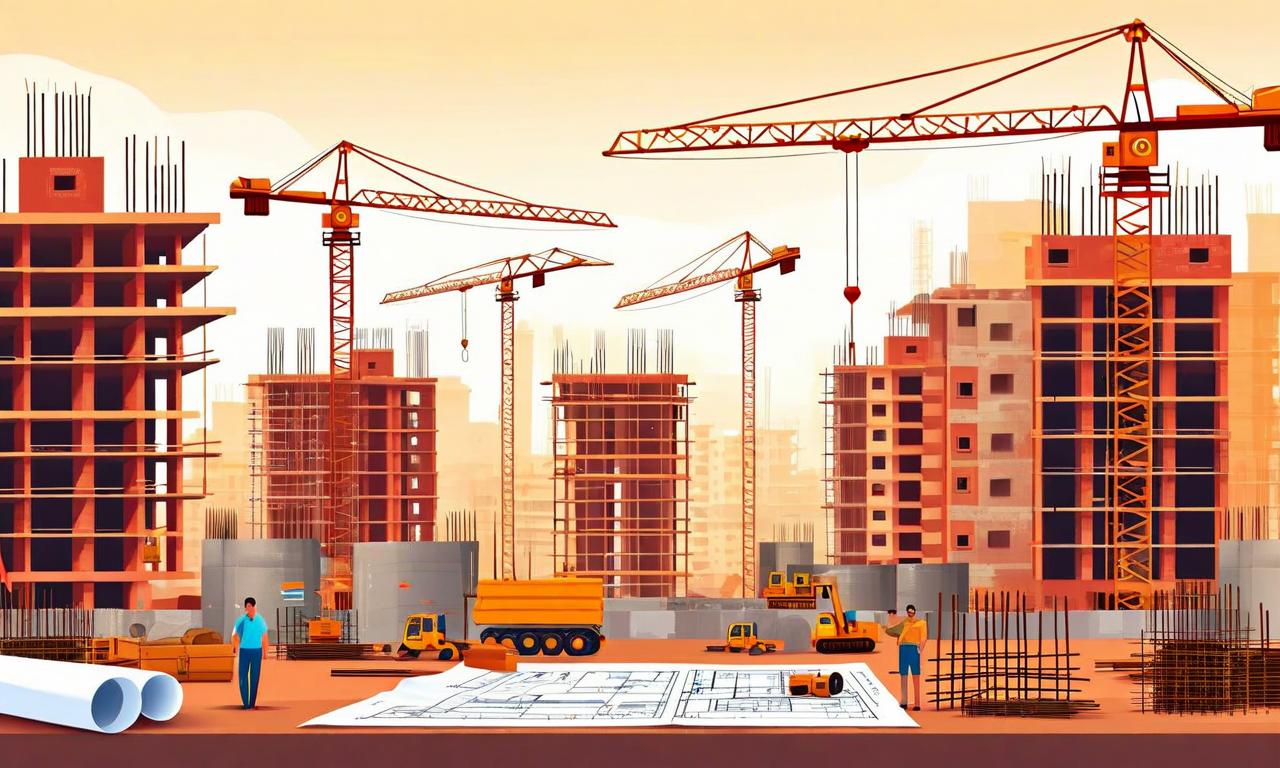
*this image is generated using AI for illustrative purposes only.

As the government prepares Budget 2026 amid persistent global uncertainty and sustained foreign portfolio outflows, market participants are closely monitoring for signals that could revive investor confidence. Gaurav Bhandari, CEO at Monarch Networth Capital, expects the upcoming Budget to be reform-oriented and explicitly FII-friendly, focusing on improving India's attractiveness as an investment destination.

December Quarter Earnings Outlook

Bhandari anticipates decent but not spectacular performance for the December quarter earnings. The following table summarizes his expectations:

Metric: Projection
Nifty Earnings Growth: 7.00-9.00%
Overall Performance: Moderate growth
Resilient Sectors: Banks and select industrials

While certain pockets like banks and select industrials may show resilience, overall earnings growth will remain moderate on an aggregate basis.

Budget 2026 Reform Expectations

With foreign investors remaining net sellers for much of the past few years, Bhandari believes the government will introduce measures to stem capital outflows and strengthen long-term investor sentiment. He expects a strong reform-oriented budget with specific focus areas:

  • Taxation relief for Foreign Institutional Investors
  • Enhanced regulatory clarity
  • Policy measures to arrest capital flight
  • Initiatives to boost India's investment destination appeal

Given sustained FII outflows over the past 3-4 years, he anticipates the government will actively attempt to enhance India's attractiveness as an investment destination.

Currency and Market Dynamics

Regarding the rupee's recent weakness, Bhandari does not foresee depreciation to ₹100 per USD. His currency outlook includes:

Parameter: Expectation
Target Level: ₹87.00 per USD
Timeline: 45-60 days
Direction: Strengthening
Government Action: Strong corrective measures expected

He expects the government and RBI to take strong corrective measures, particularly to boost exports and manage currency volatility, with no cause for panic from an investment standpoint.

Sector Preferences and SIP Flow Impact

Bhandari remains positive on specific sectors for medium-to-long-term portfolios:

PSU Banks: Supported by improving balance sheets, better asset quality, and attractive valuations

Defence: Backed by strong order books, indigenization efforts, and sustained government spending

Domestic SIP flows have been a key stabilizing force for Indian equities, and this trend is expected to continue. Financialization of household savings, rising investor awareness, and long-term wealth creation themes should keep SIP inflows robust and consistent, providing a cushion against intermittent foreign selling.

Growth Outlook and Economic Projections

Despite geopolitical concerns and trade tensions, Bhandari estimates the Indian economy should grow in the range of 7.40-7.60% in the current financial year. Domestic consumption will continue to be the backbone of Indian growth, with India's structural strengths, demographic advantage, and policy continuity providing confidence that growth momentum can be sustained despite global uncertainties.

like17
dislike

Budget 2026: Industry Calls for Policy Clarity Over Fiscal Giveaways Amid Revenue Pressures

4 min read     Updated on 14 Jan 2026, 07:10 PM
scanx
Reviewed by
Shriram SScanX News Team
Overview

As Union Budget 2026 approaches, industry leaders from crypto, logistics, capital markets, manufacturing and real estate sectors are unified in calling for policy clarity and fiscal discipline over populist measures. With tax revenues under pressure, the focus is on execution-led reforms, regulatory stability, and strategic refinements that can unlock growth without straining the fiscal balance sheet.

29943623

*this image is generated using AI for illustrative purposes only.

As Union Budget 2026 approaches, industry leaders across sectors are delivering a unified message to the government: prioritise policy clarity, regulatory stability, and execution-led reforms over big-bang announcements or fiscal exuberance. With tax revenues under pressure and competing demands on public spending, India Inc is calling for strategic refinements that unlock growth without straining the fiscal balance sheet.

Fiscal Discipline Takes Centre Stage

According to Gaurav Garg, Research Analyst at Lemonn Markets Desk, the government is likely to maintain tight focus on fiscal discipline while continuing support for priority areas including defence, renewable energy, semiconductors, and manufacturing. With tax collections impacted by last year's income-tax relief measures, expectations centre on consumption recovery and private investment driving growth while public capex expansion remains measured.

The consensus across sectors reflects a notable shift from previous years, with industry leaders emphasising that Budget 2026 should be a carefully calibrated exercise focusing on removing friction points that constrain investment rather than introducing sweeping new schemes.

Digital Assets Sector Seeks Tax Framework Refinement

The cryptocurrency and digital assets ecosystem continues to advocate for balanced regulatory and taxation reforms. Ashish Singhal, Co-founder of CoinSwitch, argues that the current tax framework introduced in 2022 creates disproportionate friction for retail investors by taxing transactions without recognising losses.

Key expectations from the digital assets sector include:

Tax Parameter Current Status Industry Expectation
TDS on Crypto Transactions 1.00% Calibrated reduction for improved liquidity
VDA Gains Tax Flat 30.00% Higher threshold for small investors
Loss Set-offs Not allowed Recognition of losses for better compliance

SB Seker, Head of APAC at Binance, views Budget 2026 as an opportunity for measured regulatory refinements that balance innovation with financial stability. With oversight mechanisms like FIU-IND now established, industry participants believe conditions are appropriate for a more mature policy approach to virtual digital assets.

Logistics Infrastructure Emerges as Growth Enabler

Logistics is positioning itself as a critical enabler for India's next growth phase. Balfour Manuel, Managing Director of Blue Dart, believes Budget 2026 could serve as an inflection point if policy attention shifts decisively towards multimodal integration and digital coordination across air, road, and rail networks.

For express logistics, Manuel emphasises sustained investment in airport infrastructure, cargo handling capacity, and regional air connectivity to reduce turnaround times for high-value shipments. He advocates for:

  • Unified logistics platforms and data-driven visibility systems
  • Paperless processes to improve business ease
  • Differential taxation encouraging greener transport modes
  • EV charging and alternative fuel infrastructure investments
  • Enhanced last-mile road connectivity for deeper market penetration

Capital Markets Seek Consistency Over Concessions

Capital markets participants are calling for coherence rather than concessions. Harsha Vardhana, Founder and Group CEO of Atom Financial Services, notes that investors seek simple, consistent, and predictable rules rather than lower taxes.

As investor participation broadens across equities, debt, and alternative assets, inconsistencies in capital gains treatment and holding periods are distorting investment behaviour. Clearer definitions of long-term ownership across asset classes could reduce short-term churn and encourage patient capital formation.

Manufacturing and Social Infrastructure Focus

Sunrise manufacturing sectors are positioning themselves as long-term growth drivers. Ricky Vasandani, CEO and Co-founder of Solitario, highlights that lab-grown diamonds have gained momentum after recognition under Make in India and removal of customs duty on diamond seeds. Continued policy stability, expanded R&D incentives, and easier financing access could help India emerge as a global hub for sustainable diamonds.

In social infrastructure, India's ageing population creates new policy challenges. Neha Sinha, Dementia Specialist and CEO of Epoch Elder Care, points to underfunded public programmes for senior care. She sees Budget 2026 as an opportunity to strengthen eldercare through higher allocations, GST rationalisation for senior care services, and development of long-term care insurance frameworks.

Real Estate Emphasises Regulatory Clarity

The real estate sector prioritises stability over stimulus measures. Vimalendra Singh, Chief Business Officer – Residential at Mahindra Lifespace Developers, stresses that regulatory clarity remains essential for responsible capital allocation and long-term planning.

Key real estate sector expectations include:

Policy Area Specific Requirement
Tax Framework Revisiting residential real estate taxation including input tax credits
Approval Processes Effective single-window clearances
Transaction Costs Rationalisation of stamp duty and related levies
Regulatory Environment Enhanced predictability for planning cycles

Industry Consensus on Execution Over Announcements

Across sectors, the prevailing sentiment reflects a mature approach to budget expectations. Industry leaders are not seeking increased government spending but rather improved spending efficiency, regulatory clarity, and policy predictability. In a year defined by fiscal constraints, Budget 2026's success may be measured not by announcement magnitude but by its effectiveness in sharpening execution, building confidence, and aligning policy frameworks with India's long-term growth ambitions.

This shift in industry expectations underscores the recognition that sustainable growth requires structural improvements in policy implementation rather than short-term fiscal stimulus measures.

like16
dislike

More News on Union Budget 2026-27