

Longsys unveils Edge AI storage fusion strategy at FMS 2026


Longsys (301308.SZ) will present its Edge AI Storage Fusion strategy at FMS 2026 in California, August 4-6, 2026. The company will showcase integrated solutions for AI PCs, mobile devices, and intelligent hosts. Chief Scientist Dr. Chen Jian will explain the Storage Foundry model, covering chip design to manufacturing.

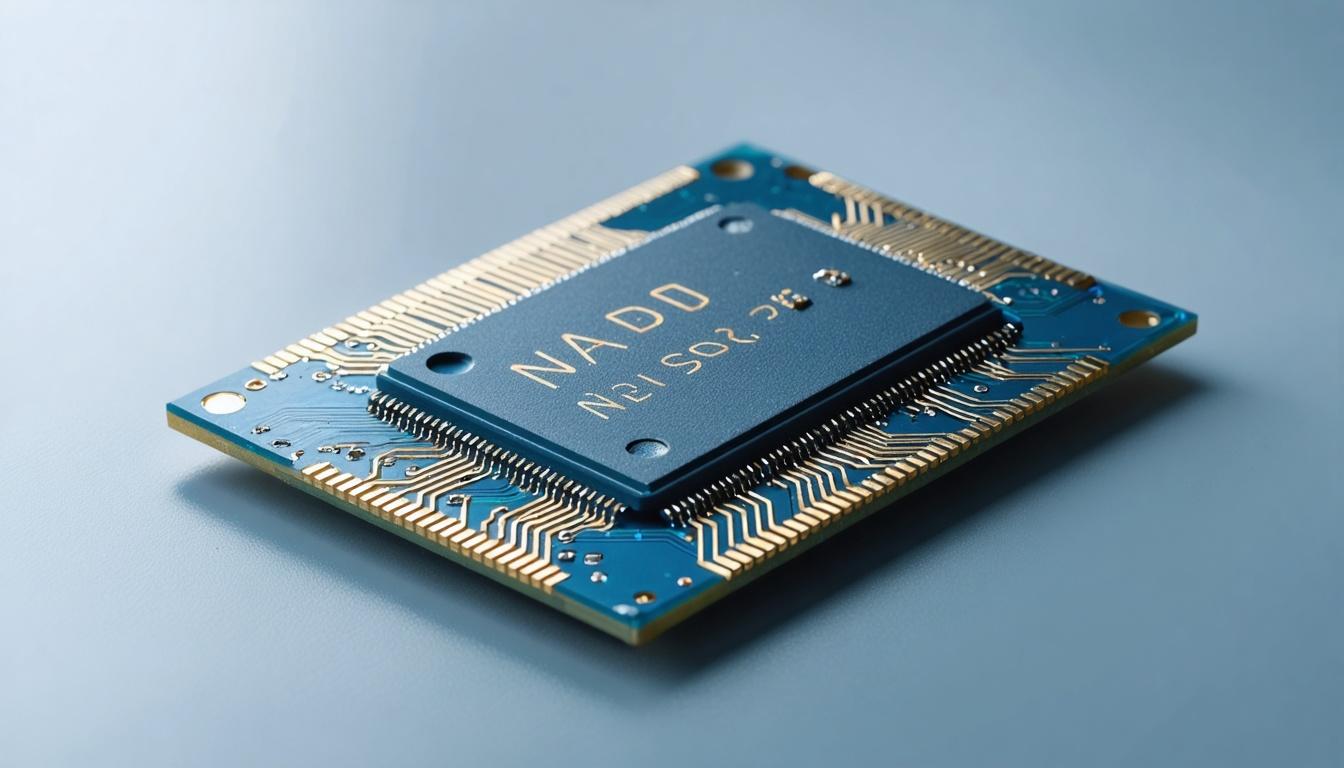

*this image is generated using AI for illustrative purposes only.
Longsys (301308.SZ) will unveil its "Edge AI Storage Fusion" strategy at the Flash Memory Summit (FMS) 2026, taking place in California, USA, from August 4 to 6, 2026. The Shenzhen-based semiconductor memory enterprise aims to demonstrate how its redesigned storage architecture bridges edge AI computing and storage, addressing industry challenges such as insufficient compute adaptation and high retrofit costs. This move signals Longsys's effort to transition the sector from technical exploration to commercial scale by redefining storage as a computing support hub rather than a passive data medium.
The presentation will focus on three core edge AI scenarios: AI Box intelligent hosts, AI PC terminals, and AI Mobile embedded devices. Longsys intends to showcase integrated hardware-software solutions that leverage proprietary technology and supply chain synergy. The company claims these solutions deliver multidimensional upgrades in performance, efficiency, and cost across diverse terminal scenarios.
Technological and Value Fusion
The "Edge AI Storage Fusion" theme encompasses two primary layers of innovation. The first is technological fusion, which involves integrating chips, storage, memory, and intelligent scheduling algorithms. This approach aims to break down traditional barriers between storage and memory to achieve true storage-compute synergy.
The second layer is value fusion, which seeks to redefine the role of storage in edge AI ecosystems. By aggregating hardware performance, software efficiency, and ecosystem adaptability, Longsys aims to enable lower-cost, higher-performance, and more scalable edge AI deployment. This philosophy underpins the company's efficient and deployable solutions for terminal AI applications.
Storage Foundry Model
Chief Scientist Dr. Chen Jian will present a session titled "Intelligence at the Edge: Powered by the Storage Foundry Model." This model represents an innovative business approach that moves beyond isolated hardware upgrades. Instead, it spans the full value chain, including:
| Value Chain Stage | Description |
|---|---|
| Chip Design | Customized design processes |
| Hardware & Firmware | Integrated system development |
| Packaging & Testing | Industrial design and quality assurance |
| Materials & Manufacturing | End-to-end production capabilities |
Dr. Chen will detail how deep cross-functional collaboration enables full-stack, efficient customization from design through delivery. Longsys has deeply invested in this model to support global partners in exploring new opportunities at the intersection of edge AI and storage.
What the Numbers Show
While specific financial metrics were not disclosed in the announcement, the strategic shift toward a full-stack Storage Foundry model indicates a move toward higher value-added services. By controlling the entire process from chip design to manufacturing, Longsys aims to reduce dependency on external components and improve margin structures through proprietary technology integration. This vertical integration strategy positions the company to capture more value within the growing edge AI hardware market.

How might Longsys's vertical integration strategy impact its gross margins compared to traditional storage manufacturers in the 2026-2027 fiscal periods?
Which major global semiconductor or AI hardware partners are expected to adopt Longsys's 'Storage Foundry Model' for their next-generation edge devices?
What specific regulatory or supply chain risks could hinder the commercial scaling of Longsys's proprietary chip design and manufacturing capabilities?
 18
18






 Create Custom Screeners
  Access 200+ Pre-built Filters
  Use 50+ Readymade Screener





