

Hyperscaler AI capex hits $539 billion, projected to reach $1.33 trillion in five years


Wall Street now prioritizes capital expenditures over earnings for AI stocks. Alphabet reports negative free cash flow as spending surges to $132 billion. Consensus estimates project total hyperscaler capex to surge from $539 billion last year to $1.33 trillion annually within five years.

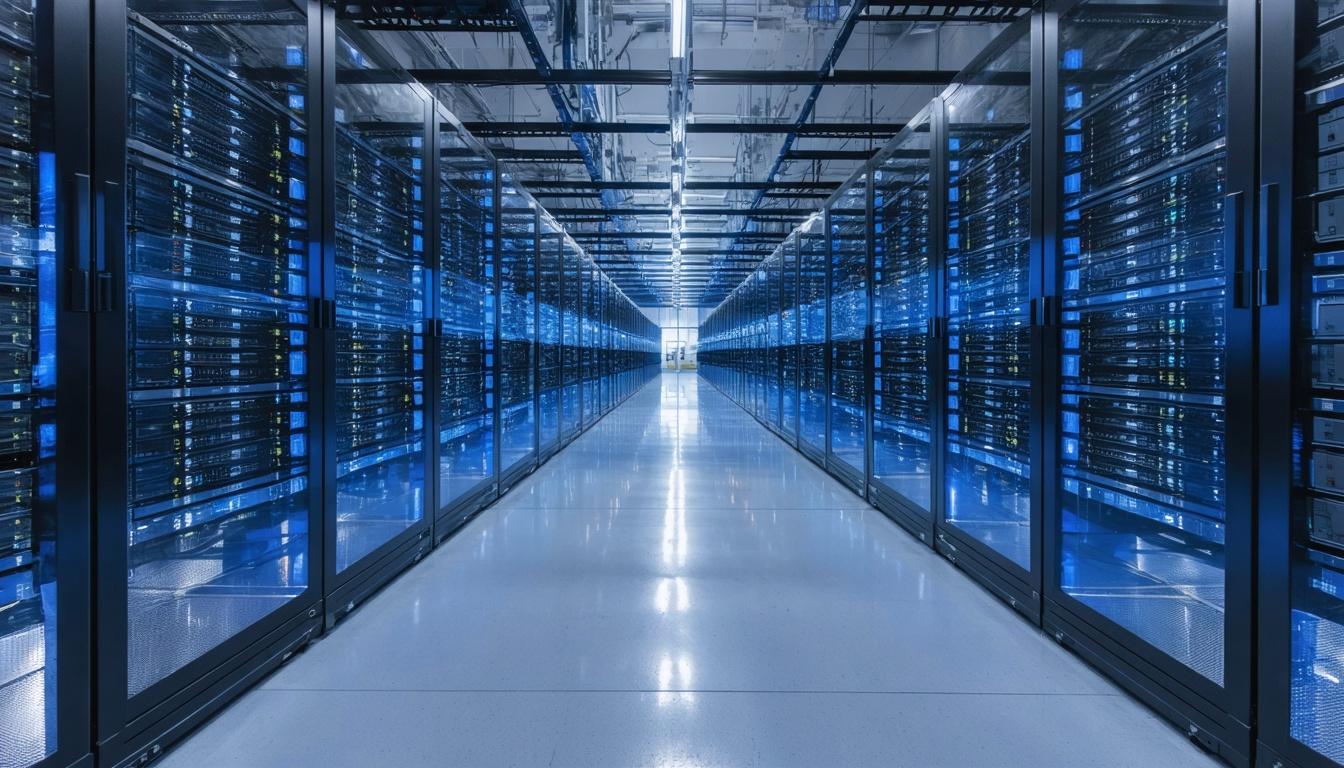

*this image is generated using AI for illustrative purposes only.
Wall Street investors have fundamentally altered how they evaluate major technology stocks, shifting their primary focus from traditional metrics like revenue and earnings to capital expenditures (capex). This change reflects the intense competition among hyperscalers to build artificial intelligence infrastructure, with Alphabet Inc., Microsoft Corp., Amazon.com Inc., and Meta Platforms Inc. leading the charge. The immediate consequence of this spending spree is visible in Alphabet’s latest results, where quarterly free cash flow turned negative for the first time in company history due to $44 billion in capex during the quarter.
Alphabet’s total capex over the past 12 months reached $132 billion, roughly double the level of a year earlier. Management has guided for approximately $200 billion in capex over the next 12 months, signaling that the investment cycle is accelerating rather than slowing. This willingness to sacrifice current cash generation for future computing capacity defines the current market dynamic, forcing investors to look beyond immediate profitability to assess long-term AI dominance.
The scale of this spending is unprecedented across the sector. Over the past twelve months, the five largest hyperscalers—Alphabet, Amazon, Meta, Microsoft, and Oracle Corp.—along with Space Exploration Technologies Corp., invested a combined $539 billion in capital expenditures. Consensus estimates suggest this figure will surge to nearly $800 billion over the current fiscal year, exceed $1 trillion the following year, and approach $1.33 trillion annually within five years.
Hyperscaler AI Capex Tracker
| Company | LTM CapEx | FY1E | FY2E | FY3E | FY4E | FY5E | 5Y CapEx CAGR |
|---|---|---|---|---|---|---|---|
| Alphabet | $132.40B | $201.83B (+52.4%) | $281.87B (+39.7%) | $309.58B (+9.8%) | $287.62B (-7.1%) | $290.28B (+0.9%) | 25.99% |
| Amazon | $151.00B | $202.09B (+33.8%) | $230.96B (+14.3%) | $240.02B (+3.9%) | $264.46B (+10.2%) | $270.44B (+2.3%) | 16.08% |
| Meta | $75.75B | $135.23B (+78.5%) | $174.06B (+28.7%) | $183.74B (+5.6%) | $189.18B (+3.0%) | $188.46B (-0.4%) | 22.01% |
| Microsoft | $97.23B | $118.88B (+22.3%) | $178.86B (+50.5%) | $190.76B (+6.7%) | $217.18B (+13.8%) | $224.36B (+3.3%) | 28.29% |
| Oracle | $55.66B | $91.71B (+64.8%) | $101.17B (+10.3%) | $89.98B (-11.1%) | $74.38B (-17.3%) | $113.76B (+52.9%) | 15.37% |
| SpaceX | $26.88B | $48.02B (+78.6%) | $93.42B (+94.5%) | $121.55B (+30.1%) | $197.67B (+62.6%) | $242.20B (+22.5%) | 55.2% |
| Total | $538.92B | $797.75B (+48.0%) | $1.06T (+32.9%) | $1.14T (+7.1%) | $1.23T (+8.4%) | $1.33T (+8.0%) | — |
Microsoft and Meta are next in line to report earnings that could further validate this trend. Microsoft spent approximately $97.2 billion over the last twelve months, with analysts expecting capex to climb to $118.9 billion over the next fiscal year, a 22% year-over-year increase. Meta’s trajectory is steeper, with spending expected to jump 79% to $135.2 billion over the next twelve months after investing about $75.8 billion in the past year.
What the Numbers Show
The data reveals a divergence between short-term cash generation and long-term infrastructure buildup. While Alphabet’s free cash flow turned negative, the broader group is projected to maintain significant growth in capex through FY3E before moderating in later years. SpaceX shows the highest five-year compound annual growth rate at 55.2%, indicating aggressive expansion plans compared to the more mature trajectories of Alphabet and Amazon. Investors are increasingly likely to prioritize these capex figures over advertising growth or cloud revenue when assessing valuation.

How might the projected moderation in hyperscaler capex growth by FY3E impact the revenue forecasts for semiconductor suppliers like NVIDIA and AMD?
What specific AI monetization milestones must Alphabet and Meta achieve to justify their negative free cash flow periods to skeptical institutional investors?
Could the unprecedented $1.33 trillion annual capex projection lead to an oversupply of AI infrastructure, potentially triggering a price war in cloud computing services?
 18
18





 Create Custom Screeners
  Access 200+ Pre-built Filters
  Use 50+ Readymade Screener





