Aptiv adds support for NVIDIA Jetson Orin Nano 2 to scale physical AI

scanx
Reviewed by
Ritika DScanX News Team
Key Highlights
  • Aptiv adds support for NVIDIA Jetson Orin Nano 2 to accelerate physical AI deployment
  • Jetson Orin Nano 2 offers 2x inference performance and 40% lower power consumption than predecessor
  • Aptiv integrates PULSE sensing, Gen 8 radar, and Wind River software into the ecosystem
  • Focus is on helping customers scale drones, robotics, and autonomous systems from prototype to production
powered bylight_fuzz_icon
49218729

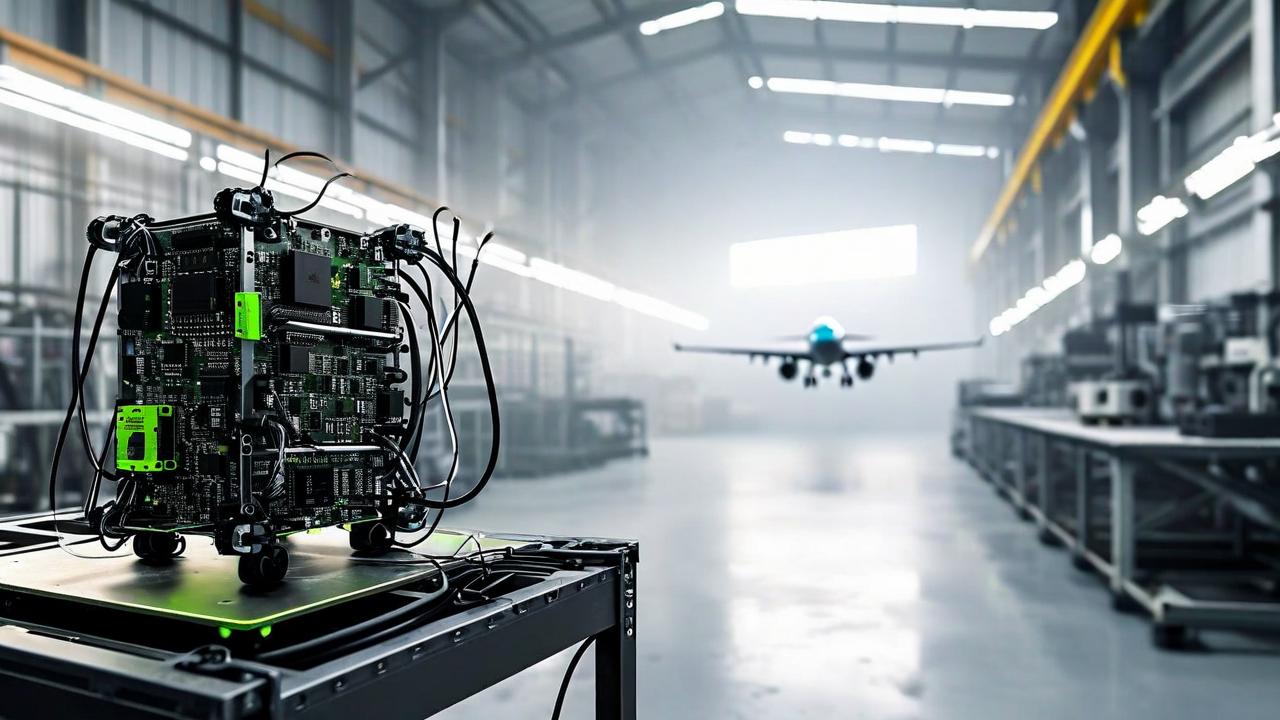
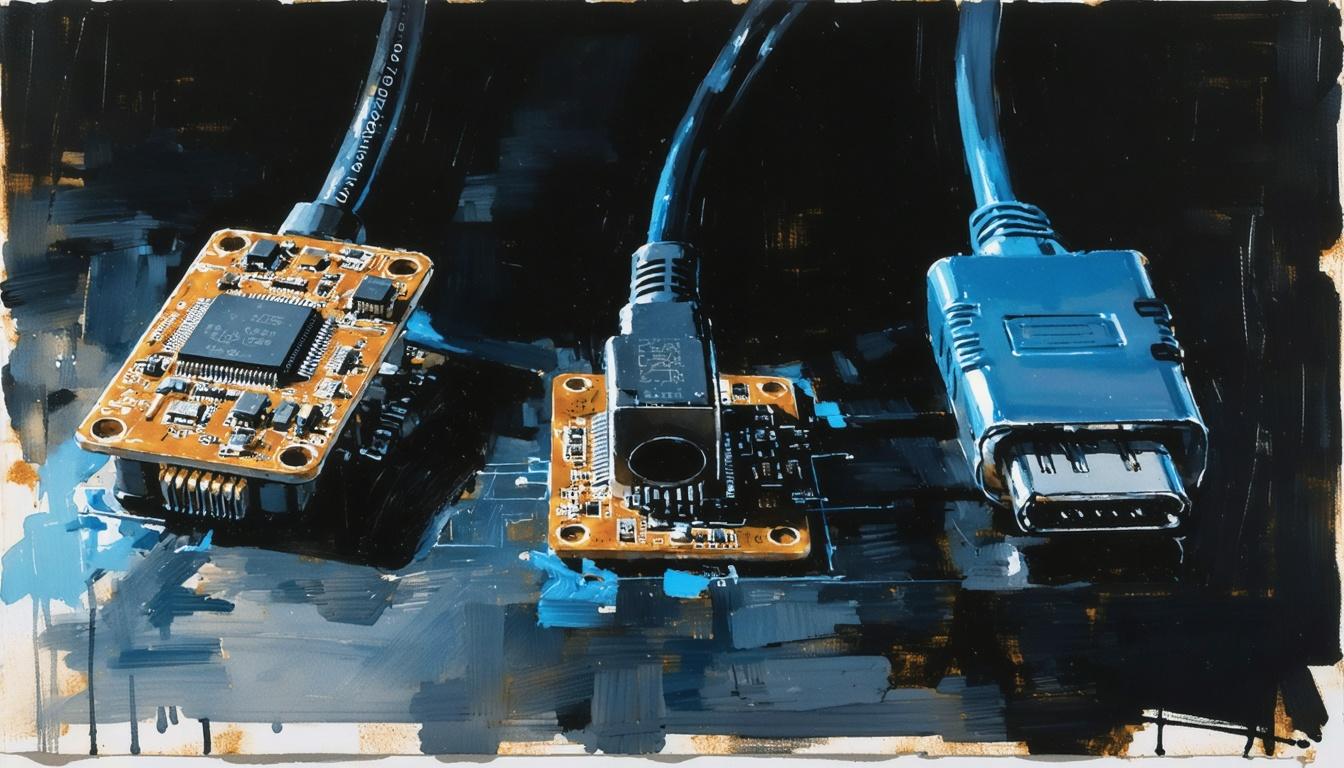
*this image is generated using AI for illustrative purposes only.

Aptiv PLC (NYSE: APTV) announced support for the NVIDIA Jetson Orin Nano 2, expanding its collaboration with NVIDIA to help customers deploy production-ready physical AI and intelligent edge systems. This development builds on Aptiv’s prior work supporting commercially deployable edge AI platforms based on NVIDIA Jetson, including the Jetson Thor.

The announcement targets sectors moving from prototype to production, specifically delivery and inspection drones, robotics, and other autonomous systems. Aptiv aims to provide the sensing, software, lifecycle support, and systems integration expertise required for these systems to operate reliably in real-world environments.

Expanding Role in the Jetson Ecosystem

The NVIDIA Jetson platform supports robotics and edge AI applications, with ecosystem partners enhancing these capabilities through additional hardware, software, development tools, and engineering services. The new Jetson Orin Nano 2 is positioned to redefine entry-level edge AI.

Key specifications of the Jetson Orin Nano 2 include:

  • Performance: 2x the inference performance of the previous Jetson Orin Nano in the same compact size.
  • Efficiency: Consumes 40% less power at the same performance level.
  • Specs: Features 78 TOPS, 8GB of memory, and an 8-core Arm CPU.

These specifications aim to power a new class of smart delivery and inspection drones, robots, and vision AI systems with significant leaps in AI performance and energy efficiency.

Aptiv’s Technology Portfolio

Aptiv will integrate several technologies and services into the Jetson ecosystem to support customers:

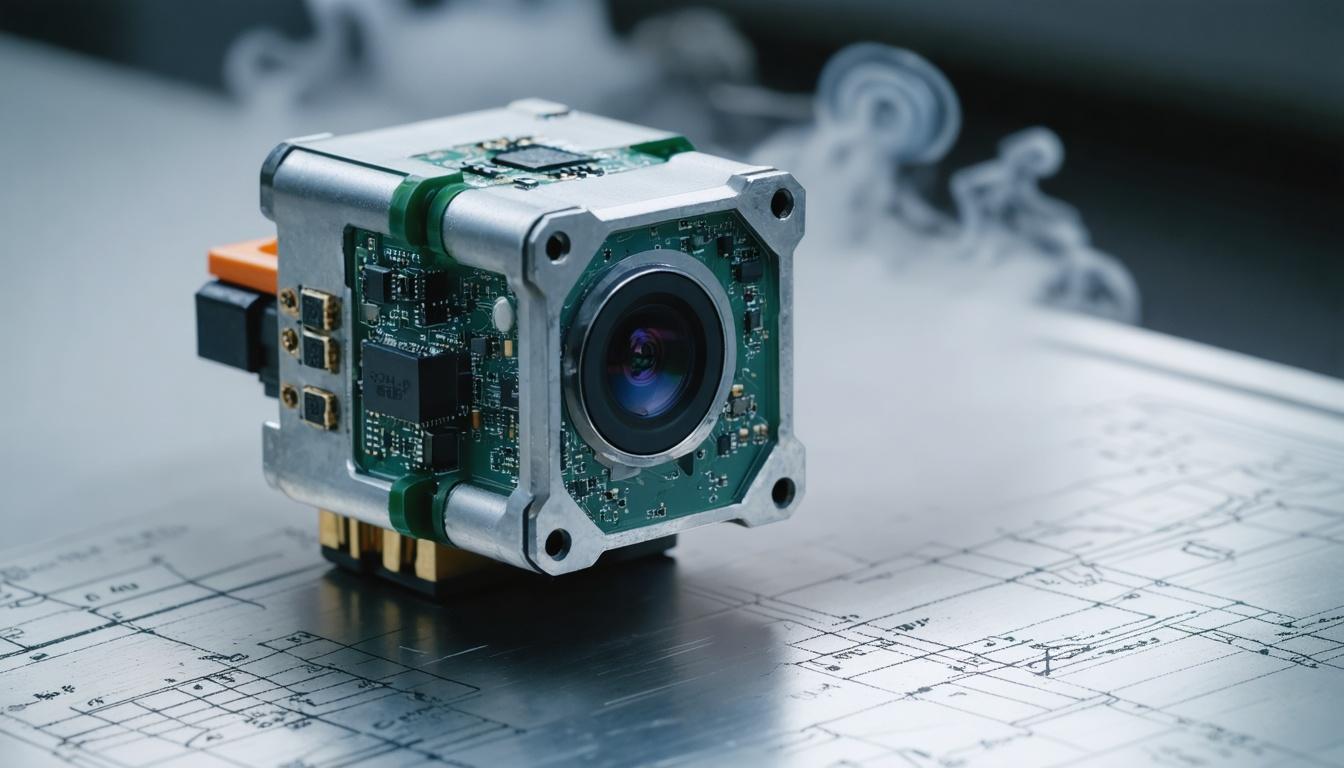
  • Aptiv PULSEâ„¢: Integrates surround-view camera and ultrashort-range radar to enable reliable 360-degree sensing, helping reduce blind spots, cost, and system complexity.
  • Aptiv Gen 8 radar: Designed to deliver advanced range, resolution, object detection, and 4D perception in challenging operating conditions.
  • Robotics compute solutions: Running on the NVIDIA Jetson Orin Nano 2, Orin NX, and AGX Orin.
  • Wind River software and lifecycle support: Assists customers with long-term maintenance, security monitoring, compliance readiness, and production deployment needs.

Scaling Physical AI Solutions

Physical AI solutions must operate in increasingly dynamic environments, requiring multimodal perception running on embedded, AI-ready compute for context-aware decision-making. As these systems interact with the physical world, predictable real-time performance and the ability to continuously learn and improve fleets of distributed devices are becoming critical.

Jay Bellissimo, Senior Vice President and President of Intelligent Systems, Software and Services at Aptiv, stated that device manufacturers need partners who can help them scale successfully. He emphasized that beyond powerful compute, this requires reliable perception, proven software platforms, and systems expertise to operate safely and efficiently in dynamic environments.

Sam Palmisano, Vice President of Global Product Development for Adjacent Markets at Aptiv, noted that while developers are building increasingly capable systems on Jetson, scaling those systems requires a broader production ecosystem. Aptiv aims to bring together sensing, compute, software, and services to help customers move from promising demonstrations to reliable, scalable commercial deployments.

Disclaimer: This article is AI-generated using data from ViewTrade. ScanX is not liable for any inaccuracies.

How might Aptiv's integration of Gen 8 radar and PULSE sensing technologies differentiate its edge AI solutions from competitors relying solely on vision-based perception?

What specific regulatory or safety certification hurdles could delay the mass production deployment of autonomous delivery drones using the Jetson Orin Nano 2?

Could the 40% power efficiency improvement in the Jetson Orin Nano 2 enable new form factors for robotics that were previously constrained by battery life limitations?

like15
dislike

Aptiv Q2 Results: Revenue up 2%, full-year guide cut $300 million

scanx
Reviewed by
Suketu GScanX News Team
Key Highlights

Aptiv delivered Q2 revenue of $3.3 billion (+2%) but cut full-year 2026 guidance by $300 million due to China market weakness and program delays. Non-automotive revenue grew 12%, offsetting automotive headwinds, while the company repurchased $250 million in shares.

powered bylight_fuzz_icon
47403906

*this image is generated using AI for illustrative purposes only.

Aptiv (NYSE: APTV) reported second-quarter revenue of $3.3 billion, reflecting a 2% adjusted year-over-year increase, but lowered its full-year 2026 revenue guidance by $300 million due to persistent challenges in the domestic China market and delayed program launches. The automotive supplier cited prolonged sales weakness among local Chinese OEMs and reduced production schedules from luxury European exporters as primary drivers for the downward revision. While the company secured $5 billion in new business awards during the quarter, bringing the year-to-date total to $10 billion, near-term volatility has forced management to adopt a more conservative forecasting approach for the remainder of the fiscal year.

The guidance cut impacts both segments but disproportionately affects Intelligent Systems. Aptiv now expects full-year 2026 revenue between $12.6 billion and $12.8 billion, implying 2% adjusted growth at the midpoint. Adjusted EBITDA is projected at $2.31 billion to $2.37 billion, with a midpoint margin of 18.4%. Adjusted earnings per share (EPS) are expected to range from $5.60 to $5.80, with free cash flow forecasted between $625 million and $725 million. These figures reflect lower operating earnings partially offset by a slightly lower effective tax rate and a reduced share count following buybacks.

Financial Performance Highlights

In the second quarter, adjusted EBITDA totaled $613 million, with margins expanding by 10 basis points despite a 30 basis point headwind from foreign exchange and commodity costs. Earnings per share rose to $1.63, an increase of $0.12 from the prior year’s pro forma results, driven by higher operating income and share repurchases. Free cash flow recorded an outflow of $33 million, which included approximately $70 million in cash separation costs associated with the Versigen spinoff.

Metric Q2 2026 Value Change / Note
Revenue $3.3 billion +2% adjusted YoY
Adjusted EBITDA $613 million +10 bps margin expansion
EPS $1.63 +$0.12 vs prior year
Free Cash Flow ($33) million Outflow includes $70m separation costs
New Business Awards $5 billion $10 billion year-to-date

Regional and Segment Dynamics

Revenue performance varied significantly by region. North America saw a 10% growth rate, driven by strength across both business segments. In contrast, Europe experienced an 8% decline, primarily due to volume pressures with select luxury OEMs within the Intelligent Systems segment. Asia Pacific revenue increased 6%, including 5% growth in China, supported by an improved mix with local OEMs that partially offset the broader slowdown in domestic production.

Within Intelligent Systems, revenue remained flat at $1.5 billion as strength in non-automotive software and services was offset by automotive weakness linked to European OEMs and a supplier fire impacting a North American customer. Adjusted EBITDA margin for this segment declined 120 basis points due to investments in non-auto markets and stranded costs. Conversely, Engineered Components revenue grew 3% to $1.8 billion, fueled by double-digit growth in diversified industrials and aerospace and defense. Its adjusted EBITDA margin improved by 100 basis points, reflecting volume flow-through and favorable recovery timing.

What the Numbers Show

The divergence between strong new business bookings and lowered revenue guidance highlights a structural shift in Aptiv’s risk profile. While the company secured $5 billion in awards—on track for its $20 billion annual target—the immediate conversion of these bookings into revenue is being hampered by macroeconomic volatility in China. The $300 million guidance reduction breaks down into approximately $150 million from changed customer production schedules, $100 million from delayed program launches, and $50 million from software sales timing. This suggests that while long-term demand for Aptiv’s technology remains robust, short-term execution is increasingly sensitive to regional retail sales data and OEM inventory adjustments, particularly in the volatile Chinese market where domestic retail sales have fallen 20%.

Strategic Diversification and Capital Allocation

Aptiv continues to pivot toward higher-margin non-automotive markets, where revenue grew 12% in the quarter. The company highlighted significant progress in robotics and drones, expecting annual revenues from these sectors to reach approximately $300 million over the next few years. Notable developments include a commercial award from a leading drone manufacturer with lifetime revenues exceeding $500 million and partnerships with three leading robotics manufacturers.

On capital allocation, Aptiv repurchased $250 million of shares in the second quarter, bringing the year-to-date total to $325 million. Management intends to repurchase a similar amount in the second half, targeting over $600 million for the full year. The company remains committed to returning approximately half of its free cash flow to shareholders through buybacks while pursuing smaller bolt-on M&A transactions to further diversify its business portfolio.

Disclaimer: This article is AI-generated using data from ViewTrade. ScanX is not liable for any inaccuracies.

How might Aptiv's accelerated pivot to non-automotive sectors like robotics and drones mitigate the ongoing revenue volatility in the Chinese automotive market?

Will the $300 million guidance cut signal a broader trend of delayed program launches across the global automotive supply chain, or is this isolated to specific luxury OEM partnerships?

Given the 120 basis point margin decline in Intelligent Systems due to stranded costs, what specific operational adjustments does management plan to implement to restore profitability in this segment?

like18
dislike

More News on Aptiv PLC