News Stocks US Tariffs Impact Indian Cable and Internet Gear Makers Amid Data Centre Infrastructure Boom
US Tariffs Impact Indian Cable and Internet Gear Makers Amid Data Centre Infrastructure Boom


US tariffs imposed by President Trump are significantly impacting Indian cable and internet gear manufacturers, with companies like STL reporting 760 basis points margin reduction and others experiencing export declines. Despite missing opportunities in the $42.45 billion AI infrastructure boom, industry players remain optimistic about long-term prospects and are implementing localization and diversification strategies to navigate the challenging trade environment.
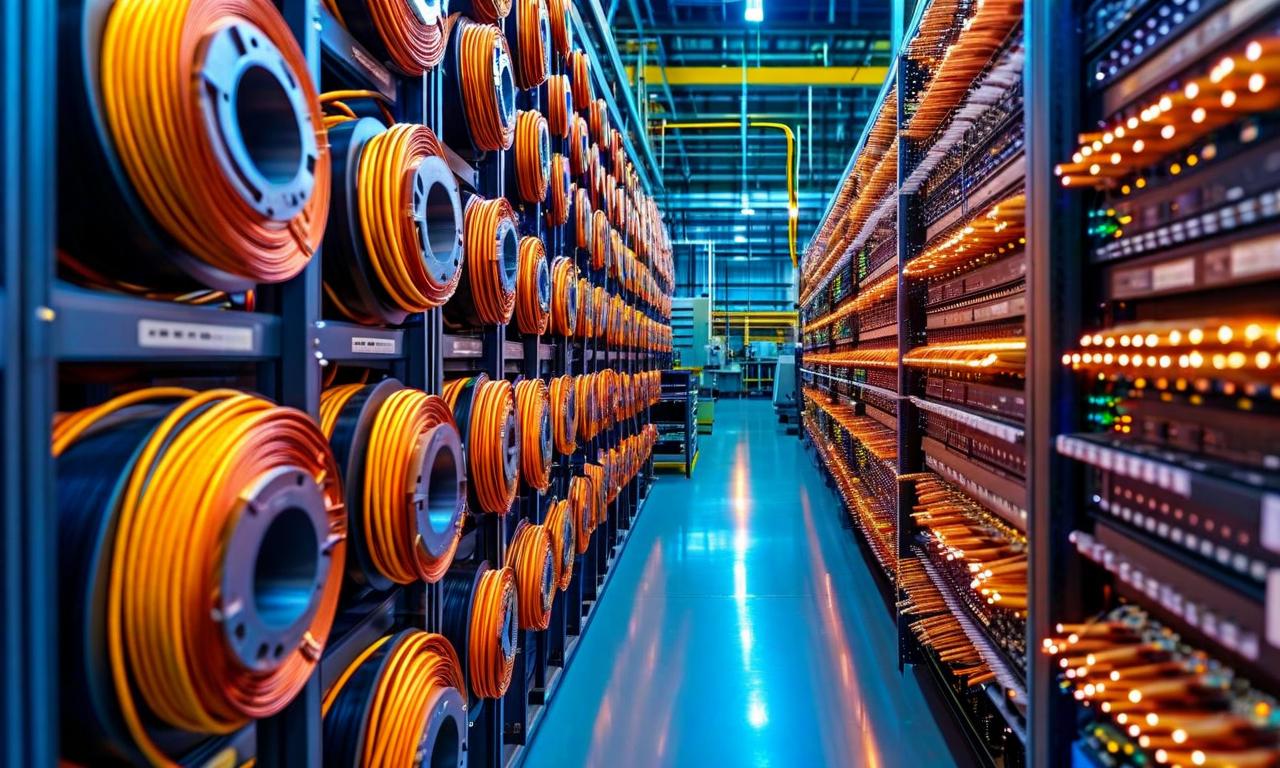

*this image is generated using AI for illustrative purposes only.
Indian cable and internet gear manufacturers are grappling with significant challenges as US tariffs imposed by President Trump create headwinds for their export businesses, potentially causing them to miss out on a massive infrastructure opportunity. The tariffs are preventing Indian companies from fully capitalizing on billions of dollars in orders for artificial intelligence infrastructure and the government's $42.45 billion Broadband Equity, Access and Deployment (BEAD) programme aimed at expanding high-speed internet access.
Trump has imposed tariffs of up to 50% on Indian goods, including a 25% penalty for purchasing Russian oil. While sectors like pharmaceuticals and semiconductors have received exemptions, manufactured goods including cables, telecom hardware inputs, and engineering products remain subject to these levies.
Major Impact on Key Players
The tariff impact has been most pronounced across several leading Indian manufacturers, with varying degrees of margin pressure and export declines reported.
Sterlite Technologies Faces Significant Margin Pressure
Sterlite Technologies Ltd (STL), a key optical fibre cable supplier, has experienced the most severe impact. According to Ajay Jhanjari, group chief financial officer at STL, the company's performance has been significantly affected:
| Impact Metric | Q3 FY26 | Q2 FY26 | Details |
|---|---|---|---|
| EBITDA Margin Reduction | 760 bps | 300 bps | Due to US tariff reset |
| Reported Margins | 10.30% | - | Current level |
| North America Revenue Share | 36.00% | 25.00% | Increased despite tariffs |
Jhanjari noted that the company is passing on some tariffs to customers and aggressively ramping up production at its US facility, while remaining hopeful for an early resolution of the India-US bilateral trade agreement.
Mixed Results Across Other Manufacturers
HFCL Ltd has managed to minimize the tariff impact through strategic positioning. Mahendra Nahata, promoter and managing director, stated during the Q2 earnings call that the company has been able to cushion itself with "very minimal impact on HFCL's exports, which are mostly optical fibre cable to the US."
Polycab Ltd faced additional challenges beyond tariffs, dealing with higher copper and aluminium costs between September and December. Chief financial officer Niyant Maru described 2025 as "a pivotal phase for the global economy, defined by shifting trade dynamics and heightened geopolitical and tariff-related uncertainties." The company's international cables business generated ₹ 1,345 crore in sales in FY25, contributing 6% to total turnover, but reported a modest contraction.
Export Performance Declines
Several companies have reported measurable impacts on their export performance:
| Company | Export Impact | Details |
|---|---|---|
| RR Kabel | 2 percentage point decline | Export share dropped to 6% in Q2 |
| Havells India | Reduced US demand | Previously "very good" export growth in FY25 |
| Polycab | Modest contraction | International business affected |
Anil Rai Gupta, chairman and managing director of Havells India, noted that while export growth was "very good" in FY25, "this year, unfortunately, we have been hit by the tariffs, and there is lesser demand from the US market."
Industry Outlook and Strategic Responses
Despite current challenges, industry executives and analysts maintain optimism about long-term opportunities. Siddhant Cally, research analyst at Counterpoint India, emphasized that "there is an opportunity for the Indian telecom and fibre cable industry in the US market" driven by data centres, backhaul, and consumer broadband demand.
Companies are implementing various strategies to navigate the tariff environment:
- Localization efforts: STL is ramping up its South Carolina facility production
- Hybrid business models: Polycab is developing both distributor and direct institutional customer channels
- Market diversification: Havells India plans to explore more export markets for underground cables
- Brand building: Enhanced efforts in the US and Middle East markets
The industry continues to retain a relative cost advantage despite narrowed margins post-tariffs. As Cally noted, "a delayed profitability is better than no profitability," with vendors focusing on localizing manufacturing or final assembly in the US to better position themselves for future growth while diversifying revenue streams across global markets.
 18
18