
UltraTech Cement's Strategic Rise to India's Cement Market Leadership
UltraTech Cement's rise from L&T's divested cement business in 2004 to India's largest cement producer exemplifies strategic acquisition-led growth and operational excellence. The company achieved 192.26 MTPA grey cement production capacity and 135.83 million tonnes in sales volume by FY25. Major acquisitions including Jaiprakash Associates (21.2 MTPA), Binani Cement (6.25 MTPA), and Century Textiles created an unmatched pan-India footprint. UltraTech's capacity growth from roughly 66 MTPA in 2016 to nearly 190 MTPA by 2025 positions it to achieve its 200 MTPA target by FY26 ahead of schedule.

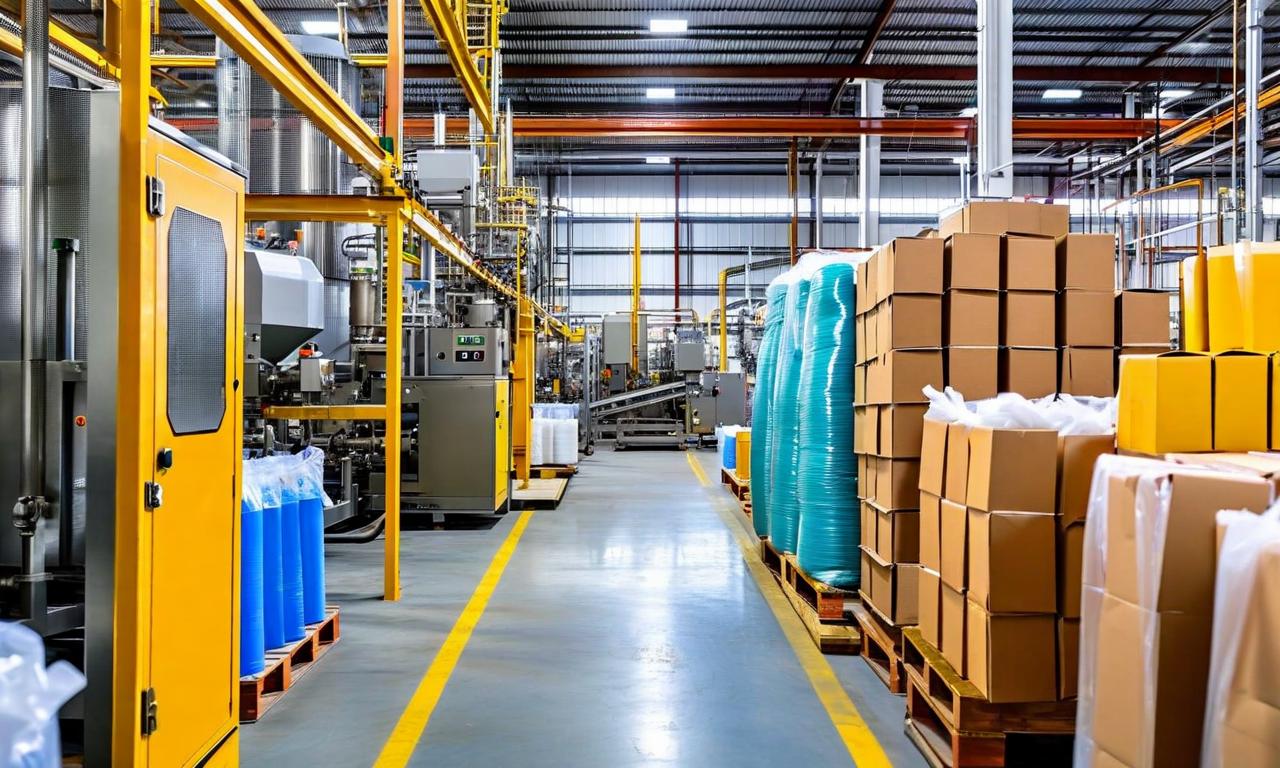
*this image is generated using AI for illustrative purposes only.
UltraTech Cement 's transformation from a divested business unit to India's largest cement producer represents one of the most remarkable industrial growth stories in recent decades. Launched as a standalone brand in 2004, the company leveraged strategic acquisitions, aggressive capacity expansion, and operational discipline to outpace century-old competitors and redefine market leadership in Indian cement.
Origins: From L&T Cement to UltraTech
UltraTech Cement's foundation traces back to a complex corporate struggle involving Larsen & Toubro in the 1980s. Dubai-based businessman Manu Chhabria's share accumulation in L&T prompted Dhirubhai Ambani to emerge as a white knight, purchasing over 12.5 percent of L&T and later raising it to nearly 18 percent. Political changes in the late 1980s forced the Ambanis' exit from L&T's board, though they remained passive shareholders until 2001.
The situation reached resolution when the Ambanis sold their entire stake to Kumar Mangalam Birla, who strategically targeted L&T's cement division. After extended negotiations under A.M. Naik's leadership, Birla agreed in 2003 to exit L&T by selling his stake to the L&T Employee Trust, receiving L&T's cement business in return. This transaction, combined with the 1998 merger of Grasim and Indian Rayon's cement operations, created the foundation for UltraTech Cement's launch in 2004.
Strategic Acquisition-Led Expansion
UltraTech's defining strategy centered on acquisition-led growth rather than solely relying on greenfield capacity additions. This approach delivered immediate capacity increases and expanded regional reach across India's fragmented cement sector.
| Major Acquisition | Year | Capacity Added (MTPA) | Strategic Impact |
|---|---|---|---|
| Jaiprakash Associates | 2017 | 21.2 | Strengthened north and central India footprint |
| Binani Cement | 2018 | 6.25 | Enhanced central India presence |
| Century Textiles | 2019 | Significant | First global cement company outside China with 100+ MTPA |
| India Cements | Recent | 14+ | Boosted southern India market share to projected 26% by FY27 |
The company's integration capabilities proved exceptional, with Jaypee's plants improving from 13 percent utilization at acquisition in 2017 to over 95 percent by early 2019. Similar utilization improvements were recorded at Binani and Century units, demonstrating UltraTech's ability to convert purchased capacity into productive assets quickly.
Organic Growth and Capacity Expansion
Beyond acquisitions, UltraTech invested heavily in organic capacity expansion. The company announced a Rs. 5,477 crore investment in 2020 to add nearly 12.8 MTPA of new capacity. By 2024, UltraTech had dramatically expanded its production base, surpassing 150 MTPA capacity.
| Performance Metric | FY25 Achievement |
|---|---|
| Grey Cement Production Capacity | 192.26 MTPA |
| Sales Volume | 135.83 million tonnes |
| Capacity Growth (2016-2025) | From ~66 MTPA to ~190 MTPA |
Pan-India Market Leadership
UltraTech's strategic acquisition choices created an unmatched national footprint. While competitors maintained strong regional dominance with limited national scale, UltraTech built comprehensive coverage through targeted deals:
- Northern India: Jaypee acquisition strengthened market position
- Central India: Binani Cement enhanced regional presence
- Southern India: India Cements acquisition projected to increase market share from 11% to 26% by FY27
- Multi-regional: Century Textiles provided cross-market expansion
The company's growth trajectory significantly outpaced competitors. While Adani Group's cement portfolios (Ambuja and ACC) collectively targeted around 118 MTPA by FY26, UltraTech approached nearly double that capacity. Smaller players like Shree Cement and Dalmia Bharat grew steadily but at measured paces, focusing on regional strengths rather than national scale.
Operational Excellence and Integration
UltraTech's success extended beyond capacity additions to operational efficiency improvements. The company invested in logistics optimization, energy efficiency, and nationwide supply chain networks. Enhanced capacity utilization at acquired units resulted from focused integration efforts and performance culture implementation.
Key operational improvements included:
- Renewable energy investments and waste heat recovery systems
- Fuel optimization programs to improve cost structures
- Integrated dealer networks for faster delivery to high-growth regions
- Freight cost reduction through nationwide supply chain optimization
Market Position and Future Targets
Today, UltraTech stands as India's largest cement producer and ranks among the top globally outside China by production and sales volume. The company's near-term target of crossing 200 MTPA by FY26, set years earlier, appears achievable ahead of schedule, demonstrating strategic foresight and execution discipline.
UltraTech's transformation from a divested business unit in 2004 to market leadership showcases the power of strategic acquisitions, disciplined execution, and operational integration. The company's capacity to convert structural opportunities into sustainable competitive advantages has established a blueprint for industrial scale and market dominance in traditionally fragmented sectors.
Historical Stock Returns for UltraTech Cement
| 1 Day | 5 Days | 1 Month | 6 Months | 1 Year | 5 Years |
|---|---|---|---|---|---|
| +0.04% | +0.93% | +7.26% | -0.67% | +15.67% | +123.48% |


