News Stocks Tourism Sector Seeks GST Reforms, Industry Status and Infrastructure Support in Budget 2026
Tourism Sector Seeks GST Reforms, Industry Status and Infrastructure Support in Budget 2026


India's tourism sector is seeking comprehensive reforms in Union Budget 2026, including simplified GST procedures, industry status recognition, and enhanced infrastructure support. The industry, contributing 7-8% to GDP and employing 46.50 million people, demands flat 1% TCS rates, centralized GST registration, and single-window clearance systems. Key focus areas include domestic tourism infrastructure development, international marketing initiatives, and skills development programs to sustain the projected 10-11% CAGR growth and achieve the $1 trillion GDP contribution target.
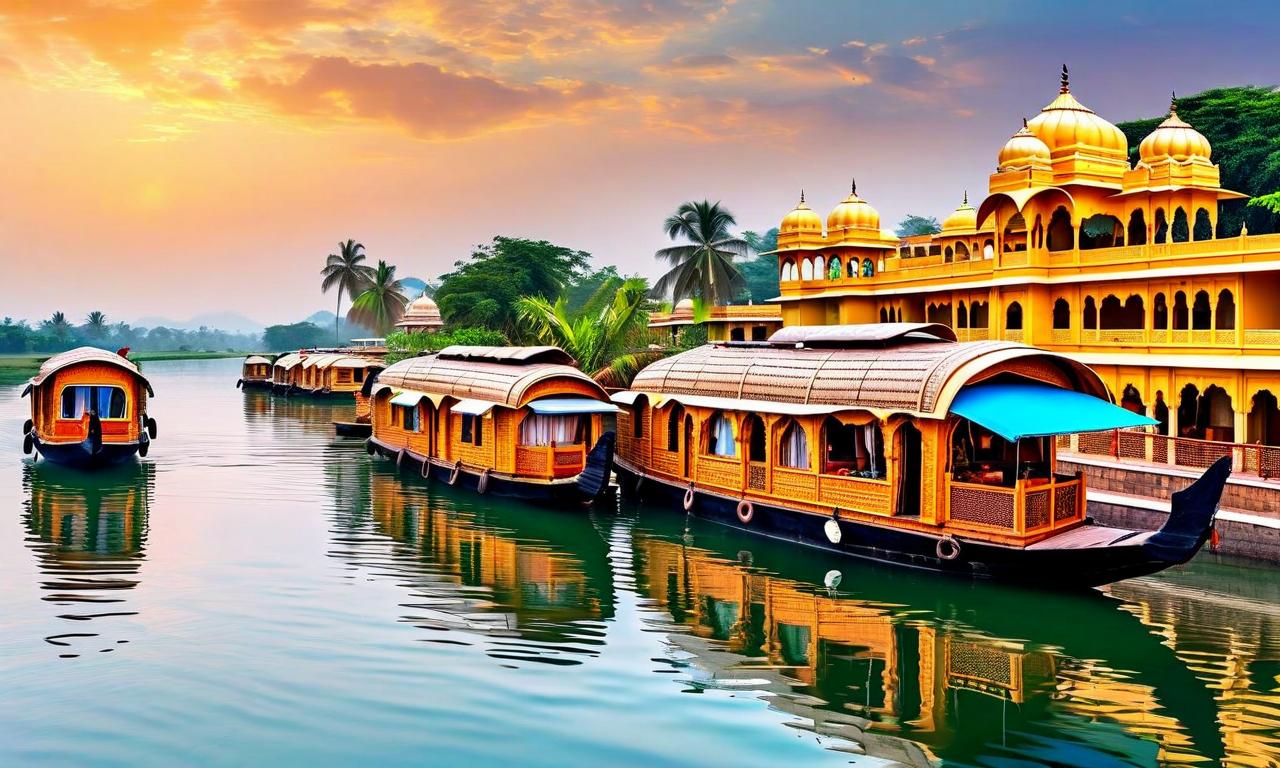

*this image is generated using AI for illustrative purposes only.
India's travel, tourism and hospitality sector is positioning Union Budget 2026 as a critical opportunity for structural reforms that could transform the industry from a service-based sector to a key infrastructure and growth driver. Industry stakeholders across various segments are seeking comprehensive policy support to sustain growth momentum and address existing fiscal and regulatory gaps.
Key Sector Demands and Reform Expectations
The tourism industry's primary expectations center around three core areas: simplified GST procedures, enhanced financing models, and policy support for new ownership structures. According to Vishal Suri, MD and CEO of SOTC Travel, the budget presents an opportunity to strengthen India's tourism foundations and accelerate growth through strategic reforms.
| Priority Area | Specific Demands |
|---|---|
| GST Reforms | Centralized registration, single returns, flat 1% TCS rate |
| Industry Recognition | Grant industry status to unlock potential |
| Infrastructure | Single-window clearance, enhanced connectivity |
| Financing | Lower interest rates, institutional credit for MSMEs |
Abhishek Sahai, General Manager of Conrad Pune, emphasized that reducing indirect taxes would increase affordability, boost global competitiveness, and encourage tourism growth.
GST and Tax Structure Overhaul
SOTC's Suri outlined specific GST procedural reforms needed after GST 2.0 implementation. The recommendations include implementing centralized registration options, seamless single returns across all states, and procedural simplification to achieve a truly 'Good and Simple Tax' system.
A significant proposal involves replacing the complex multi-tier TCS structure with high tax rates of 5% and 20% with a universal 1% rate. This approach aims to ensure clear audit trails while avoiding unnecessary cash and liquidity blockage for travelers.
Wilfred Selvaraj, MD of LGT Holidays, highlighted how the current tax framework challenges organized travel players, noting that high GST on tour packages and 20% TCS on overseas programs have materially increased travel costs for consumers.
Infrastructure Development and Connectivity Focus
Stakeholders emphasized infrastructure-led growth as crucial for unlocking the sector's potential. Mahesh Iyer, MD and CEO of Thomas Cook (India), called for investments in infrastructure across under-served regions, spiritual destinations, and Tier II/III cities, combined with single-window clearance systems for hospitality projects.
| Infrastructure Priority | Key Requirements |
|---|---|
| Regional Connectivity | Improved rail and air connectivity |
| Tourism Facilities | Enhanced facilities at tourist destinations |
| Tier II/III Development | Targeted infrastructure investments |
| Digital Integration | AI-integrated training modules |
Govind Gaur, CEO of WanderOn, underscored that domestic tourism can become the backbone of India's tourism landscape if the government focuses on increased infrastructural connectivity, airport expansion, and improved rail travel.
Industry Status and Economic Impact
The sector's economic significance is substantial, contributing 7-8% to India's GDP according to Nikhil Sharma, MD and COO, South Asia of Radisson Hotel Group. Shwetank Singh, Executive Director of Chalet Hotels, noted that the hospitality sector has created 46.50 million jobs and is projected to support 64 million by 2035.
Despite this economic contribution, the industry lacks infrastructure classification, which Singh identified as a constraint on scale. The demand for industry status recognition aims to unlock financing potential and facilitate growth acceleration.
International Tourism and Marketing Initiatives
Ravi Gosain, President of the Indian Association of Tour Operators (IATO), highlighted the great potential for inbound tourism but emphasized the need for focused financial support. He proposed establishing an "India Tourism Promotion Board" dedicated to promoting India internationally, with adequate funding for worldwide promotion.
Key international tourism support measures include:
- Enhanced allocation for global marketing campaigns like Incredible India
- Rationalized GST for tourism services
- Improved e-visa facilities and processing
- Increased benefits for international air connectivity to Tier-2 and Tier-3 destinations
Skills Development and Employment Generation
Jyoti Mayal, Chairperson of Tourism and Hospitality Skill Council, expects the government to prioritize long-pending skilling reforms. The proposed initiatives include industry-aligned curriculum, modernized training with digital and AI-integrated modules, regional hospitality skill centers, and streamlined apprenticeship pathways.
Dinesh Yadav, Founder and MD of Fine Acers, noted that with the industry expanding at a projected 10-11% CAGR, it requires a complete policy overhaul rather than short-term remedies to maintain growth momentum. The comprehensive reform approach could help India achieve the pathway to $1 trillion contribution to GDP from the tourism sector.
 17
17