News Stocks Renault Unveils Third-Generation Duster in India on Republic Day with Advanced Safety Features
Renault Unveils Third-Generation Duster in India on Republic Day with Advanced Safety Features


Renault is launching the third-generation Duster in India on Republic Day, marking the SUV's return after 2022 discontinuation. The new model features India-specific design elements including sleeker LED lighting, 360-degree camera system, and vertically oriented tail-lamps. Built on the CMF-B platform, it will offer multiple powertrain options including hybrid technology and introduce ADAS features for the first time in Renault's Indian lineup, competing in the competitive midsize SUV segment.
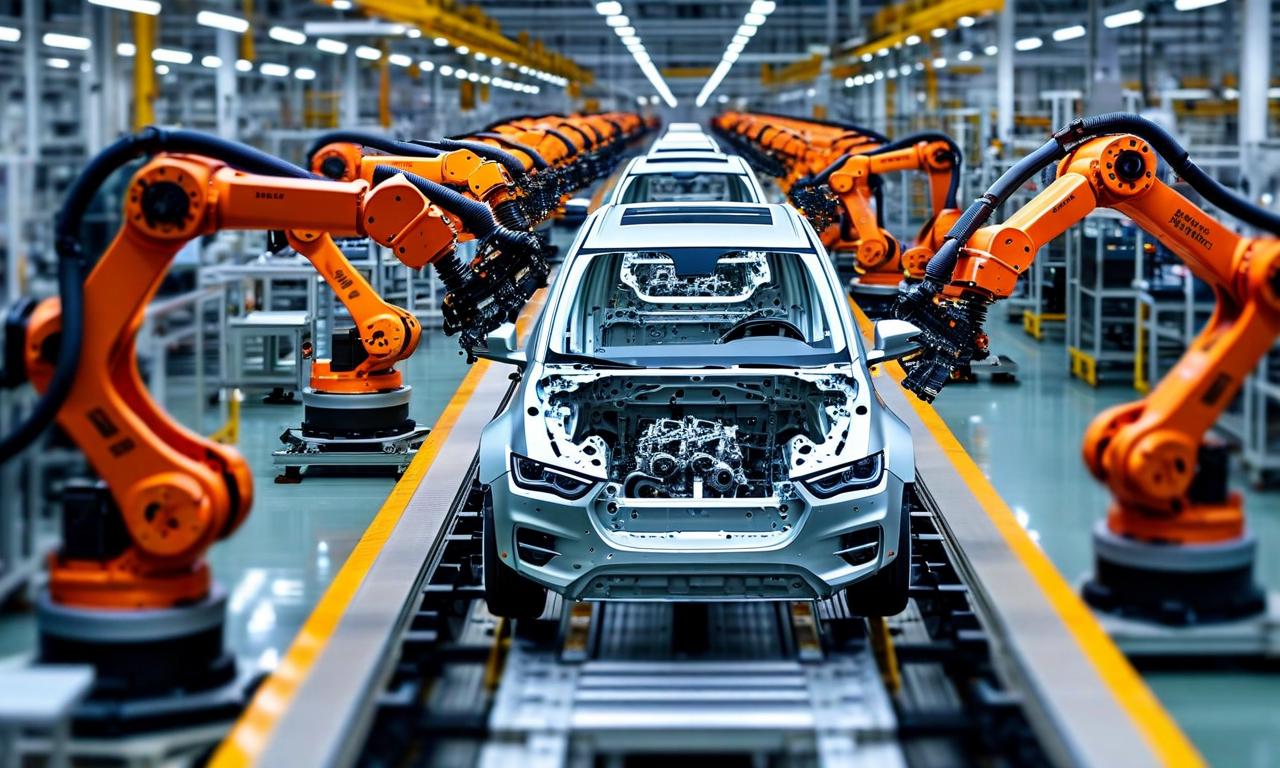

*this image is generated using AI for illustrative purposes only.
Renault is set to unveil the all-new third-generation Duster in India on Republic Day, marking the return of the popular SUV nameplate after it was discontinued in 2022. The French automaker had skipped the second-generation model for India, making this launch particularly significant for the brand's Indian operations. Development of the new Duster has been underway for an extended period, with several test vehicles spotted on Indian roads over the past year.
Design and Exterior Features
The India-spec Duster will be broadly based on the international version but will feature noticeable visual differences tailored for the local market. The SUV is expected to receive sleeker LED headlamps and eyebrow-shaped LED daytime running lamps, giving it a more contemporary appearance.
| Design Element | Specification |
|---|---|
| Headlamps | Sleeker LED units |
| DRL | Eyebrow-shaped LED |
| Camera System | 360-degree camera (front grille mounted) |
| Front Bumper | Three-slat air intake with wide lower air dam |
| Tail Lamps | Vertically oriented LED (India-specific) |
| Connectivity | Connected LED tail-lamp bar |
Spy images have revealed a camera module near the centre of the front grille, indicating a possible 360-degree camera system. The front bumper includes a three-slat air intake, a wide lower air dam, and redesigned fog lamps. Teasers suggest that the India model will have unique front and rear bumpers compared to the global version.
The SUV retains its characteristic sculpted bonnet, squared proportions, and extensive body cladding that provide an upright stance. At the rear, the India-spec Duster is expected to feature vertically oriented LED tail-lamps instead of the V-shaped units seen on the international model, along with a connected LED tail-lamp bar.
Interior and Technology Features
While the interior of the India-bound Duster has not yet been officially revealed, it is expected to closely follow the international model's layout. The cabin is likely to feature a layered dashboard with angular lines, a driver-focused centre console, and hexagonal air vents.
Expected interior features include:
- 10-inch freestanding touchscreen with wireless Apple CarPlay and Android Auto
- 7-inch digital instrument cluster
- Three-spoke multifunction steering wheel
- Wireless phone charging
- Dual-zone climate control
- Panoramic sunroof
- Six-speaker audio system
Renault is also expected to introduce advanced driver assistance systems (ADAS), which would be a first for the brand in India, marking a significant technological advancement for the company's Indian portfolio.
Powertrain Options
Globally, the third-generation Duster is offered with multiple powertrain options, though Renault has not yet confirmed which will be available in India.
| Engine Type | Displacement | Power Output | Technology |
|---|---|---|---|
| Turbo-petrol | 1.2-litre | 128.2 bhp | 48V mild-hybrid |
| Strong-hybrid | 1.6-litre | 138 bhp | Petrol-hybrid combination |
| Petrol-LPG | 1.0-litre | 98.6 bhp | Dual-fuel system |
Industry reports suggest petrol-only options at launch, with hybrid power under evaluation and no diesel engine planned. Separate expectations mention a 1.3-litre turbo-petrol and a 1.0-litre turbo-petrol for lower trims, but final specifications are awaited.
Platform and Market Positioning
The new Duster is built on the CMF-B platform, which supports updated electronics, improved safety systems, and modern powertrains. Renault is working on localising this platform for India. The same architecture will also underpin Nissan's upcoming midsize SUV, the Tekton, which is expected to launch in mid-2026 with different styling but similar mechanicals.
First launched in India in 2012, the original Duster helped popularise the monocoque-based SUV format by offering car-like comfort with SUV practicality. The new model represents Renault's re-entry into one of India's most competitive midsize SUV segments, where it will compete against established players including the Hyundai Creta, Kia Seltos, Honda Elevate, MG Astor, Volkswagen Taigun, Skoda Kushaq, Maruti Grand Vitara, Toyota Hyryder, Tata Curvv, and Tata Sierra.
 15
15