

RBI Governor Outlines Three Key Drivers Behind India's Sustained Low Inflation


RBI Governor Sanjay Malhotra has identified three key factors behind India's four-month streak of inflation below the 2-6% target range: softer food prices due to high base effects, the flexible inflation targeting regime, and effective supply-side actions. With December 2025 inflation at 1.33% and food prices declining 2.71% year-on-year, the central bank projects a gradual rise to 2.9% in Q4FY26 and 3.9-4% in early FY27.



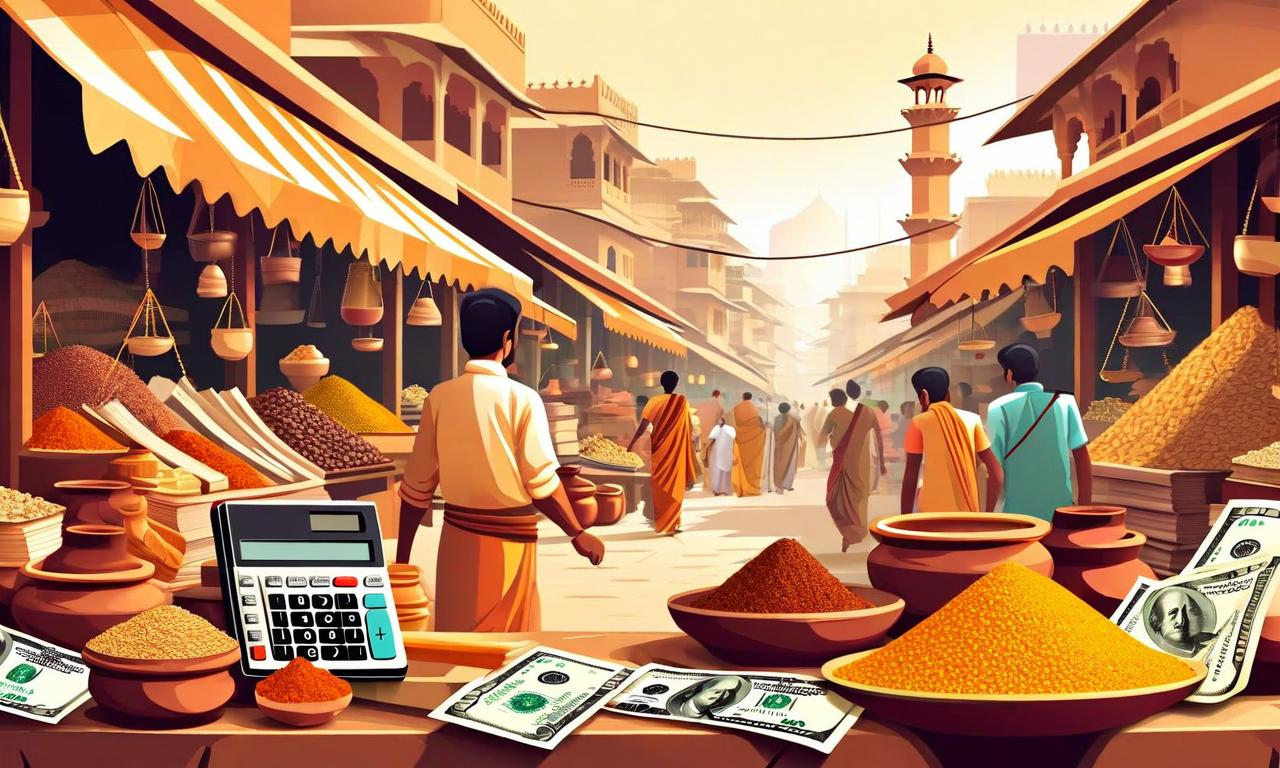
*this image is generated using AI for illustrative purposes only.
Reserve Bank of India Governor Sanjay Malhotra has outlined three primary factors driving India's sustained low inflation, which has remained below the central bank's target range of 2% to 6% for four consecutive months despite external headwinds and geopolitical challenges.
In an exclusive interview with NDTV Profit's Managing Editor Tamanna Inamdar, Governor Malhotra explained that the combination of softer food prices, flexible inflation targeting regime, and supply-side actions has created a favorable inflation environment supporting the Indian economy.
Food Price Dynamics and Base Effects
Governor Malhotra identified softer food prices as the first major driver, attributing this trend to significant base effects. "We had a very high food inflation earlier and so from a higher base, inflation now seems to be lower," he explained.
The recent inflation data demonstrates this trend clearly:
| Month | Overall Inflation | Food Price Change (YoY) | Vegetable Price Change (YoY) |
|---|---|---|---|
| October 2025 | 0.25% | - | - |
| November 2025 | 0.71% | -3.91% | -22.20% |
| December 2025 | 1.33% | -2.71% | -18.47% |
The RBI Governor emphasized that global commodity prices have also remained low, making this "more a supply-side phenomenon rather than a demand-side phenomenon." He noted that core inflation stands at 4.6%, but excluding precious metals inflation, it drops to just 2.3%.
Flexible Inflation Targeting Framework
The second key factor highlighted by Governor Malhotra is the flexible inflation targeting regime implemented by the RBI. The central bank maintains a standard target of 4% with a 2% band on either side, creating the 2-6% range.
"Over the years, ever since the central bank implemented the flexible inflation targeting, India's inflation levels have actually come down," Malhotra stated. He acknowledged that while this framework isn't the sole reason, it has contributed significantly alongside policy frameworks and government supply-side actions.
The RBI has completed a consultation paper on inflation targeting and submitted recommendations to the government, which will set future targets based on these inputs.
Supply-Side Actions and Policy Support
Governor Malhotra credited supply-side actions by the government and other stakeholders as the third crucial element in maintaining low inflation. These coordinated efforts have complemented the monetary policy framework to create a comprehensive approach to inflation management.
Forward-Looking Inflation Projections
The RBI expects inflation to gradually increase as base effects diminish. The central bank's projections indicate a controlled upward trajectory:
| Period | Projected Inflation |
|---|---|
| Q4FY26 (Jan-Mar) | 2.9% |
| Q1FY27 | 3.9% |
| Q2FY27 | 4.0% |
Consumer Impact and Survey Results
Addressing whether common citizens are experiencing the benefits of low inflation, Governor Malhotra referenced positive consumer survey responses. "Even in the consumer surveys, we find that the inflations that they feel or project are generally higher from what are actually reported, but they have come down," he noted.
The data from the Ministry of Statistics and Programme Implementation (MOSPI) clearly reflects the downward inflation trend, with consumer surveys indicating that people are indeed feeling the impact of lower prices.
Governor Malhotra expressed comfort with current inflation levels, particularly given the projected gradual increase ahead. The combination of supply-side improvements, effective monetary policy framework, and favorable base effects has created an environment where inflation remains well within manageable bounds while supporting economic growth.
Historical Stock Returns for Bank of India
| 1 Day | 5 Days | 1 Month | 6 Months | 1 Year | 5 Years |
|---|---|---|---|---|---|
| -0.58% | -7.28% | -10.08% | -5.48% | +4.92% | +133.30% |
 15
15












 Access 50+ Readymade Screeners
  Use 200+ Custom Filters
  Get Full Market Insights





