
 NewsPower Stocks Face Volatility on China Re-entry Concerns, But Impact Expected to Be Limited: IIFL
Power Stocks Face Volatility on China Re-entry Concerns, But Impact Expected to Be Limited: IIFL


Power sector stocks declined on reports of Chinese companies re-entering the Indian market, but IIFL Institutional Equities expects limited impact. While TBEA has received approval to supply high-voltage reactors to government entities, current high capacity utilization should prevent aggressive price undercutting seen in previous cycles. The more significant factor for future pricing will be domestic capacity expansion, with transformer manufacturing capacity expected to nearly double in 12-15 months.

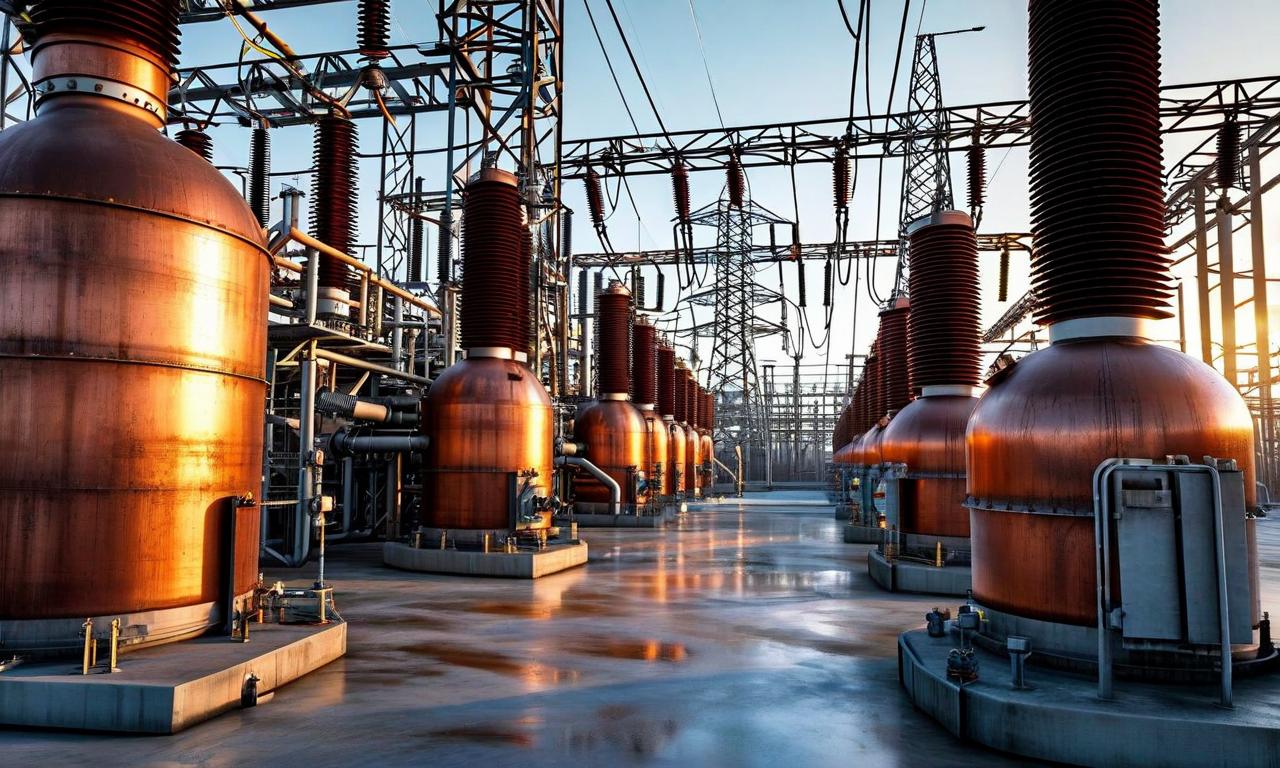

*this image is generated using AI for illustrative purposes only.
Power sector stocks faced selling pressure amid reports of Chinese firms potentially re-entering the Indian market, but industry analysts suggest the impact may be more limited than feared. Renu Baid Pugalia, Senior Vice President – Research at IIFL Institutional Equities, provided clarity on the situation, noting that while no official government notification has lifted existing restrictions, specific approvals are being granted on a case-by-case basis.
Chinese Participation in Power Transmission Sector
Industry interactions have revealed notable developments in the power transmission and distribution (T&D) space. TBEA, a Chinese manufacturer with manufacturing operations in India since 2014, has reportedly received approval to supply high-voltage reactors to government entities for the next financial year. These components are critical for 400 and 765 kilovolt (kV) high-voltage transmission systems.
| Parameter: | Details |
|---|---|
| Company: | TBEA (Chinese manufacturer) |
| Indian Operations Since: | 2014 |
| Approved Products: | High-voltage reactors |
| Application: | 400 kV and 765 kV transmission |
| Approval Scope: | Government entities, next financial year |
The high-voltage transmission segment currently sees active participation from domestic players including Hitachi Energy, GE Vernova T&D, and CG Power. Baid explained that approvals are being granted in the transmission space where players were previously constrained on capacities and average market pricing had increased sharply.
Market Dynamics and Pricing Concerns
Despite the sentiment overhang created by these developments, IIFL does not foresee material impact on earnings or sudden pricing disruptions. The current market environment differs significantly from earlier cycles when Chinese players aggressively undercut prices to gain market share.
Capacity utilization across the transformer and transmission equipment industry remains high, with factories operating at largely full levels. This operational backdrop is expected to prevent the sharp price declines that characterized previous periods of Chinese market entry.
| Market Condition: | Current Status |
|---|---|
| Capacity Utilization: | High across industry |
| Factory Operations: | Largely at full levels |
| Price Undercutting Risk: | Limited due to capacity constraints |
| Earnings Impact: | No material impact expected |
Domestic Capacity Expansion Impact
A more significant factor influencing future market dynamics is the substantial domestic capacity expansion already underway. The transformer industry's manufacturing capacity is expected to nearly double within the next 12 to 15 months, representing a fundamental shift in supply dynamics.
Baid noted that whether TBEA received approval or not, market prices were expected to correct due to this capacity expansion. The domestic industry's growth trajectory suggests that pricing pressures would emerge regardless of Chinese participation, making the capacity expansion a more critical factor than foreign competition.
Current Market Assessment
The analyst emphasized that current restrictions have not been lifted wholesale, with no risk of imports at present. Instead, the development represents a selective approach where Chinese manufacturers with established Indian operations may participate in specific segments where capacity constraints have driven pricing higher.
The power transmission and distribution sector continues to benefit from strong demand fundamentals, while the industry prepares for increased competition from both expanded domestic capacity and selective Chinese participation in coming periods.
 20
20






 Create Custom Screeners
  Access 200+ Pre-built Filters
  Use 50+ Readymade Screener





