

India's Manufacturing Sector Shows Multi-Speed Growth with Clear Winners and Laggards


India's manufacturing sector displays multi-speed growth with CDMOs, capital goods, and auto ancillaries leading due to supply chain diversification and domestic demand strength. Chemicals face cyclical headwinds from weak global demand. Investment success requires quality assessment, growth differentiation, and valuation discipline in this divergent landscape.

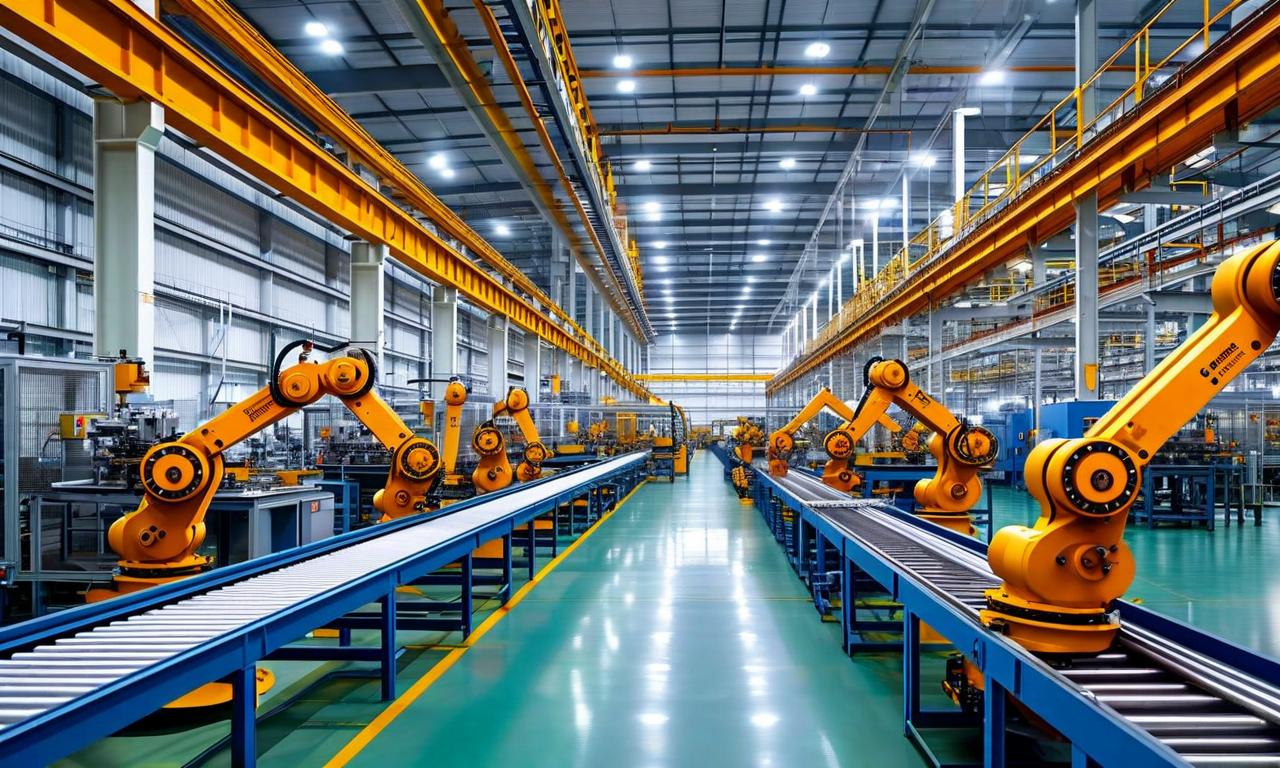

*this image is generated using AI for illustrative purposes only.
India's manufacturing sector is experiencing a multi-speed growth trajectory, with distinct winners and laggards emerging across different segments. This divergence reflects structural shifts in global supply chains, varying domestic demand patterns, and the varying preparedness of Indian companies to capitalize on new opportunities, according to Manoj Bahety, fund manager at Carnelian Asset Management & Advisors.
Leading Manufacturing Segments
Contract Development and Manufacturing Organizations
CDMOs represent one of the strongest growth stories in Indian manufacturing. The sector is benefiting from a meaningful reallocation of global orders as multinational companies implement China-plus-one strategies to diversify their supply chains. India's combination of engineering talent, cost efficiency, and improving regulatory credibility positions it as a natural alternative to China-dominated manufacturing.
Bahety emphasizes that this trend has structural underpinnings rather than being cyclical. The ongoing diversification provides Indian CDMOs with multi-year visibility for capacity expansion, creating sustainable growth opportunities.
Capital Goods Sector
Companies with strong execution capabilities and established market positions are experiencing favorable conditions from both domestic and international markets. The alignment of these factors is creating robust opportunities:
| Growth Driver | Impact |
|---|---|
| International Diversification | Incremental export orders from supply-chain shifts |
| Domestic Capex Cycle | Sustained demand from infrastructure, power, railways |
| Market Position | Strong order books and earnings visibility |
Auto Ancillaries Performance
The auto components sector is benefiting from a healthy domestic automotive cycle combined with steady export growth. Several Indian component manufacturers are scaling operations faster than in previous cycles by aligning with evolving technologies and global original equipment manufacturer platforms. This strategic positioning has enabled companies to move up the value chain and strengthen their competitive positioning.
Underperforming Segments
Chemicals Sector Challenges
The chemicals sector faces headwinds primarily due to weak global end-consumer demand rather than structural weaknesses within India. As a heavily export-oriented sector, global softness has negatively impacted both volumes and pricing. However, Bahety views this slowdown as cyclical, noting that India's leadership in complex chemistry remains intact and should recover as global demand normalizes.
Key Growth Drivers and Investment Framework
The manufacturing divergence stems from three critical factors: global supply chain reallocation patterns, domestic demand strength in specific segments, and companies' effectiveness in capturing both trends. While policy support through initiatives like the Production-Linked Incentive scheme has provided assistance, the most significant gains are occurring in sectors where India already possesses scale and proven ecosystems.
Looking ahead, the primary beneficiaries of supply-chain realignment are likely to be manufacturers in areas where India already maintains relevance and competitiveness. These represent expansion opportunities within established markets rather than entirely new ventures.
Investment Approach and Valuation Considerations
Carnelian Asset Management employs a disciplined investment framework to navigate this multi-speed environment:
| Assessment Criteria | Focus Area |
|---|---|
| Quality Filter | Business strength and management depth |
| Growth Analysis | Differentiation between acceleration and compounding businesses |
| CLEAR Framework | Cash flows, liabilities, earnings quality, asset quality, governance |
| Valuation Discipline | Final guardrail for investment decisions |
Valuations have already experienced sharp rerating in parts of manufacturing. While some premium is justified where growth visibility and competitive advantages are clear, Bahety cautions that markets can move ahead of fundamentals, requiring balanced optimism with clear growth-valuation analysis.
Future Opportunities and Risk Factors
Within manufacturing, capital goods and specialty engineering continue to present attractive opportunities, particularly in precision engineering and industrial equipment where entry barriers remain high. Electronics manufacturing services and select import-substitution themes are gaining traction as domestic capabilities reach global standards.
Despite near-term weakness, the chemicals sector still offers compelling opportunities in specific niches for companies with differentiated products and strong client relationships. Bahety identifies niche manufacturers supplying mission-critical components to global OEMs as the most underappreciated opportunity, combining durability with scalability potential.
However, risks persist including global demand volatility, margin pressures, and aggressive capital expenditure decisions that could strain balance sheets. The investment approach emphasizes focusing on quality, capital discipline, and operational flexibility in India's evolving manufacturing landscape.
 18
18




 Create Custom Screeners
  Access 200+ Pre-built Filters
  Use 50+ Readymade Screener





