

India Adds 4-5 GW Power Capacity Monthly, Announces $3.03 Trillion Smart Meter Initiative


India is adding 4-5 GW of power capacity monthly to its current 514 GW base as demand is expected to double by 2040. The government announced a $3.03 trillion smart meter initiative to reduce discom losses and improve profitability. Since 2014, India has added over 178 GW of renewable capacity, including 130 GW solar and 32.9 GW wind. The Power Ministry has identified investment opportunities worth $345 billion in generation, $68.22 billion in transmission, and $35 billion in energy storage.

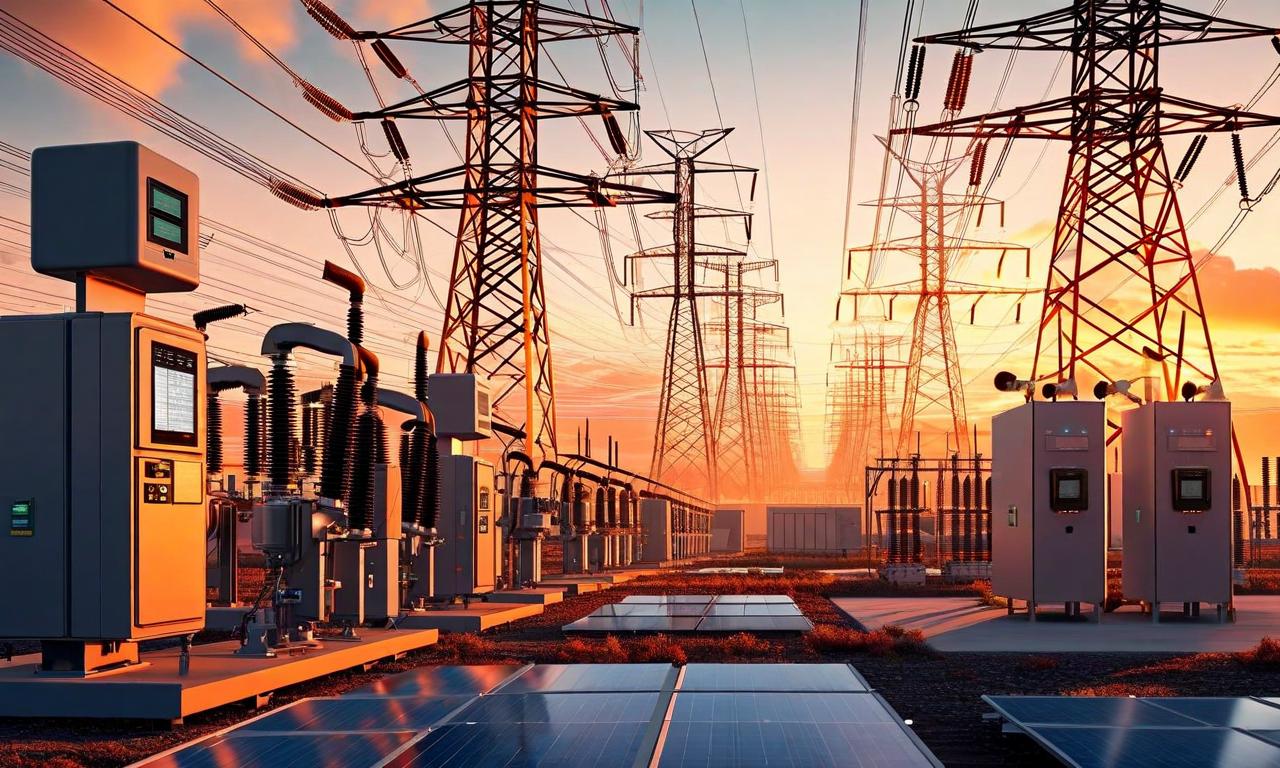

*this image is generated using AI for illustrative purposes only.
India is significantly accelerating its power infrastructure development, adding 4-5 GW of capacity monthly to augment the current power capacity of 514 GW. This rapid expansion comes as national power demand is expected to double by 2040, with the country recently achieving notable milestones by successfully meeting peak power demand of 250 GW during solar hours and 237 GW during non-solar hours.
Smart Meter Initiative and Policy Developments
Union Minister of Power and Housing & Urban Affairs Manohar Lal Khattar announced that India has transitioned from addressing power shortages to ensuring universal energy access. A major component of this transformation includes the nationwide rollout of smart meters with an outlay of $3.03 trillion, specifically designed to reduce losses for distribution companies and help them achieve profitability.
| Initiative | Investment/Target |
|---|---|
| Smart Meter Rollout | $3.03 trillion |
| Nuclear Capacity Target by 2047 | 100 GW |
| Current Power Capacity | 514 GW |
The minister highlighted that the SHANTI Bill will support India's ambitious target of achieving 100 GW nuclear capacity by 2047.
Grid Infrastructure and Renewable Energy Progress
India operates one of the world's largest synchronous grids, featuring an inter-regional transfer capacity of 120 GW. The renewable energy sector has demonstrated remarkable growth, with the country adding over 178 GW of renewable capacity since 2014.
| Renewable Energy Type | Capacity Added Since 2014 |
|---|---|
| Solar Capacity | 130 GW |
| Wind Capacity | 32.9 GW |
| Large Hydro Capacity | 9.9 GW |
| Total Renewable Capacity | 178 GW |
Transmission Infrastructure Expansion
Power Secretary Pankaj Agarwal revealed that India will soon achieve 5 lakh circuit kilometers of transmission lines. The past decade has witnessed substantial infrastructure development with significant additions across multiple categories.
| Infrastructure Development (Past Decade) | Capacity Added |
|---|---|
| Transmission Lines | 2.05 lakh circuit kilometers |
| Transmission Capacity | 852 GVA |
| Inter-regional Capacity | 84.34 GW |
The Power Ministry has identified substantial investment opportunities totaling $345 billion in electricity generation, $68.22 billion in transmission and distribution, and $35 billion in energy storage.
Energy Storage and Future Projects
Under the Inter-State Transmission System (ISTS), renewable energy transmission capacity shows significant progress with 48 GW commissioned, 172 GW under construction, and 18 GW under bidding. The country has identified pumped storage project potential of 258 GW, with 7 GW currently commissioned and more than 17 GW expected to be added by 2030.
| Energy Storage Initiative | Capacity/Investment |
|---|---|
| Pumped Storage Project Potential | 258 GW |
| PSP Commissioned | 7 GW |
| PSP Expected by 2030 | 17+ GW |
| Battery Storage Viability Gap Funding | 43 GWh |
To encourage battery storage adoption, India has approved viability gap funding for 43 gigawatt hours. These announcements were made during the curtain-raiser of the Bharat Electricity Summit 2026, scheduled for March 19-22 in New Delhi.
 16
16






 Create Custom Screeners
  Access 200+ Pre-built Filters
  Use 50+ Readymade Screener





