
 NewsIndia's Power Sector May See Limited Impact if Chinese Import Curbs Are Scrapped: PL Capital
India's Power Sector May See Limited Impact if Chinese Import Curbs Are Scrapped: PL Capital


PL Capital analyst Amit Anwani expects limited impact on India's power sector if Chinese import restrictions are lifted, with any easing likely to be selective. The industry has transformed since 2020 with increased government-led ordering and reduced private sector participation. BHEL maintains strong execution visibility with an order book exceeding ₹2.00 lakh crore, while transmission companies may face limited margin impact despite competitive concerns.

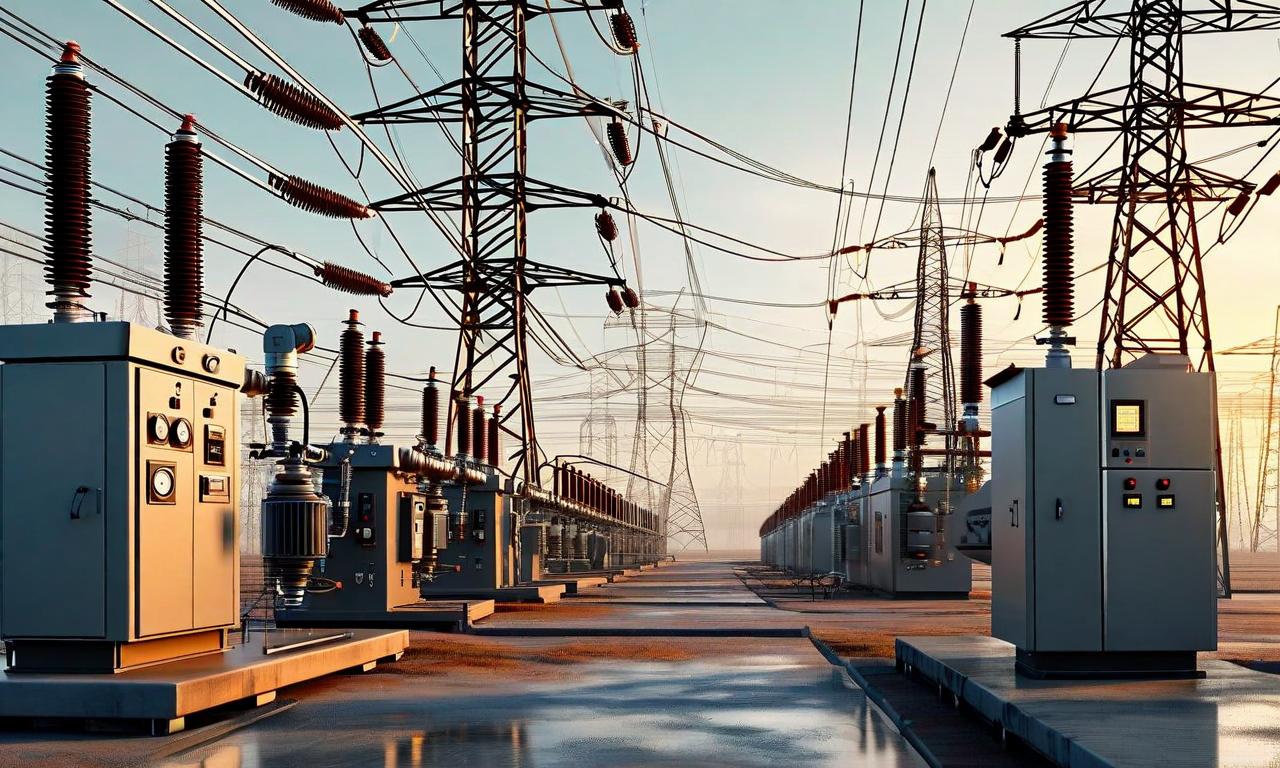

*this image is generated using AI for illustrative purposes only.
A potential rollback of restrictions on Chinese firms bidding for Indian government contracts may have limited impact on India's power and transmission sector, according to Amit Anwani, Research Analyst at PL Capital. He expects any easing of the five-year-old curbs to be selective rather than a blanket opening of the sector.
A Reuters report indicated that India's finance ministry is considering scrapping restrictions imposed in 2020 following a deadly clash between Indian and Chinese troops. These measures required Chinese bidders to register with a government committee and obtain political and security clearances, effectively barring them from competing for government contracts estimated to be worth $700.00 billion to $750.00 billion.
Industry Structure Transformation Since 2020
Anwani highlighted that the power and transmission sector has undergone significant structural changes since the restrictions were implemented. The private sector has narrowed considerably in terms of new capacity addition, with most recent large orders coming from government and state-owned entities.
| Sector Changes: | Details |
|---|---|
| Private Sector Role: | Significantly reduced in new capacity addition |
| Order Source: | Primarily government and state-owned entities |
| Chinese Equipment Reliance: | Sharply decreased due to security concerns |
| Public Sector Approach: | NTPC largely avoided Chinese boiler-turbine-generator equipment |
Before 2020, several private power producers had relied heavily on Chinese suppliers for equipment. However, this dependence has reduced sharply due to concerns around critical technologies and national security considerations.
BHEL's Strong Order Position
BHEL has demonstrated robust performance with strong order inflows over the past two and a half years. The company's order book has crossed ₹2.00 lakh crore, providing substantial execution visibility.
| BHEL Performance Metrics: | Status |
|---|---|
| Order Book Value: | Over ₹2.00 lakh crore |
| Order Inflow Period: | Strong performance over 2.5 years |
| Market Focus Areas: | Execution, margins, balance sheet health |
| Future Outlook: | Order inflows may moderate over next 12 months |
Anwani noted that even if Chinese imports increase marginally, BHEL already has execution visibility due to orders secured in the last 24 months. The market is primarily focused on the company's execution capabilities, margin performance, and balance sheet health.
Transmission Sector Implications
The transmission segment has shown some market reaction to reports of possible policy easing. Companies such as ABB India and Siemens India have expressed concerns that higher competition could impact margins if restrictions are relaxed.
However, Anwani expects limited overall effect, particularly given that 40.00% to 50.00% capacity addition is planned over the next two years. The sector has already invested heavily in capacity and capital expenditure, which may cushion any competitive impact.
Strategic Sectors Likely Protected
Anwani emphasized that strategic and security-sensitive sectors are likely to remain outside the scope of any relaxation, consistent with previous approaches in power, telecom, and related areas. The real impact of any policy change will depend on the specific details of government notifications and the extent of actual easing implemented.
The analyst stressed that more clarity is needed before drawing firm conclusions on sector-wise impact, as the effectiveness of any policy change will ultimately depend on the exact notification details and implementation scope.
 19
19






 Access Market Heat-map & Insights
  Create, Save & Share your Screener
  Use 200+ Screening Filters





