

EMS Stocks Crash Up to 53% as Dixon Technologies, Kaynes Face Multiple Headwinds


EMS sector stocks have crashed 22-53% from peaks, with Dixon Technologies, Kaynes Technology and PG Electroplast among the worst hit. Multiple headwinds including surging memory chip prices, regulatory uncertainties, and stretched valuations have triggered the correction. While some analysts see value emerging post-correction, others urge caution citing still-elevated multiples and execution risks.



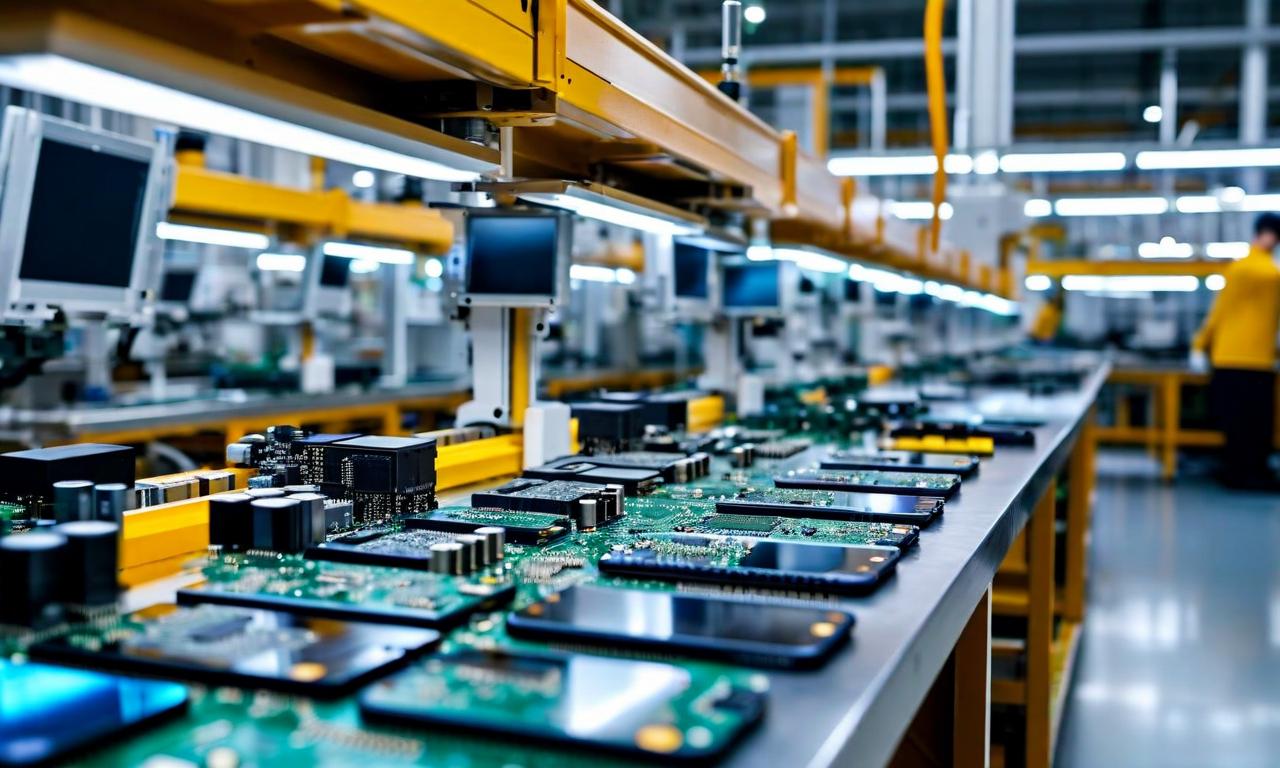
*this image is generated using AI for illustrative purposes only.
Leading electronics manufacturing services (EMS) companies have witnessed a dramatic correction, with shares plummeting as much as 53% from their respective peaks. Once considered market darlings riding the China-plus-one and PLI narratives, these stocks are now grappling with earnings uncertainty, policy risks, and valuation concerns.
Sharp Correction Across EMS Sector
The selloff has been broad-based and severe across the electronics manufacturing space:
| Company | Decline from 52-Week High |
|---|---|
| Kaynes Technology | 53% |
| Epack Durable | 50% |
| PG Electroplast | 42% |
| Dixon Technologies | 42% |
| Amber | 29% |
| Syrma SGS | 22% |
What was once a broad-based rally has transformed into a savage correction, forcing a hard reset across the entire EMS ecosystem.
Multiple Headwinds Converge
Several factors have contributed to the sector-wide rout. A massive surge in memory chip (DRAM) prices is hampering smartphone demand and squeezing margins for Dixon Technologies, India's largest Android handset maker producing devices for Xiaomi, Motorola, Vivo, Oppo, Transsion and Realme. Regulatory overhang around pending government approvals for joint ventures threatens volumes and profitability from FY27 onwards.
Additional pressures include softer seasonal demand in consumer durables and the looming March deadline for the mobile PLI scheme expiration, casting shadows over future growth visibility. Company-specific troubles have deepened the pain, with Kaynes facing scrutiny over disclosure lapses and stretched working capital, while PG Electroplast suffered a weaker-than-expected summer season.
Analyst Views Remain Divided
Despite the steep correction, opinions on whether these stocks represent value remain contested. JP Morgan struck a contrarian note on Kaynes, calling the stock "below bear case" and the "cheapest on PEG" in its coverage universe at 0.7x versus peers' average of 1x. The firm maintained an overweight rating with a price target of ₹7,550, expecting "improving receivables and NWC over the next two quarters to be key drivers."
Sunny Agrawal, Head of Fundamental Research at SBI Securities, acknowledged the damage but defended the long-term thesis. "Yes, long term growth potential is intact. Individually, each of the businesses are facing short term headwinds," he said, citing Dixon's memory price and volume issues, PG Electroplast's weak summer season, and Kaynes' disclosure challenges. Post-correction, he sees better valuations emerging and prefers "stocks catering to consumer durable and PCB segments like Amber, Syrma, PG Electroplast, EPack durable."
Caution Against Premature Entry
However, Om Ghawalkar, Market Analyst at Share.Market, urged caution against rushing in. "Although EMS stocks like Kaynes, Dixon, and PG Electroplast have corrected 35–52% from their peaks, the sector may not be undervalued yet," he warned. "While the long-term growth story remains intact, investors should not assume the recent dip equates to a compelling buy signal."
Ghawalkar highlighted that rounded trailing multiples for leading EMS names continue trading well above broader manufacturing averages, reflecting high expectations of sustained execution and growth. With return on capital employed (ROCE) still normalising amid heavy PLI-driven capex, he argued that near-term earnings delivery will be critical to justify current multiples.
Operational Performance Remains Strong
Despite market concerns, EMS players have continued performing operationally, particularly in the seasonally strong March quarter. "Over the past several years, Q4 has consistently seen sharp revenue acceleration, driven by seasonality in consumer electronics, fiscal year-end order push from clients, and PLI-linked capacity ramp-ups," Ghawalkar noted. Peak capacity utilisation in Q4 often hits 80-90%, compared to much lower off-season levels.
Improving product mix and original design manufacturing (ODM) exposure have supported margin expansion across smart meters, electric vehicle components and industrial electronics. However, Ghawalkar advocated patience, suggesting retail investors "wait for upcoming earnings to validate growth and margin assumptions, while keeping EMS exposure within overall portfolio allocation."
The long-term India electronics manufacturing story, underpinned by policy support, export diversification and global supply-chain realignment, remains compelling across consumer, industrial and automotive electronics. However, rising competition and execution risks indicate the next phase of returns will be far more selective than the broad rally of recent years.
Historical Stock Returns for Dixon Technologies
| 1 Day | 5 Days | 1 Month | 6 Months | 1 Year | 5 Years |
|---|---|---|---|---|---|
| -0.78% | +1.38% | -7.62% | +35.08% | -22.71% | +204.18% |
 17
17












 Access Market Heat-map & Insights
  Create, Save & Share your Screener
  Use 200+ Screening Filters





