

Delhi Airport to Close Third Runway for Major Rehabilitation Work from February 16


Delhi International Airport Ltd announces comprehensive rehabilitation of third runway from February 16, 2026, to early July, subject to DGCA approval. The 17-year-old runway will undergo extensive upgrades including resurfacing, new Rapid Exit Taxiway construction, and Instrument Landing System installation. Airport capacity will be maintained at 1,514 movements per day during the rehabilitation period through stakeholder coordination.

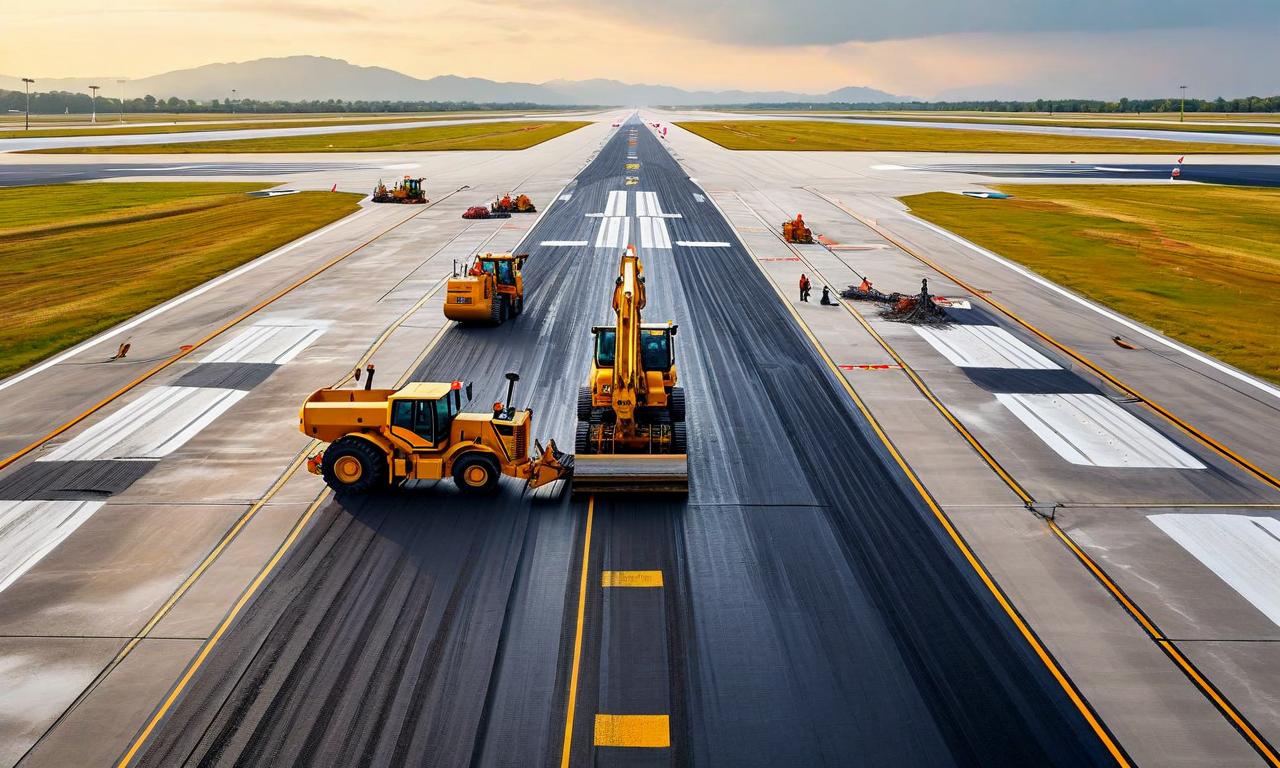

*this image is generated using AI for illustrative purposes only.
Delhi International Airport Ltd (DIAL) announced on Tuesday a comprehensive rehabilitation programme for Runway 11R/29L, the third runway at Indira Gandhi International Airport, marking a significant infrastructure upgrade for one of India's busiest airports. The extensive rehabilitation work is scheduled to commence from February 16, 2026, with the runway expected to be recommissioned in early July, subject to approval from the Directorate General of Civil Aviation (DGCA).
Rehabilitation Scope and Timeline
The runway, which was commissioned in 2008 and has been in continuous operation for 17 years, will undergo comprehensive strengthening and upgrade works to support safety, operational resilience, and future capacity requirements. While the runway has undergone regular maintenance, including minor rehabilitation in 2017, DIAL stated that increased traffic, operational intensity, and natural ageing have made comprehensive rehabilitation essential at this stage.
| Project Component | Details |
|---|---|
| Runway Closure Period | February 16, 2026 to early July 2026 |
| Flexible Pavement Work | 500,000 square metres |
| Rigid Pavement Upgrades | 39,000 metres |
| Lighting Fixtures | 2,000 airfield ground lighting fixtures |
| New Taxiway | Rapid Exit Taxiway Z1 construction |
Operational Continuity Measures
DIAL has conducted multiple high-level consultations with the Airports Authority of India (AAI), airlines, and other stakeholders to assess and mitigate the impact of the temporary closure. Following these discussions, the airport's scheduled movement capacity will be maintained at 1,514 movements per day during the rehabilitation period. Airlines and Air Traffic Control have been fully briefed, and operational plans have been finalised to ensure continuity of services.
Technical Upgrades and Infrastructure Improvements
The planned scope of work includes several critical components designed to enhance runway performance and safety standards. The project encompasses milling and resurfacing of flexible runway and taxiway sections, laying of Dense Bituminous Macadam and Bituminous Concrete, and removal and reinstallation of around 2,000 airfield ground lighting fixtures across 500,000 square metres.
Additional technical improvements include:
- Rigid pavement upgrades across 39,000 metres
- New pavement markings installation
- Widening of Runway End Safety Area drains
- Replacement of windsock cabling and electrical systems
- Installation and calibration of new Instrument Landing System (ILS)
New Rapid Exit Taxiway Construction
A key component of the project involves the construction of a new Rapid Exit Taxiway, designated Z1, which will connect Runway 11R/29L to the existing Zulu taxiway. The new taxiway is expected to enable faster aircraft exits and optimise runway occupancy time, particularly during peak hours, enhancing overall operational efficiency.
The rehabilitation plan also covers the readiness and installation of a new Instrument Landing System, followed by calibration, validation, and operationalisation in line with the AIRAC cycle, to support safe aircraft operations, including during low-visibility conditions.
Management Commitment
Videh Kumar Jaipuriar, CEO of DIAL, emphasised the project's significance, stating that the rehabilitation of Runway 11R/29L represents a crucial infrastructure project to ensure long-term operational safety, efficiency, and compliance with global aviation standards. He confirmed DIAL's commitment to delivering the project on time, with minimal disruption to airport operations, and with full coordination with AAI, DGCA, airlines, and all stakeholders.
Shares of GMR Airports Ltd ended at ₹95.75, down by ₹4.35, or 4.35%, on the BSE, reflecting market reaction to the announcement.
 19
19






 Access 50+ Readymade Screeners
  Use 200+ Custom Filters
  Get Full Market Insights





