

Centre Cannot Act Unilaterally on Air Purifier GST Cut, Tells Delhi High Court


The Centre has informed the Delhi High Court it cannot reduce GST on air purifiers without GST Council approval, citing constitutional requirements under Article 279A. Air purifiers currently face 18% GST as electronic items, and any rate change would require consensus between Centre and states with pan-India application. The next GST Council meeting, expected post-Budget, may discuss the proposal, though decisions cannot be city-specific despite varying pollution levels across regions.
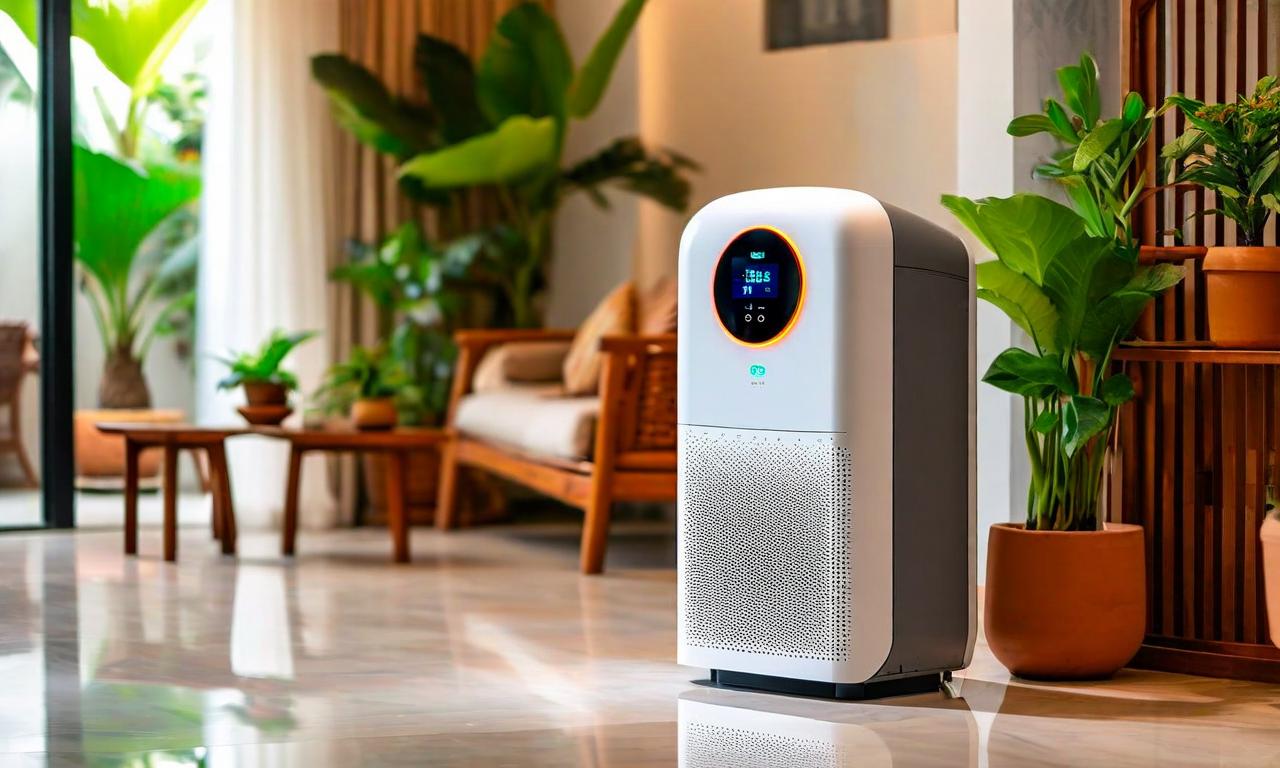

*this image is generated using AI for illustrative purposes only.
The Centre has told the Delhi High Court that it cannot unilaterally reduce goods and services tax (GST) rates on air purifiers, emphasizing that such decisions require approval from the GST Council. This development rules out immediate tax relief on air purifiers, which are increasingly viewed as health-related devices amid worsening air quality in major Indian cities.
Constitutional Framework Governs GST Decisions
In an affidavit dated January 4, 2026, filed before the Delhi High Court, the Centre cited Article 279A of the Constitution, stating that the GST Council is the sole body empowered to decide on GST rates. The government emphasized that tax rate decisions are part of cooperative federalism, requiring consensus between the Union and states while balancing competing fiscal interests.
| Constitutional Aspect: | Details |
|---|---|
| Governing Article: | Article 279A of Constitution |
| Decision-making Body: | GST Council |
| Current Tax Rate: | 18% |
| Product Classification: | Electronic items |
Next Council Meeting Expected Post-Budget
Government sources indicated that a proposal to cut GST on air purifiers is expected to be discussed at the next GST Council meeting, likely to be held after the Union Budget. A senior government source told Moneycontrol that the Council cannot be convened for a single-point agenda, and the matter will be taken up in the next meeting post-Budget.
The government's submission emphasizes that rate changes under GST are not executive decisions but require agreement between the Centre and states, keeping revenue and uniformity concerns in mind.
Pan-India Impact and Revenue Implications
Sources highlighted the challenge of granting GST relief for air purifiers with a city-specific focus, such as Delhi, where pollution levels are among the highest. Any GST rate change must apply uniformly across the country and cannot be tailored to one city or region, even if pollution levels are more severe in specific areas.
| Impact Parameter: | Implications |
|---|---|
| Geographic Scope: | Pan-India application required |
| Revenue Effect: | Multiple states affected |
| Product Category: | Electronic items classification |
| Decision Process: | GST Council deliberation mandatory |
Since air purifiers are classified as electronic items, sources noted that a rate cut would have wider revenue implications across states. This classification means any reduction has pan-India consequences and affects multiple states' revenues, requiring careful examination by the Council.
Current Tax Structure and Future Prospects
Air purifiers currently attract 18% GST under the electronic items category. Sources confirmed that any classification and rate-related decisions can only be addressed through GST Council deliberations, not through executive or judicial action. This makes a post-Budget Council meeting the earliest possible forum for discussing any change in GST rates on air purifiers, with any decision applying uniformly across India.
 20
20






 Access 50+ Readymade Screeners
  Use 200+ Custom Filters
  Get Full Market Insights





