
 NewsKV Toys India CMD Karan Narang on SME IPO Strategy and India's Toy Manufacturing Revolution
KV Toys India CMD Karan Narang on SME IPO Strategy and India's Toy Manufacturing Revolution


KV Toys India CMD Karan Narang discusses the company's journey from 1980s Delhi manufacturing unit to leading homegrown toy brand preparing for SME IPO. The company operates four brands across multiple distribution channels, targeting 5-6% profit margins while planning category expansion and export opportunities. Fresh IPO funds will support working capital, credit facilities, and new product development as India's toy market shifts toward regular demand patterns.

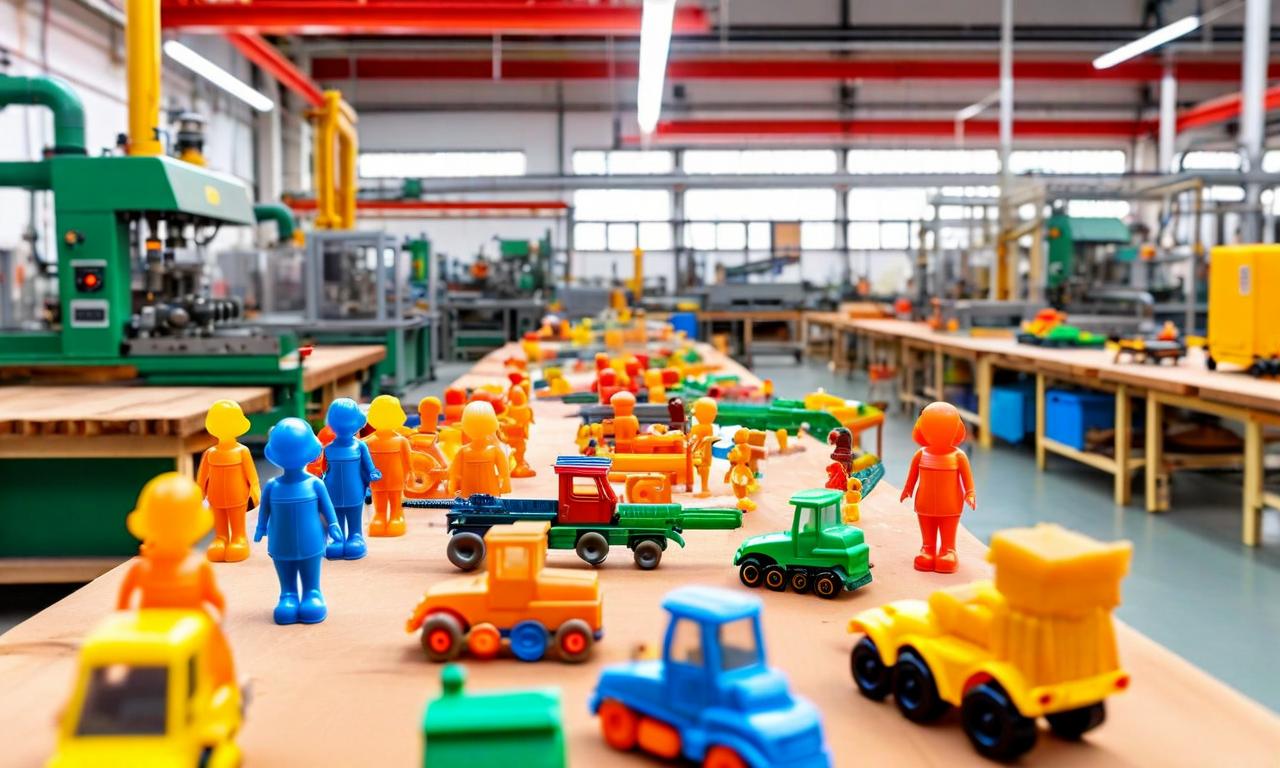

*this image is generated using AI for illustrative purposes only.
KV Toys India Chairman & Managing Director Karan Narang has outlined the company's transformation journey and strategic vision as it prepares for its SME IPO launch. Speaking about the company's evolution from a small Delhi-based operation to a leading homegrown toy brand, Narang detailed the business model, competitive positioning, and growth roadmap that positions the company for capital market entry.
Company Legacy and Evolution
KV Toys India's foundation traces back to the early 1980s when Narang's grandfather operated a small toy manufacturing unit in Delhi, serving local markets within the city. The business underwent significant transformation in 1998 when Narang's father joined and introduced fresh vision, coinciding with China's emergence as a major toy supplier to India.
The company's strategic pivot came in 2009 with the family's relocation to Mumbai, facilitating faster movement of goods as the city served as the primary port for Chinese imports. Narang's entry into the business brought systematic expansion through retail dynamics study, distributor behavior analysis, and consumer preference research, leading to presence across modern trade, general trade, and e-commerce channels.
Recognizing the absence of strong homegrown toy brands in India, the company began manufacturing operations in 2016-17, receiving strong market response that drove aggressive expansion through partner-manufacturers sharing the company's quality standards.
Business Model and Product Portfolio
| Business Parameter: | Details |
|---|---|
| Distribution Channels: | Modern trade, general trade, quick commerce, e-commerce, specialized toy stores |
| Brand Portfolio: | Four brands - Aliya (dolls), Thunderstrike (toy guns), vehicles range, additional categories in pipeline |
| Best-selling Category: | Toy cars and vehicles |
| Growth Categories: | Aaliya dolls, Thunderstrike guns |
Narang emphasized the company's straightforward operational model focusing on innovative toy development, competitive pricing maintenance, and nationwide distribution through modern retail chains and extensive general trade networks. The company's competitive differentiation centers on four core elements: innovative products, appropriate pricing, continuous portfolio renewal, and strong execution capabilities.
SME IPO Strategy and Fund Utilization
The upcoming SME IPO represents a largely fresh issue designed to fuel the company's next growth phase. Narang described the fund deployment strategy as directly supporting business expansion across multiple areas.
| Fund Utilization: | Purpose |
|---|---|
| Working Capital: | Supporting increased demand in supermarkets and modern retail |
| Credit Support: | Enabling larger volume supplies across trade channels |
| Product Development: | Funding new product categories and innovation |
| Focus Area: | All funds directed toward growth-related activities |
The company maintains a strategic approach to profitability, targeting sustainable profit margins of 5-6% to remain competitive against global players while ensuring consistent revenue growth.
Market Expansion and Future Roadmap
KV Toys India's three to five-year roadmap emphasizes category diversification, recognizing that successful toy retail requires depth and variety across multiple product segments. The company identifies exports as a significant opportunity, particularly as global retailers seek supply chain diversification away from Chinese manufacturers.
Narang highlighted India's evolving toy market dynamics, noting the shift from seasonal demand patterns to more regular purchasing behavior. The transformation reflects changing parenting approaches and expanded gifting culture, supported by India's demographic advantage with approximately 300 million children.
Manufacturing Competitiveness
Regarding India's competitive positioning against Chinese manufacturers, Narang noted that non-electronic toys have achieved near-parity with Chinese pricing levels, supported by favorable labor and infrastructure costs. However, electronic toys face challenges due to raw material duties that increase costs by 5-10%, requiring policy adjustments to enhance global competitiveness.
The company's expansion strategy includes strengthening partner manufacturing relationships and building enhanced brand recall across markets, positioning KV Toys India to capitalize on the growing demand for Made-in-India products when quality standards match international benchmarks.
Investment Proposition
Narang positioned the SME IPO as an opportunity for medium to long-term investors to participate in building India's toy manufacturing capabilities. The company emphasizes its established infrastructure including distribution networks, product categories, manufacturing partners, demand channels, and brand momentum as foundation elements requiring capital acceleration.
The investment proposition centers on KV Toys India's potential to compete globally while shaping India's toy industry development, supported by the company's track record of consistent revenue and profitability growth across expanding market channels.
 20
20





 Create Custom Screeners
  Access 200+ Pre-built Filters
  Use 50+ Readymade Screener





