

Kinwong files for Hong Kong IPO as profit falls on rising copper costs


Shenzhen Kinwong Electronic Co. Ltd. filed for a Hong Kong listing, reporting revenue growth of 18% to 5.34 billion yuan in the first four months of 2026, while profit fell 25% to 317 million yuan due to rising copper costs. Gross margins declined to 18.7% in the period from 23.2% in 2023, with margins on high-end MLPCBs and HDPCBs dropping sharply. The company, a leader in automotive electronics PCBs, faces valuation pressure compared to peers with higher profitability.

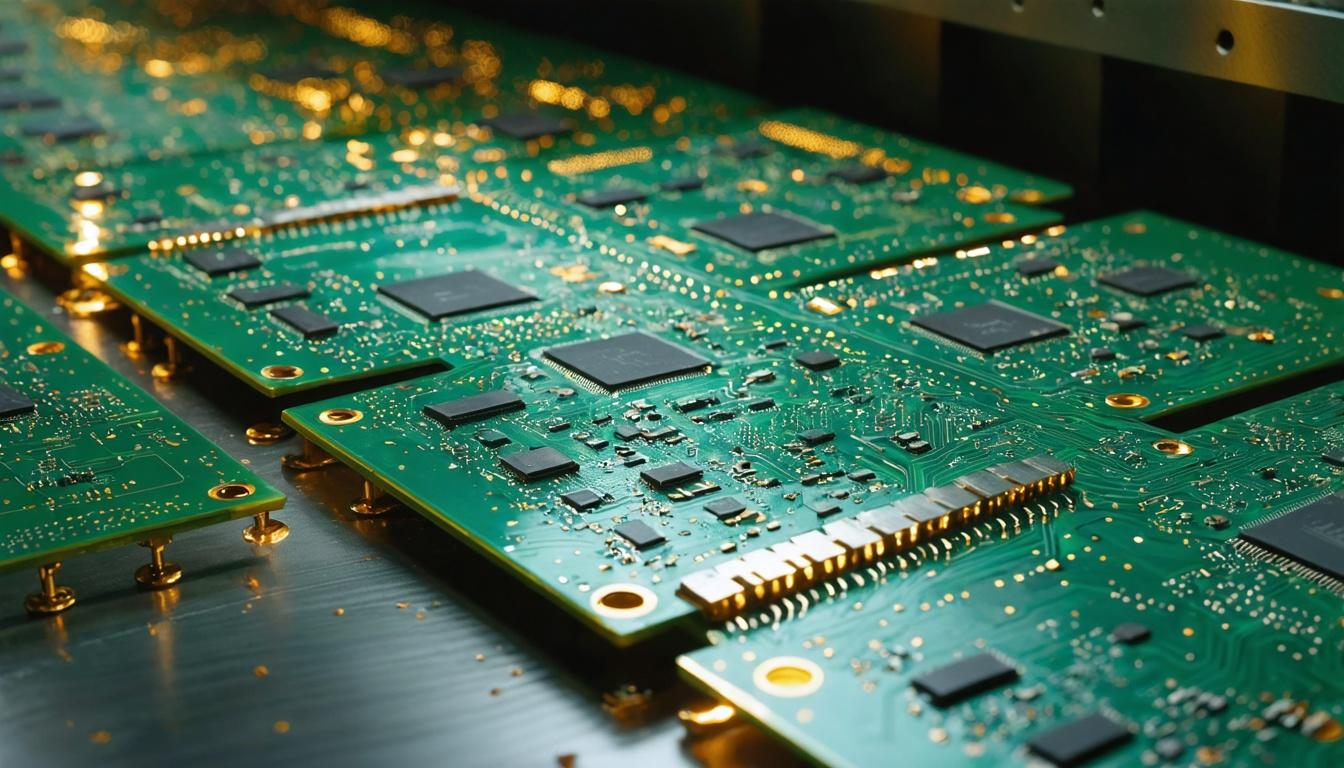

*this image is generated using AI for illustrative purposes only.
Shenzhen Kinwong Electronic Co. Ltd. has filed a preliminary prospectus for a Hong Kong listing earlier this month, aiming to tap demand for AI-related stocks despite high-end products comprising a small portion of its revenue. The PCB maker reported a divergence in its financial performance for the first four months of 2026, with revenue rising while profit declined significantly due to surging raw material costs. The company's gross margin fell to 18.7% in the four months ending April, down from 23.2% in 2023, as copper prices rose approximately 40% over the last year to about $13,500.
Kinwong ranks first among global automotive electronics PCB suppliers with a 10.6% market share, according to third-party market data in its listing document. Among all PCB suppliers globally, it holds the 11th position with a 2.5% market share, placing fifth among its Chinese peers. The company's revenue rose from 10.75 billion yuan in 2023 to 15.31 billion yuan last year, while profit climbed from 911 million yuan to 1.24 billion yuan over the same period.
Financial Performance and Cost Pressures
The company's financial momentum shifted in the first four months of 2026. Revenue increased 18% year-on-year to 5.34 billion yuan, but profit slumped 25% to 317 million yuan. Kinwong attributed the profit decline to rising raw material prices, specifically copper, which constitutes a key input for PCBs. The company estimates that for every 10% increase in the price of copper, its gross margin declines by 1.2 percentage points. Consequently, raw materials as a percentage of cost of sales rose from 60.4% in 2023 to 62.9% in the first four months of 2026.
| Period | Revenue (billion yuan) | Profit (million yuan) | Gross Margin |
|---|---|---|---|
| 2023 | 10.75 | 911 | 23.2% |
| Last Year | 15.31 | 1,240 | 21.6% |
| First four months of 2026 | 5.34 | 317 | 18.7% |
Segment and Margin Analysis
The contraction in gross margins impacted the company's product portfolio significantly. The gross margin for PCB products was 12.3% in the first four months of 2026, a drop of more than 4 percentage points year-on-year. High-end multilayer printed circuit boards (MLPCBs) and high-density PCBs (HDPCBs) experienced even steeper declines. MLPCB margins fell from 18% in the first four months of 2025 to 9.7% in the same period this year, while HDPCB margins dropped from 19.9% to 12.2%. MLPCBs accounted for 51.6% of total revenue in the first four months of 2026, while HDPCBs represented 7%.
Geographic margins also reflected pressure. The gross margin for the Chinese market stood at 8% in the first four months of 2026. Overseas gross margin was 35.1% in 2023 but fell to 17.8% in the first four months of this year. Kinwong's largest business segment is PCBs for automotive electronics, which accounts for more than 40% of its revenue. This market grew at 8.4% annually from 2020 to 2025 but is expected to slow to 6.2% growth between 2025 and 2030.
Peer Comparison and Valuation
Kinwong's margins are lower than several industry peers that recently listed in Hong Kong. Delton Technology, which focuses on high-speed and high-frequency high-end PCBs, had an overall gross margin of approximately 33% last year. Victory Giant, focusing on high-performance computing PCBs, reported a gross margin of 34% last year. Circuit Fabology, a supplier of PCB direct imaging equipment, had a gross margin approaching 40%.
Kinwong's Shanghai listing currently values the company at about 70 billion yuan, with a price-to-earnings (P/E) ratio of about 55 times. This valuation is lower than peers such as Shennan Circuit, which trades at 92 times earnings, and WUS Circuit, which trades at 68 times earnings. The disparity is attributed to the higher profitability of those two companies compared with Kinwong.

What specific pricing strategies or hedging mechanisms will Kinwong implement to mitigate the impact of volatile copper prices on future margins?
How will the expected slowdown in automotive electronics market growth to 6.2% affect Kinwong's revenue diversification strategy beyond its current 40% reliance on this sector?
Can Kinwong successfully pivot its product mix towards high-end AI-related MLPCBs and HDPCBs to close the gross margin gap with peers like Delton Technology and Victory Giant?
 20
20






 Create Custom Screeners
  Access 200+ Pre-built Filters
  Use 50+ Readymade Screener





